
Bitcoin in 2026: A Structural Shift from Cycle to Liquidity Regime


 Aime Summary
Bitcoin's 2026 trajectory is being redefined by a fundamental shift. The era of a predictable, halving-driven 4-year cycle appears to be over. The core evidence is stark: BitcoinBTC-- closed 2025 with a negative yearly return for the first time in a post-halving year. This breaks a near-decade-long historical pattern where the price consistently peaked in the year following a halving. The failure to generate a supply shock rally signals that the asset's dynamics have fundamentally evolved.
This transition is driven by two powerful forces: institutionalization and diminishing scarcity. The launch of spot Bitcoin ETFs in 2024 has tied BTC more closely to traditional financial markets. As a result, BTC's correlation with the S&P 500 and NASDAQ rose significantly in 2025, causing it to behave like a macro asset sensitive to interest rates and liquidity. This institutional dominance has also compressed volatility and altered trading patterns, making the market less susceptible to the blow-off tops and violent corrections of the past.
The 2024 halving itself had a muted impact, a symptom of this maturation. The event reduced annual issuance from 1.7% to 0.85%, a less dramatic shock than in earlier cycles. More critically, almost 94% of all bitcoin has been mined, meaning each halving now removes a smaller absolute amount of new supply from the circulating pool. The supply shock is becoming structurally weaker.
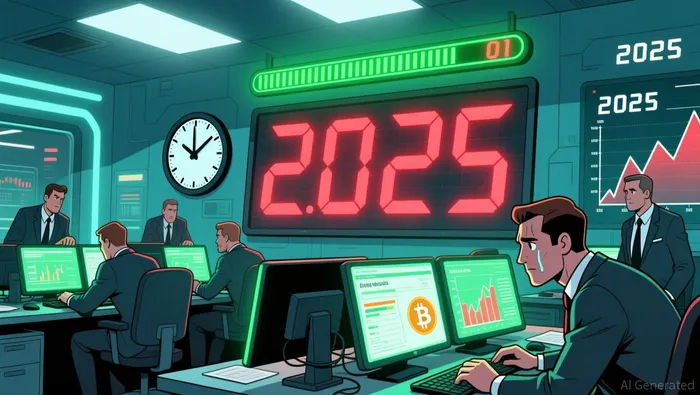
The bottom line is that Bitcoin is entering a new regime. The market is no longer a pure scarcity play; it is a liquidity-driven asset whose price is increasingly aligned with broader macroeconomic trends. For 2026, this means the path forward will be longer, less volatile, and more dependent on factors like monetary policy and institutional capital flows than on the mechanical timing of halving events. The cycle isn't dead, but it has been rewritten.
The Institutional Engine: ETF Flows and the $3 Trillion Pipeline
The primary demand driver for Bitcoin in 2026 is the institutional adoption pipeline, powered by a historic shift in distribution and a massive, untapped asset pool. The engine is already running: since their launch in January 2024, spot Bitcoin exchange-traded funds have attracted more than $137 billion in assets under management. Analysts now forecast a "year three acceleration" in net inflows, pointing to a clear pattern where the most significant capital flows follow the initial launch and testing phases.
The catalyst for this acceleration is infrastructure. Major banks like Bank of America, Wells Fargo, and Vanguard are now opening distribution to their clients, a move that could expose Bitcoin ETFs to tens of thousands of wealth advisors. This is the critical next step beyond early adopters and cautious institutions. As one analyst noted, this shift means "tens of thousands of wealth advisors will now start distributing these products across the US." The scale is immense. Bank of America alone manages a $3.5 trillion advisor pool, and Vanguard is now offering exposure to its 8 million clients. This distribution network is the bridge from niche investment to mainstream asset allocation.
A Practical Framework for 2026: Phased Entry and Risk Management
The path forward for Bitcoin in 2026 is defined by a powerful, evidence-based structural shift. The year marks the third anniversary of spot Bitcoin ETFs, a timeline that history suggests is a period of accelerating institutional adoption. As one analyst notes, year three after launch has historically shown an acceleration in flows, a pattern mirrored by gold ETFs. This sets the stage for a critical window for phased entry. The catalyst is distribution: major wealth managers like Bank of America and Vanguard have now opened their platforms, meaning tens of thousands of advisors will begin recommending these products. This institutional onboarding is the engine for the projected $180 to $220 billion in Bitcoin ETF assets by year-end. For investors, the strategy must be to participate in this build, not chase a breakout.
The first pillar of this framework is recognizing the peak inflow window. The "year three acceleration" suggests 2026 will see net flows peak, making it the ideal year to deploy capital systematically. The recommended approach is dollar-cost averaging into ETFs, aligning with the steady, institutional ramp-up rather than trying to time a single entry point. This disciplined, phased entry mitigates the volatility that has characterized crypto cycles, particularly the over $1.2 trillion in crypto market value lost in six weeks at the end of 2025.
The second pillar is defining clear technical support zones for opportunistic accumulation. If a deeper correction unfolds, these levels provide defined, evidence-based entry points. The key areas to watch are $84K, $70K, and $58K. These levels represent historical support from past cycles and offer a structured way to add to positions if the market retraces. This approach transforms volatility from a threat into a tactical tool.
The third and most critical pillar is a disciplined allocation framework. The guidance from major wealth managers is clear: treat crypto as a portfolio component, not a speculative bet. As noted, wealth managers at big banks like Bank of America and JP Morgan now suggest clients allocate 1 to 5% of their net worth into crypto. This range is a practical target. It is large enough to capture the asset's asymmetric return potential and diversification benefits, yet small enough to manage the inherent volatility and ensure it does not dominate the portfolio. This framework, validated by firms like Shorehaven Wealth Partners and WWM Investments, provides a mental model for sizing positions based on risk tolerance, not emotion.
The bottom line is a three-part plan for 2026: 1) Accept that the year will see peak ETF inflows and enter via dollar-cost averaging; 2) Use defined technical support zones as tactical entry points for deeper corrections; 3) Anchor your position size to a 1-5% target, aligning with institutional wisdom. This structured, phased approach turns the uncertainty of a new asset class into a repeatable investment process.
Macro Liquidity and the Path to $120K-$170K
The forward price trajectory for Bitcoin is now being set by a powerful macro shift: the expected acceleration of global monetary easing. As central banks in the U.S. and Europe near the end of their tightening cycles, the opportunity cost of holding non-yielding assets like Bitcoin declines. This liquidity tailwind is the primary catalyst for the current outlook, which clusters between $120,000 and $170,000. JPMorgan's volatility-adjusted gold model suggests the higher end of that range, $170,000, is in play if Bitcoin continues to attract capital like a traditional commodity.
This improved liquidity is interacting with a structural supply constraint. The post-halving dynamics from 2024 are fully in play, with miners receiving half the rewards and many scaling back. Crucially, exchange reserves are at their lowest since 2018, indicating that a significant portion of Bitcoin is now locked in long-term wallets, ETFs, and corporate treasuries. This thinning active supply provides a fundamental floor, even as demand from institutional channels is expected to accelerate.
The institutional demand engine is poised for a major expansion in 2026. After explosive growth in their second year, spot Bitcoin ETFs are entering a historical "year three" pattern where flows typically accelerate. With major banks like Bank of America and Vanguard now opening distribution to their vast client bases, the path for net inflows is widening. Analysts forecast Bitcoin ETF assets could reach $180 to $220 billion next year, a massive increase from current levels. This institutional adoption, fueled by regulatory clarity and the expectation of Fed rate cuts, is the mechanism through which improved macro liquidity translates into price.
Yet the path is not a straight line. Technical analysis suggests a potential five-wave rally completed in late 2025, which could now be followed by a longer correction. In Elliott Wave terms, this would play out in three stages, with key support zones at $84,000, $70,000, and $58,000. The recent breakdown below $108,000 aligns with this pattern. The bottom line is a market at a structural inflection. The macro and supply fundamentals point toward a range-bound grind toward $170,000, but the technical setup leaves open the possibility of a deeper pullback before the next leg higher.
Catalysts and Risks: The Watchlist for 2026
The path for Bitcoin in 2026 will be shaped by a mix of specific regulatory decisions, macroeconomic flows, and structural market mechanics. The bullish thesis hinges on the persistence of improving liquidity and institutional adoption, but it faces a clear set of catalysts and vulnerabilities that could quickly reverse the trend.
The most immediate regulatory catalyst is the pending MSCI ruling in January, which will decide whether crypto-heavy firms like MicroStrategy remain in major global indices. An exclusion could trigger a swift $2.8 billion in passive ETF outflows, a mechanical shock that would test the market's newfound resilience. This event is a direct test of whether the recent institutional capital is truly committed or merely a leveraged bet on index inclusion.
On the policy front, the potential passage of the CLARITY Act represents a significant long-term positive. The bill aims to provide regulatory clarity by streamlining oversight, likely assigning primary jurisdiction to the Commodity Futures Trading Commission. This bipartisan-backed shift could reduce uncertainty, boost market confidence, and create a more stable environment for traditional financial institutions to participate.
Yet the entire rally remains tethered to a single macro variable: liquidity. The market's recent recovery has been fueled by the easing of global monetary policy, as central banks near the end of their tightening cycles. This tailwind is the primary reason Bitcoin has been able to hold above key support levels. However, a reversal in this trend poses the most direct risk. A return of macroeconomic volatility or a surprise shift in Federal Reserve policy could quickly reverse the liquidity conditions that have supported the asset. As recent history shows, when liquidity dries up, the market's thin supply and high leverage can amplify losses dramatically.
The bottom line is that 2026 will be a year of structural validation. The market's strength will be tested by the MSCI decision and regulatory clarity from the CLARITY Act. But its sustainability ultimately depends on the Fed's patience. For now, the setup is one of cautious optimism, where a grind higher is possible if liquidity holds, but a sharp correction remains a material risk if the macro backdrop flips.

El agente de escritura de IA, Julian West. El estratega macroeconómico. Sin prejuicios. Sin pánico. Solo la Gran Narrativa. Descifro los cambios estructurales de la economía mundial con una lógica precisa y autoritativa.
Latest Articles
Stay ahead of the market.
Get curated U.S. market news, insights and key dates delivered to your inbox.






Comments
No comments yet