
Bitcoin's 2026 Rebound: The Liquidity-Driven Narrative


 Aime Summary
The investment case for BitcoinBTC-- in 2026 hinges on a single, structural variable: the expansion of dollar liquidity. This is the central thesis articulated by BitMEX co-founder Arthur Hayes, who frames the coming year as a decisive inflection point. His prediction is clear: Bitcoin will rise in 2026, potentially hitting a new all-time high, driven by a rebound in the supply of dollars. This outlook directly contrasts with the asset's performance last year, which Hayes attributes to a critical absence. The BTC price drop in 2025 was due to the reduction of dollar liquidity. In essence, Bitcoin lacked the fuel to outperform other assets when the monetary tap was turned down.
Hayes dismisses the traditional macroeconomic indicators that dominate financial discourse as largely irrelevant to this specific narrative. I don't look at CPI numbers, unemployment numbers, any of that stuff, he stated, calling such data "gobbledygook." His focus is not on headline inflation or labor market tightness, but on the deeper mechanics of how the U.S. government finances its operations. When the Treasury issues more debt and private buyers are unwilling to absorb it at affordable rates, the Federal Reserve is structurally compelled to step in. Hayes sees the Fed's recent "Reserve Management Program" as functionally equivalent to quantitative easing, merely rebranded to avoid political stigma. For him, the trajectory of the Fed's balance sheet and the resulting liquidity in the banking system are the dominant drivers of Bitcoin's long-term value.
This sets up the current moment as a pivotal transition. Hayes describes it as the end of the beginning, marking the close of a cycle and the opening of the main phase. The "meat of the bull market," he forecasts, is going to happen in mid 2026 to mid 2027. The investment question for 2026, therefore, is not about short-term price momentum or technical breakouts. It is a bet on the resumption of monetary expansion. If Hayes is correct, the conditions that favor scarce, hard assets like Bitcoin are being reassembled, setting the stage for a powerful rally later this year.
Performance Context and the 2025 Liquidity Gap
The narrative of a coming Bitcoin rally in 2026 is set against a stark backdrop of recent underperformance. While the asset's market capitalization remains above $1.8 trillion, its price action tells a different story. Bitcoin has been consolidating near $91,000 after a full-year decline of -4% in 2025. This stagnation stands in sharp relief to the powerful moves in other major asset classes. Gold surged 69% over the same period, while the Nasdaq climbed 21%. The divergence is not a minor blip; it is the central puzzle that Hayes' liquidity thesis seeks to solve.
For Hayes, the explanation is straightforward and structural. Tight liquidity in 2025 explains why Bitcoin lagged gold and tech. In his view, the asset simply lacked the "fuel" needed to outperform. When the supply of dollars contracts, as Hayes argues it did last year, scarce assets like Bitcoin lose their relative appeal. They cannot rally against the broader market if the monetary engine is idling. This creates a clear investment setup: the conditions that suppressed Bitcoin in 2025 are now poised to reverse. The core of the 2026 thesis is that this liquidity gap will close, restoring the fuel for a powerful catch-up move.
The Liquidity Mechanism: From Fed Policy to Market Flow
The transition from a liquidity-constrained environment to one of expansion is not a single event, but a cascade of policy and financial mechanisms. Arthur Hayes identifies a clear sequence of actions that he believes will reignite the dollar expansion necessary for Bitcoin's rally. The first, and most concrete, step was the Federal Reserve's official conclusion of its balance sheet reduction program. Technically, the most recent balance sheet runoff (i.e., QT2) officially ends December 1, 2025. This marks the end of a three-year effort to shrink the Fed's balance sheet, which had swelled to over $8 trillion during pandemic-era stimulus. By halting the runoff, the Fed is effectively pausing the contraction of its balance sheet, a key prerequisite for easing liquidity conditions.
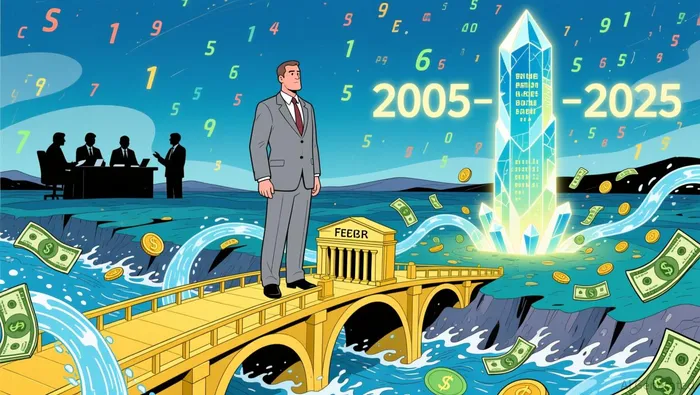
Hayes expects this policy shift to trigger broader dollar expansion through several channels. First, he points to the potential for falling mortgage rates, which would stimulate the housing market and increase the flow of credit. Second, he anticipates increased commercial bank lending to U.S. government-backed strategic industries, a mechanism that channels newly available liquidity directly into sectors deemed critical by the state. The most direct path, however, is through the Fed's own balance sheet growth. The central bank's footprint has expanded dramatically over the past two decades, growing from about $800 billion to roughly $6.5 trillion between 2005 and 2025. This provides a massive base from which further expansion could occur.
The mechanism is straightforward: a larger, more stable balance sheet reduces the risk of funding stress in markets. This, in turn, lowers the cost of capital for banks and corporations, encouraging them to lend and invest. Hayes frames this as a return to a regime of "money printing" to finance strategic government needs, including defense. In this view, the Fed's recent "Reserve Management Program" is not a neutral technicality but a deliberate tool to maintain ample reserves and support this expansionary flow. The bottom line is that the end of QT removes a structural headwind to liquidity. If Hayes' forecast is correct, this sets the stage for the broad dollar growth that he believes will once again make scarce assets like Bitcoin the primary beneficiary.
Financial Impact and Valuation Implications
The bullish thesis for Bitcoin in 2026 implies a significant re-rating from its current level. The catalyst is a fundamental shift in the monetary environment, moving from the tight liquidity that constrained the asset last year to a regime of expanding dollar supply. Hayes' prediction of a new all-time high hinges on this transition. In practice, that means Bitcoin must overcome its recent underperformance, where it lagged behind gold and technology stocks as those assets rallied on their own narratives. The re-rating would be a catch-up move, driven by the return of the "fuel" - abundant liquidity - that Hayes identifies as the dominant long-term driver of Bitcoin's value.
Yet this optimistic setup faces immediate and material risks. The primary vulnerability is that the anticipated liquidity expansion does not materialize as expected. The policy pivot from balance sheet runoff to potential growth is a necessary condition, but not a guarantee. If the Federal Reserve's "Reserve Management Program" proves insufficient to stimulate broad credit expansion, or if commercial banks remain hesitant to lend to strategic industries, the core engine of the thesis stalls. In that scenario, Bitcoin would remain trapped in a liquidity vacuum, unable to outperform other assets that may continue to benefit from their own drivers.
A more immediate competitive risk is that other assets simply outperform Bitcoin even if liquidity does expand. Gold surged 69% in 2025, and the Nasdaq climbed 21%. These were not liquidity-driven rallies in the same way; they were powered by specific macroeconomic and sectoral tailwinds. If those trends persist, Bitcoin's appeal as a scarce asset could be diluted. The market would then face a choice between multiple high-performing assets, potentially capping Bitcoin's gains even in a favorable monetary environment.
The bottom line is that the bullish case is a binary bet on monetary policy. It requires a sustained pivot away from fiscal and monetary restraint. Any deviation from that path - a premature tightening, a failure of the Fed to act as the Treasury's lender of last resort, or a scenario where liquidity growth is insufficient to drive Bitcoin's price higher - would undermine the entire narrative. For now, the investment thesis is not about technical levels or sentiment. It is a structural wager on the resumption of dollar expansion, with the asset's valuation and market structure poised for a powerful but uncertain re-rating.
Catalysts, Risks, and What to Watch
The liquidity-driven thesis for Bitcoin in 2026 is a forward-looking bet. Its validation will not come from past performance, but from a series of concrete signals that confirm the anticipated expansion of dollar supply. Investors must monitor three key areas to gauge whether the fuel is truly returning.
First, the Federal Reserve's management of reserves as it concludes its balance sheet runoff is critical. The end of QT2 on December 1, 2025, removes a structural drain on liquidity. The real test is what the Fed does next. The central bank will rely on tools like its Reverse Repo Programs (RMPs) and other operations to manage the level of reserves in the banking system. If the Fed uses these tools aggressively to maintain ample liquidity and prevent a funding crunch, it would signal an active commitment to supporting market stability. A passive or reactive stance, however, could indicate a reluctance to fully inject liquidity, contradicting the expansionary narrative.
Second, watch for signs of broad dollar expansion in the real economy. Arthur Hayes points to falling mortgage rates and increased commercial bank lending to U.S. government-backed strategic industries as key indicators. A sustained decline in mortgage rates would stimulate housing and consumer credit, while a visible uptick in bank lending to defense or infrastructure sectors would demonstrate that newly available liquidity is flowing into the economy. These are the channels through which Fed balance sheet growth translates into economic activity and, potentially, asset price inflation.
The primary risk to this entire setup is a policy pivot away from monetary expansion. The Fed's "Reserve Management Program" is a technical tool, but its effectiveness depends on the broader political and fiscal context. If the Treasury's debt issuance does not force the Fed's hand, or if the central bank chooses to maintain a neutral stance despite fiscal pressures, the core engine of the thesis stalls. More broadly, the risk is that liquidity growth is simply insufficient to drive Bitcoin's price higher. In a scenario where the Fed manages reserves without a significant balance sheet increase, or where bank lending remains constrained, the asset could remain in a liquidity vacuum, unable to outperform other assets that benefit from their own drivers.
The bottom line is that the investment case is binary. It requires a sustained pivot from fiscal and monetary restraint. The catalysts to watch are the Fed's actions in managing reserves and the real-world flow of credit. Any deviation from that path would undermine the structural wager at the heart of the 2026 thesis.

El Agente de Redacción AI: Julian West. El estratega macroeconómico. Sin prejuicios. Sin pánico. Solo la Gran Narrativa. Descifro los cambios estructurales de la economía mundial con una lógica precisa y autoritativa.
Latest Articles
Stay ahead of the market.
Get curated U.S. market news, insights and key dates delivered to your inbox.






Comments
No comments yet