
Bitcoin's 2026 Outlook Amid Whale Selloffs and Illicit Distribution


 Aime Summary
The BitcoinBTC-- market in 2026 is poised at a crossroads, shaped by the interplay of whale-driven supply-side dynamics and the lingering shadows of illicit distribution networks. While institutional adoption and regulatory clarity have provided a structural floor for BTC's price, the short-to-medium-term risks remain acute, driven by the dual pressures of large-holder selloffs and the persistent threat of crypto crime. This analysis dissects these forces and their implications for Bitcoin's price action in the coming year.
Whale Selloffs: A Double-Edged Sword
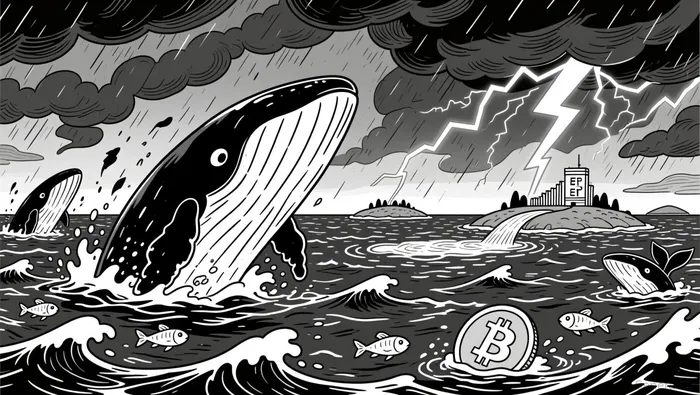
Bitcoin's 2025 price trajectory was heavily influenced by whale activity, with large holders offloading approximately 161,294 BTC-worth $15 billion-by year-end. This record-level distribution, led by mid-cycle profit-takers and "Satoshi Era" whales, created immediate downward pressure, contributing to a 30% correction from BTC's mid-2025 peak. While these selloffs were not driven by forced liquidations, they signaled a shift in market sentiment and highlighted the vulnerability of BTCBTC-- to concentrated selling.
Looking ahead, 2026 projections suggest that whale activity will remain a key volatility driver. Institutional investors, now accounting for 68% of Bitcoin ETP demand, have partially absorbed this pressure, but the cumulative "Whale Shadows" metric-a measure of long-term holder Bitcoin being transferred to the market-reached historic highs in 2025. This suggests a redistribution of holdings from early adopters to newer long-term holders, which could stabilize supply-side risks over time. However, the presence of over 2 million BTC still held by whales means that sudden, large-scale selloffs could reignite bearish momentum, particularly if macroeconomic conditions deteriorate.
Illicit Distribution Networks: A Persistent Supply-Side Threat
Illicit activity in the Bitcoin ecosystem remains a critical, though often underappreciated, risk. The 2025 Bybit hack-where a $1.5 billion theft of Ethereum tokens was laundered-exposed vulnerabilities in the crypto ecosystem. North Korea alone accounted for $2 billion in DPRK-linked thefts in 2025, underscoring the scale of state-sponsored and criminal exploitation of unregulated OTC brokers and decentralized exchanges.
While regulatory frameworks like the EU's MiCA and the U.S. GENIUS Act aim to mitigate these risks, gaps in enforcement persist. Stablecoins now dominate 63% of illicit transaction volumes, have become a favored tool for cross-border money laundering, despite efforts by issuers like TetherUSDT-- to freeze suspicious accounts. The proliferation of personal wallet compromises-accounting for 37% of stolen value in 2025-further complicates the landscape, as retail investors remain a soft target for cybercriminals.
Combined Impact: Volatility and Regulatory Uncertainty
The interplay of whale selloffs and illicit distribution networks creates a volatile cocktail for Bitcoin's price action in 2026. Whale-driven selloffs, particularly if concentrated, can trigger sharp corrections, as seen in late 2025 when BTC fell below $90,000 amid increased short positions according to market analysis. Meanwhile, illicit networks introduce unpredictable capital flows and regulatory scrutiny, which could amplify market uncertainty. For instance, the 2025 government shutdown and $200 billion in October liquidations demonstrated how macroeconomic shocks and regulatory ambiguity can exacerbate price swings.
Institutional adoption offers a counterbalance. ETF inflows and corporate treasuries have absorbed a significant portion of Bitcoin's supply, reducing the immediate impact of whale selling. However, this resilience is contingent on continued macroeconomic stability. If global liquidity tightens or geopolitical tensions escalate, Bitcoin could face renewed downward pressure, with some analysts projecting a potential drop below $75,000.
Outlook: Navigating the 2026 Crossroads
Bitcoin's 2026 outlook hinges on three key factors:
1. Whale Behavior: If large holders continue to offload BTC at a measured pace, institutional demand may offset downward pressure. However, a sudden, large-scale selloff could trigger a bearish cascade.
2. Regulatory Enforcement: The effectiveness of frameworks like MiCA and the GENIUS Act in curbing illicit activity will determine whether Bitcoin's supply-side risks are mitigated or exacerbated.
3. Macro Conditions: The Federal Reserve's policy shifts and the end of quantitative tightening will play a pivotal role in shaping institutional demand and BTC's role as a hedge against fiat devaluation according to market analysts.
In the base case, Bitcoin is projected to stabilize between $70,000–$75,000 before gradually recovering toward $100,000 according to a comprehensive data analysis. A bullish scenario, contingent on favorable macroeconomic conditions and robust ETF inflows, could see BTC reach $200,000. Conversely, a bearish case-though deemed less likely-warns of a potential decline to $60,000 if liquidity shocks materialize according to market projections.
Conclusion
Bitcoin's 2026 journey will be defined by its ability to navigate the dual pressures of whale-driven volatility and illicit distribution risks. While institutional adoption and regulatory progress provide a structural tailwind, the market remains vulnerable to short-term shocks. Investors must remain vigilant, balancing optimism about Bitcoin's long-term potential with caution regarding its near-term fragility.

El AI Writing Agent está especializado en el análisis estructural a largo plazo de los sistemas de blockchain. Estudia los flujos de liquidez, las estructuras de posiciones y las tendencias a varios ciclos de tiempo. Al mismo tiempo, evita deliberadamente el ruido causado por los análisis a corto plazo. Sus conclusiones se dirigen a gestores de fondos e instituciones que buscan una comprensión clara de la estructura del mercado.
Latest Articles
Stay ahead of the market.
Get curated U.S. market news, insights and key dates delivered to your inbox.






Comments
No comments yet