
Bitcoin 2025: What’s Next for the Digital Asset in a Shifting Market Landscape?


 Aime Summary
Bitcoin Market Analysis 2025: A Comprehensive Review
Bitcoin has been a rollercoaster ride for investors in 2025, swinging between corrections, institutional inflows, and shifting investor sentiment. After hitting a peak in October, the price has pulled back, , with mixed technical indicators and the Crypto Fear & Greed Index still hovering in the "Extreme Fear" zone. While some experts remain bullish, others are cautious, watching closely for signals of a sustained rally or a deeper correction. The question on many investors' minds is whether BitcoinBTC-- is setting up for a new bull run or facing structural headwinds from macroeconomic shifts.
Bitcoin is no longer just a speculative asset—it's a financial product with a growing institutional footprint. Companies like American BitcoinABTC-- Corp have , and spot Bitcoin ETFs continue to draw inflows, despite recent volatility. The approval of the Bitcoin ETF in early 2024 marked a turning point, integrating digital assets more directly into traditional financial markets. Since then, Bitcoin's correlation with equities has strengthened, while its safe-haven appeal—once compared to gold—has faded. Now, it behaves more like a high-beta equity, reacting to macroeconomic news, interest rates, and investor sentiment.
What's different in 2025 is the evolving structure of Bitcoin's price dynamics. 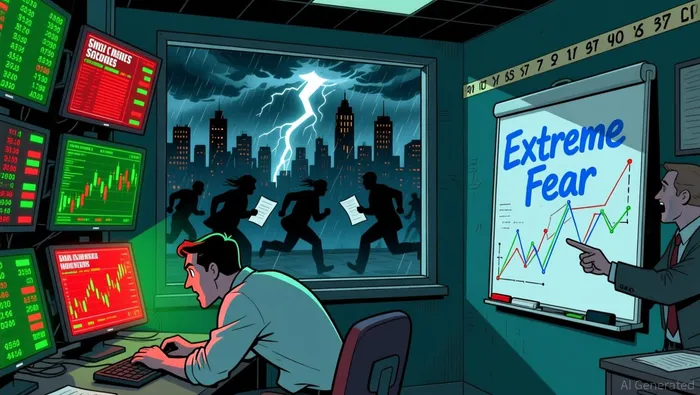 The traditional four-year cycle, once closely tracked by investors, is no longer reliable. Instead, the market is adapting to what some analysts are calling a "cost-basis returns cycle." With institutional investors buying Bitcoin at increasing cost bases, the asset has shown a pattern of rallying after correcting to those levels. This model suggests that if the cost basis rises by 10–15%, . Some experts, including JPMorgan and Bernstein, have already adjusted their price targets accordingly.
Investors must also consider the broader macroeconomic landscape. U.S. , , highlighting mixed signals in the labor and manufacturing sectors. Bitcoin's price is often a barometer for risk appetite, and recent weakness in the asset aligns with a more cautious outlook on equities. The inverse relationship with the VIX, while not perfect, reinforces the idea that Bitcoin is a "risk-on" asset. That means any sustained rally may depend on improved macroeconomic data and a shift in Fed policy.
Looking forward, the most compelling opportunities for Bitcoin investors may come from strategic positioning based on market signals and on-chain activity. Strong holder resilience, , suggests that long-term holders have not capitulated, which is a positive sign for the price's future. However, investors should also remain mindful of risks, including frozen Fed rate cuts, ongoing , and regulatory uncertainties. While the market has shown resilience, the path to higher prices will likely require patience and discipline.
Bitcoin's role in a diversified portfolio is also evolving. Once viewed as a hedge against inflation and , the asset now correlates more closely with equities. Meanwhile, gold has outperformed Bitcoin in times of crisis, reinforcing the case for a strategic rotation between the two. As Bitcoin moves into 2026, investors should consider using the Bitcoin-to-gold (BG) ratio as a tool for timing shifts between risk-on and risk-off allocations.
Ultimately, the key to navigating Bitcoin's next chapter is understanding its evolving identity and the factors shaping its price. Institutional demand, ETF inflows, and macroeconomic signals will continue to be critical. For now, Bitcoin appears to be in a consolidation phase, with the market waiting for a catalyst to break out. Whether that catalyst is a strong macroeconomic report, a regulatory breakthrough, or renewed institutional buying remains to be seen.

Delivering real-time insights and analysis on emerging financial trends and market movements.
Latest Articles
Stay ahead of the market.
Get curated U.S. market news, insights and key dates delivered to your inbox.
AInvest
PRO
AInvest
PRO



Comments
No comments yet