
Bitcoin 2025 Conference Introduces Hash Over Cash Initiative for Social Justice
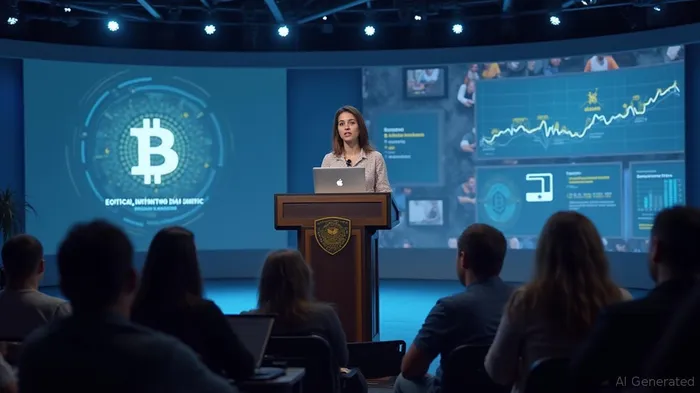
At the recent Bitcoin 2025 conference, entrepreneur Jill FordFORD--, founder of BitFord DigitalBTBT--, and Justin Rhedrick of the Bitcoin Transformation Community introduced an ambitious initiative called “Hash Over Cash.” This program aims to bridge the gapGAP-- between crypto infrastructure and social justice by channeling outdated mining equipment and donated hashpower into workforce reintegration and hands-on job training for formerly incarcerated individuals.
The initiative invites companies and individual miners to contribute used or broken ASIC rigs or temporarily redirect mining output. BitFord handles the repair, resale, and routing of proceeds, while the Bitcoin Transformation Community leads reentry-focused training programs. Participants learn real-world tech skills such as diagnosing and refurbishing mining hardware, which are transferable to various roles in the tech and Bitcoin space.
Ford emphasized the efficiency of hardware donations over cash donations, which often get stuck in red tape. Companies can quickly greenlight hardware donations, which also come with tax deductions. The program has early support from firms like Bldg 96 and plans to scale nationally, positioning itself as a blueprint for sustainable impact in Bitcoin.
Ford and Rhedrick's partnership was driven by a shared belief that Bitcoin should be a tool for empowerment, not just speculation. Ford's personal experience in a correctional facility highlighted the lack of access to crypto tools for women, who often need Bitcoin the most due to the limitations of the fiat economy. This realization underscored the importance of bridging the access gap to unlock opportunities for individuals and resilience for the ecosystem.
The program focuses on those underserved by traditional workforce pipelines, starting in TK but with a vision to expand nationally. Mobile training units are being designed to deploy in correctional facilities or reentry centers, making the model modular and adaptable to various locations. The initiative aims to empower returning citizens to become trainers, ensuring the knowledge ripple continues.
Tax deductions play a significant role in motivating corporate donors, as donated hardware can often be written off faster and more cleanly than cash. This makes it easier for public companies to approve internally, as it comes from inventory rather than a budget line. The program provides full documentation for donations, making the accounting side seamless. However, it is crucial to consult with a qualified tax professional to determine the best approach for any given business situation.
The biggest barrier to getting large mining firms to participate is the mindset that ESG or social impact is a cost center rather than a competitive advantage. The initiative aims to change this narrative by showing the upside: brand equity, tax efficiency, and a stronger, more decentralized network. Firms that understand this are already signing on, while those who don't yet see the benefits are being shown the potential long-term resilience for both people and the Bitcoin ecosystem.
The program envisions short-term career paths in mining repair, logistics, hardware maintenance, and data center support. Long-term, it aims to open pathways to entrepreneurship, where individuals can run nodes, manage warehouses, or even launch their own repair shops. This is about capacity building rather than charity, providing real, in-demand skills without the need for a four-year degree or a perfect resume.
Ford addresses skeptics by emphasizing that Bitcoin means freedom, ownership, autonomy, and access. These values are incredibly relevant to people who have had their freedom restricted and are trying to rebuild their lives. Mining is a hands-on, scalable sector that can serve as a bridge to something bigger, making it a relevant and impactful initiative for reentry and social impact.
In response to mining skeptics and potential backlash, Ford highlights the need to separate irresponsible practices from sustainable, community-led solutions. The initiative focuses on small-scale, reuse, and repair, integrating with communities rather than overrunning them. The future of mining in the U.S. must be local, sustainable, and accountable to succeed politically at the local level.

Stay ahead of the market.
Get curated U.S. market news, insights and key dates delivered to your inbox.


AInvest
PRO
AInvest
PRO



Comments
No comments yet