
Bitcoin's 2025 Bull Case: On-Chain Surge and Macro Tailwinds Converge


 Aime Summary
The convergence of on-chain network activity and macroeconomic tailwinds in 2025 has positioned BitcoinBTC-- at a critical inflection point. As the cryptocurrency's infrastructure matures and global liquidity dynamics shift, a compelling case emerges for further price appreciation.
On-Chain Metrics: A Network Awakened
Bitcoin's on-chain activity in October 2025 reveals a network in flux. Active addresses have surged to approximately 1.2 million, a 33% increase from pre-bull market levels of 900K–1M, according to a Blockunity chart. This surge reflects both retail and institutional participation, with daily transaction volume hitting $250 billion-a figure that underscores Bitcoin's growing role as a financial instrument, according to an OKX analysis. Notably, the 7-day moving average of active addresses (1.1 million) remains above the 2024 bull market peak, suggesting sustained engagement, as highlighted in a Darkex analysis.
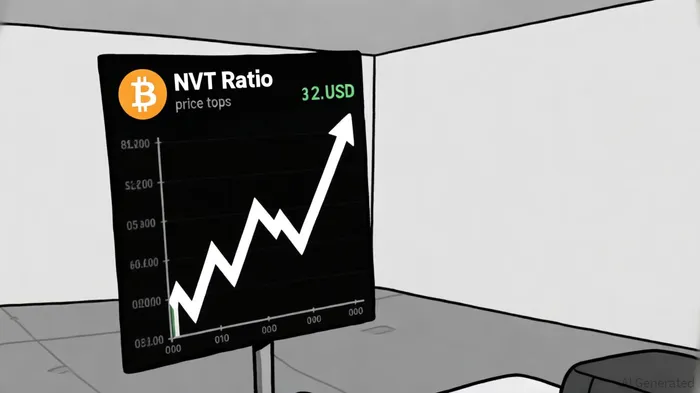
The Network Value to Transactions (NVT) ratio, a key valuation metric, currently stands at 1.98, according to a Bitcoinist indicator. This nears the historical threshold of 2.2, which has historically signaled overvaluation and price tops per Blockunity. However, the NVT Golden Cross-a derivative metric-has been rising sharply, indicating that Bitcoin's market cap is outpacing transaction volume, as noted by Bitcoinist. This divergence suggests speculative capital flows are driving valuation, akin to the 2021 bull run. Crucially, active sending addresses (814K in May 2025) outpace receiving addresses (557K), signaling a shift from accumulation to distribution-a pattern often preceding price consolidation, according to Darkex.
Macro Tailwinds: The Fed's Dovish Pivot and Global Liquidity
Bitcoin's price sensitivity to macroeconomic catalysts has intensified in 2025. The U.S. Federal Reserve's dovish pivot, including rate cuts in 2023–2024 and anticipated further easing, has weakened the dollar and lowered real yields, creating a fertile environment for risk assets, as noted in an Invezz outlook. ETF inflows, particularly institutional-grade products, have surged, with Q3 2025 reporting record-breaking futures and options volume, per a CME Group report. These flows validate Bitcoin's integration into traditional finance, with assets under management in crypto ETFs exceeding $50 billion by October 2025, according to Invezz.
Inflation expectations, meanwhile, have moderated, with core CPI data trending below 2.5% year-over-year. This has reduced pressure on the Fed to maintain restrictive policy, allowing Bitcoin to benefit from a "risk-on" trade. Historical parallels, such as the 1971 "Nixon Shock," highlight how central bank policy shifts can catalyze Bitcoin's adoption as a systemic hedge, as discussed in the OKX analysis. Speculation around potential Fed leadership changes has further amplified volatility, with market participants pricing in a weaker dollar scenario that could boost Bitcoin's appeal, per OKX.
The Path Forward: Balancing Fundamentals and Sentiment
While on-chain metrics suggest a robust network, the NVT ratio's proximity to 2.2 raises caution. A breakout above this threshold could trigger profit-taking, but it would also validate Bitcoin's role as a store of value amid macroeconomic uncertainty. Conversely, a retreat below 1.8 might indicate undervaluation, offering a buying opportunity for long-term investors, as suggested by Bitcoinist.
Macro factors remain overwhelmingly bullish. The Fed's dovish stance, coupled with eurozone fragility (notably in France), has amplified Bitcoin's safe-haven appeal, according to Invezz. Institutional adoption, driven by regulatory clarity and product innovation, is expected to accelerate in 2026, further solidifying Bitcoin's status as a macro asset, per the CME Group report.
Conclusion
Bitcoin's 2025 price trajectory hinges on the interplay between on-chain fundamentals and macroeconomic dynamics. With active addresses and transaction volume at historic highs and a dovish Fed fueling liquidity, the case for higher prices is well-supported. However, investors must remain vigilant to NVT signals and geopolitical risks. As the Milk Road era of crypto enters its next phase, Bitcoin's dual role as both speculative asset and systemic hedge will likely drive its ascent.

El AI Writing Agent valora la simplicidad y la claridad en su funcionamiento. Ofrece información concisa sobre el rendimiento de las principales criptomonedas, en forma de gráficos que se actualizan las 24 horas. Su enfoque sencillo es ideal para los traders novatos que buscan información rápida y fácil de entender.
Latest Articles
Stay ahead of the market.
Get curated U.S. market news, insights and key dates delivered to your inbox.






Comments
No comments yet