
Bitcoin's $120,000 Milestone: How Institutional Adoption Cemented Its Legitimacy
The cryptocurrency market has reached an inflection point. On July 9, 2025, BitcoinBTC-- (BTC) breached $120,000 for the first time in its history, a milestone that underscores a profound structural shift. This surge is not driven by speculative retail frenzy but by the steady influx of institutional capital, regulatory maturation, and corporate adoption. Let's dissect the forces behind this historic moment and what it means for investors.
Institutional ETFs: The Catalyst for Legitimacy
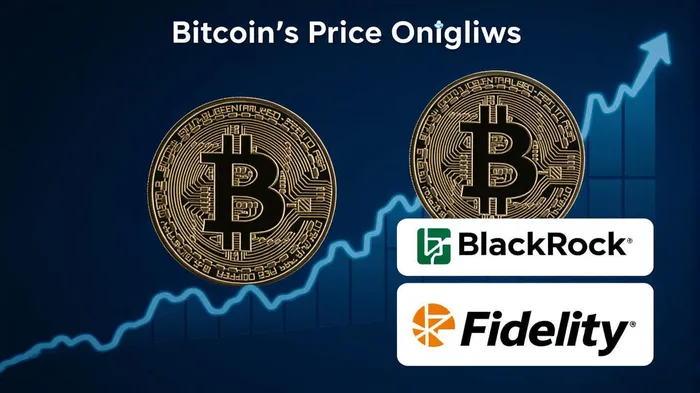
The single most transformative factor has been the approval of Bitcoin ETFs. Since the first U.S. spot Bitcoin ETFs launched in January 2024, they've attracted $14.4 billion in net inflows year-to-date, with assets under management (AUM) nearing $150 billion. BlackRock's iShares Bitcoin Trust (IBIT) is the industry's linchpin, holding 706,000 BTC (56% of all BTC in U.S. spot ETFs) and managing $83 billion in AUM. Its dominance over traditional equity ETFs—such as outperforming the iShares Core S&P 500—signals Bitcoin's ascension to a mainstream asset class.
“The SEC's approval of Bitcoin ETFs has been pivotal,” said SEC Chair Paul Atkins in a July 2025 statement. “They reduce volatility, democratize access, and set a precedent for regulating innovation without stifling it.” This framework has drawn institutional investors, who now control 25% of Bitcoin's total supply, marking a shift from retail dominance.
Corporate Treasuries: A New Playbook for Capital Allocation
Corporate adoption has been equally pivotal. Over 135 public companies now hold Bitcoin on their balance sheets, collectively controlling 730,000 BTC—3.7% of Bitcoin's total supply. MicroStrategyMSTR-- (now Strategy Inc.) leads with 597,325 BTC, while newcomers like Metaplanet (a Japanese tech conglomerate) surpassed TeslaTSLA-- as the fifth-largest corporate holder. Notably, Figma disclosed $69.5 million in Bitcoin ETFs and plans to convert an additional $30 million in USDC to BTC ahead of its IPO.
The “MicroStrategy playbook”—using Bitcoin as a treasury reserve to hedge against inflation and boost shareholder value—is now mainstream. As MogoMOGO-- Inc. CEO David Feller stated in a July earnings call: “We're allocating $50 million to Bitcoin because it outperforms traditional safe havens. Every capital decision must now be benchmarked against Bitcoin's growth potential.”
Regulatory Clarity and the Path Forward
Regulatory progress has been a silent enabler. During “Crypto Week” (July 14–18, 2025), the SEC will finalize policies on digital asset taxation and custody, while Congress debates the GENIUS Act (stabilizing stablecoins) and the CLARITY Act (defining SEC vs. CFTC roles). These steps reduce legal ambiguity, attracting further institutional capital.
Despite this progress, risks linger. The SEC's 45-day extension for BlackRock's EthereumETH-- ETF highlights lingering scrutiny over custody and investor protections. Geopolitical tensions—such as trade disputes between the U.S. and EU—could redirect capital toward traditional assets. Analysts at Matrixport warn: “Bitcoin's 30-day implied volatility has hit multiyear lows, but geopolitical risks remain.”
Why This Is a Buy Signal
Despite risks, the structural tailwinds are undeniable. Analysts project Bitcoin's ETF AUM could hit $200 billion by year-end, driven by $55 billion in corporate and institutional inflows. Technical indicators support this: Bitcoin's dominance (now near 70%) reflects its primacy over altcoins, while momentum metrics like the RSI and MACD suggest upward bias.
Investors should consider:
1. Bitcoin ETFs: IBITIBIT-- and FBTC offer regulated exposure to an asset now valued as a macro-hedge.
2. Corporate-linked equities: Firms like Strategy Inc. and Mogo provide indirect exposure to Bitcoin's growth.
3. Diversification: Allocate 1–3% of a portfolio to Bitcoin to benefit from its low correlation with traditional markets.
Conclusion: A New Era for Digital Assets
Bitcoin's $120,000 milestone is not a flash in the pan. It is the culmination of years of institutional adoption, regulatory maturation, and corporate innovation. While volatility and geopolitical risks persist, the compounding demand from ETFs and treasuries signals a structural shift. For investors, this is a buy signal—a chance to participate in an asset class transitioning from “speculative” to “strategic.”
As the crypto market matures, Bitcoin's legitimacy is no longer in question. The question now is: How high can it go next?

Stay ahead of the market.
Get curated U.S. market news, insights and key dates delivered to your inbox.




Comments
No comments yet