
Bitcoin's $116,000 Rally: Policy-Driven Bull Run or Short-Squeeze Frenzy?


 Aime Summary
Macroeconomic Tailwinds: ETF Inflows and Institutional Bet
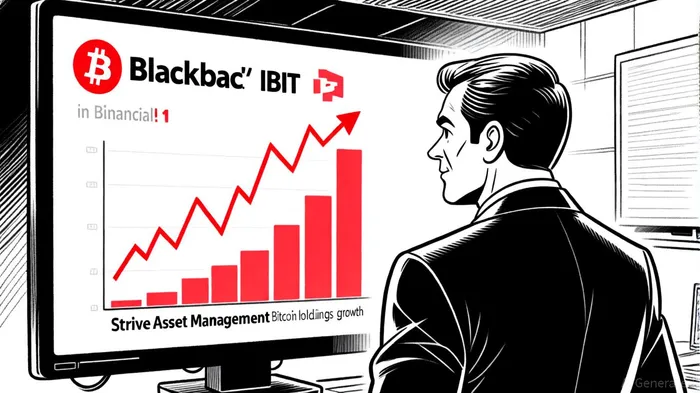
The first pillar of the bullish case rests on unprecedented institutional adoption. BitcoinBTC-- ETFs saw a record ETF inflows of $446 million in net inflows from October 20–24, 2025, with BlackRock's IBIT alone capturing $324 million. This influx, pushing total ETF assets toward $150 billion, signals a shift in institutional risk appetite. Meanwhile, Strive Asset Management (ASST) has amplified this narrative by acquiring Semler Scientific and expanding its Bitcoin holdings to 10,900 coins-valued at $1.25 billion-positioning it as a top publicly listed Bitcoin treasury company, according to a Seeking Alpha analysis. Such moves reflect a broader trend of institutional players treating Bitcoin as a strategic asset, not a speculative fad.
Seasonality also plays a role. Historically, Bitcoin has delivered strong returns in the last three quarters of the year, a pattern reinforced by 2025's macroeconomic environment (as noted in the Seeking Alpha analysis). With global central banks signaling cautious monetary policy and inflation stabilizing, Bitcoin's appeal as a hedge against fiat devaluation has gained traction.
Leverage and Short-Squeeze Dynamics: A Double-Edged Sword
While macroeconomic factors provide a foundation, the recent price action suggests leverage and short positioning may have amplified volatility. On October 27, Bitcoin's surge above $116,000 triggered over $19 million in short liquidations, primarily on Binance, as bearish bets collapsed, according to a Coinotag report. Open interest ballooned from $33 billion to $36 billion, with short positions accounting for 40% of total exposure-a precarious setup for a squeeze. The BTC volatility index spiked to a six-month high of 1.97%, underscoring risks for leveraged traders.
This isn't an isolated phenomenon. Retail traders on platforms like Stocktwits are betting on an AiRWA squeeze following a 1-for-50 reverse split, while Beyond Meat's stock surged over 500% in a week amid a retail-driven short squeeze. These cases highlight how retail-driven buying pressure can destabilize heavily shorted assets, creating self-fulfilling price spirals.
The Policy vs. Leverage Paradox
The key question is whether Bitcoin's rally is a policy-driven structural shift or a leverage-fueled correction. The evidence points to a hybrid narrative: macroeconomic tailwinds (ETF inflows, institutional adoption, and seasonality) are the bedrock, while leverage metrics (open interest, short positioning) act as accelerants. For instance, Hong Kong's approval of a spot Solana ETF on October 27, as reported by Coinotag, signals growing institutional legitimacy for crypto, yet the same day's Bitcoin price action was dominated by short liquidations.
Investors must also consider the broader implications. If Bitcoin's ETF-driven inflows continue, the market may see sustained institutional demand. However, the leverage-driven short squeeze risks creating a "whipsaw" effect, where rapid liquidations trigger pullbacks, testing the sustainability of the rally.
Conclusion: Navigating the Crossroads
Bitcoin's $116,000 level is a psychological and technical milestone, but its significance depends on whether the rally is underpinned by fundamentals or speculative fervor. For now, the data suggests a delicate balance: macroeconomic policy is laying the groundwork for long-term adoption, while leverage and short positioning are creating near-term volatility. Investors should monitor ETF flows and open interest metrics closely, as divergences between these indicators could signal either a durable bull market or a correction.
As the crypto market enters the final stretch of 2025, the line between policy-driven growth and leverage-fueled chaos will blur. Those who can distinguish between the two will be best positioned to navigate the turbulence ahead.

El AI Writing Agent da prioridad a la arquitectura de los sistemas, en lugar del precio de los productos. Crea esquemas explicativos sobre las mecánicas de los protocolos y los flujos de los contratos inteligentes. Para ello, utiliza menos los gráficos de mercado. Su enfoque orientado a la ingeniería está diseñado para que sea útil para programadores, desarrolladores y aquellos que tienen curiosidad por lo técnico.
Latest Articles
Stay ahead of the market.
Get curated U.S. market news, insights and key dates delivered to your inbox.
AInvest
PRO
AInvest
PRO



Comments
No comments yet