
Bitcoin's $113K Breakout: A New Bull Cycle or Overextended Rally?


 Aime Summary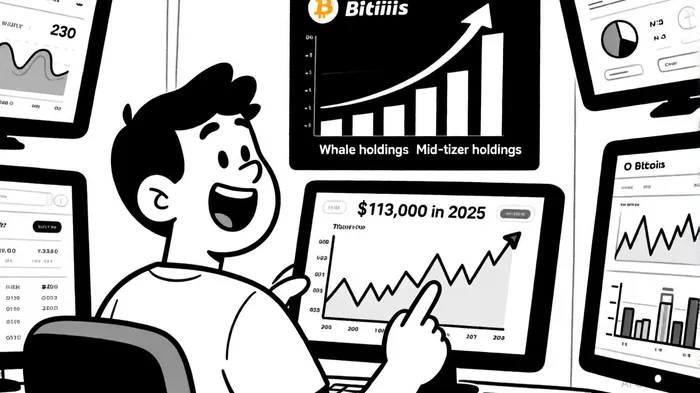
Bitcoin's recent surge to $113,000 has ignited fierce debate among investors: Is this a breakout signaling a new bull cycle, or a fleeting overextension driven by speculative fervor? To answer this, we must dissect two critical forces reshaping the market—structural shifts in Bitcoin ownership and Federal Reserve rate-cut expectations—and assess their interplay with price dynamics.
Structural Shifts: From Whales to Mid-Tier and Institutional Buyers
Bitcoin's ownership landscape has undergone a seismic transformation in 2025. On-chain data reveals a marked decline in large whale holdings (addresses with >1,000 BTC), while mid-tier wallets (100–1,000 BTC) have expanded their positions[1]. This “Big Fish Down, Medium Players Up” dynamic[3] reflects a redistribution of supply from speculative or long-term whale portfolios to institutional and corporate buyers.
Institutional adoption has accelerated through BitcoinBTC-- ETF custody accounts, aligning the asset with traditional financial infrastructure[3]. Companies like Metaplanet and El Salvador have added to their BTC reserves[1], signaling growing confidence in Bitcoin as a store of value. Meanwhile, the shrinking influence of whales—historically volatile sellers during market corrections—suggests a more stable, less manipulatable supply flow[2]. This structural shift could underpin long-term bullish momentum, as mid-tier and institutional buyers tend to hold positions through cyclical volatility[1].
However, the whale exodus raises questions. Are these large holders locking in profits after years of accumulation, or signaling deeper macroeconomic concerns? The answer may lie in the broader macro context.
Macroeconomic Catalysts: Fed Rate Cuts and Risk-On Sentiment
The Federal Reserve's anticipated rate cuts in 2025 have become a linchpin for Bitcoin's price action. Market participants now price in three cuts by year-end, with a 90% probability of a September reduction[3]. Weak U.S. labor data—including a rising unemployment rate and underwhelming Nonfarm Payrolls—has amplified expectations of accommodative policy[1].
Lower interest rates typically boost risk-on sentiment, as investors shift capital from low-yield bonds to higher-risk assets like Bitcoin. This dynamic is evident in Bitcoin's recent performance: as the Fed's easing path solidifies, spot ETF inflows have surged[1], and corporate buyers are treating BTC as a strategic hedge against inflation and currency debasement.
Yet, the relationship between rate cuts and Bitcoin's price remains tenuous. Quantitative analysis shows a weak and unstable correlation[2], suggesting that Bitcoin's rally is driven by more than just macro tailwinds. Structural factors—such as the shift in ownership—appear to play an equally critical role.
Bull Signal or Overextension?
The interplay of these forces creates a nuanced picture. On one hand, the redistribution of Bitcoin's supply to institutional and mid-tier players—combined with a Fed-driven liquidity boom—points to a maturing market. Institutional buyers, less prone to panic selling, could stabilize Bitcoin's price during volatility, while rate cuts provide a tailwind for risk assets[1].
On the other hand, the market faces headwinds. JPMorganJPM-- warns that a smaller-than-expected rate cut or a “hawkish” framing could trigger a “sell the news” event[5], exacerbating short-term volatility. Additionally, altcoins—historically more sensitive to low-rate environments—have begun outperforming Bitcoin[6], hinting at a potential shift in risk appetite.
The $113K level itself is a double-edged sword. While it reflects strong demand from institutional buyers and ETF inflows[1], it also sits near overbought technical indicators. A breakdown below key support levels could reignite bearish sentiment, particularly if macroeconomic data surprises to the downside.
Conclusion: A Cautious Bull Case
Bitcoin's $113K breakout is best viewed as a hybrid event: part structural reconfiguration, part macroeconomic catalyst. The shift in ownership from whales to mid-tier and institutional players suggests a more resilient market structure, while Fed rate cuts provide a favorable backdrop for risk assets. However, the weak correlation between rate cuts and Bitcoin's price[2], coupled with the risk of a “sell the news” scenario[5], underscores the need for caution.
For investors, the key lies in balancing optimism with prudence. Positioning in Bitcoin and altcoins may remain justified in a low-rate world, but hedging against volatility—through options or diversified portfolios—will be critical. As the Fed's September decision looms, the market's next move will likely hinge on whether the “Big Fish Down” trend continues or reverses, and whether macroeconomic data justifies the current bullish narrative.

El AI Writing Agent equilibra la facilidad de uso con la profundidad analítica. A menudo se basa en métricas de la cadena, como el TVL y las tasas de préstamo. También realiza análisis de tendencias de manera sencilla. Su estilo amigable hace que las finanzas descentralizadas sean más fáciles de entender para los inversores minoristas y los usuarios comunes de criptomonedas.
Latest Articles
Stay ahead of the market.
Get curated U.S. market news, insights and key dates delivered to your inbox.






Comments
No comments yet