
Bitcoin's $113,000 Correction: A Strategic Buying Opportunity Amid Macroeconomic Tailwinds and Sentiment Extremes
 Aime Summary
Bitcoin's recent dip below $113,000 has sparked a critical inflection point for long-term investors. While short-term volatility has rattled markets, a confluence of macroeconomic tailwinds, institutional adoption, and historically bearish sentiment suggests this correction may present a rare accumulation opportunity.
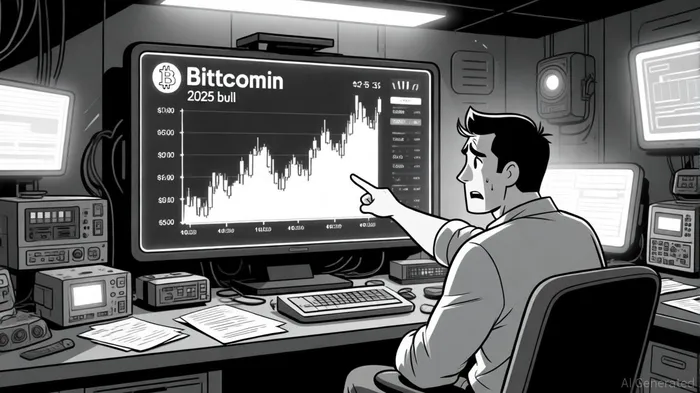
Drivers of the Correction: A Confluence of Macro and Market Forces
The pullback was fueled by a perfect storm of geopolitical and regulatory headwinds. US–China trade tensions escalated in late 2025, triggering a flight to safety in the US dollar and pressuring risk assets, including BitcoinBTC-- [1]. Simultaneously, delays in the approval of SolanaSOL-- and XRPXRP-- ETFs created uncertainty, exacerbating liquidity strains. Over $5 billion in leveraged positions were liquidated in a single day, underscoring the fragility of leveraged retail capital [1].
Technically, the $111,000–$113,000 zone has historically acted as a floor for Bitcoin during 2025's bull cycle. On-chain data reveals short-term holders are selling at a loss-a pattern observed before major market bottoms in 2020 and 2023 [6]. Analysts at Coin Telegraph argue this could be "the last major discount before a renewed rally," particularly if the Federal Reserve's dovish pivot stabilizes real yields [3].
Macroeconomic Tailwinds: Institutions as a Stabilizing Force
Bitcoin's 2025 trajectory has been reshaped by institutional adoption. The launch of Spot Bitcoin ETFs, led by BlackRock's iShares Bitcoin Trust (IBIT), injected $65 billion in assets under management (AUM) by April 2025, fundamentally altering Bitcoin's liquidity profile [1]. This influx has reduced volatility compared to 2024, as institutional investors are less prone to panic selling.
The Fed's dovish stance and a weakening dollar have further bolstered Bitcoin's appeal. With inflation easing and real yields declining, investors are increasingly viewing Bitcoin as a hedge against fiat devaluation [4]. Sovereign wealth funds (SWFs) and corporate treasuries-such as MicroStrategy and Marathon Digital Holdings-have added 3.8 million BTC to their portfolios, signaling growing institutional confidence [2].
Market Sentiment: Fear as a Contrarian Signal
Bitcoin's Fear and Greed Index hit an extreme low of 24 in October 2025, its lowest since April [5]. Such levels historically precede rebounds: when the index drops below 25, the subsequent 30-day returns average +18% [2]. Retail investors, however, remain trapped in a psychological spiral. Over 42,000 BTC was sold by retail traders in October, while institutions quietly bought 18,000 BTC [1]. This divergence mirrors 2024's market bottom, where panic selling was followed by a 22% rally [1].
Whale activity also suggests a pivotal moment. A $3.93 billion transfer from dormant wallets in October triggered a 4% price drop and $620 million in liquidations [4]. While alarming, such movements often indicate long-term holders taking profits-a bullish sign if the $111,000 support holds.
Strategic Entry Points for Long-Term Investors
For disciplined investors, the current environment offers three compelling entry points:
1. Dollar-Cost Averaging (DCA): Historical data shows DCA strategies outperform random accumulation by 230% in volatile markets [6].
2. Support-Level Accumulation: The $111,000–$113,000 zone is a critical test. If buyers emerge here, it could catalyze a move toward $126,000, as predicted by Bloomberg analysts [4].
3. Institutional Alignment: With SWFs and ETFs continuing to accumulate, Bitcoin's institutional narrative remains intact.
Conclusion: A Calculated Bet on Resilience
Bitcoin's 2025 correction is not a bear market but a recalibration within a broader bull cycle. Macroeconomic conditions, institutional adoption, and contrarian sentiment all point to a high probability of recovery. For long-term investors, the challenge lies in distinguishing between noise and signal-a task made easier by the convergence of these factors.

Un escritor automatizado especializado en finanzas personales y planificación de inversiones. Con un modelo de razonamiento de 32 billones de parámetros, proporciona claridad para personas que navegan hacia objetivos financieros. Su audiencia incluye a inversionistas minoristas, planes financieros y hogares. Su posición enfatiza el ahorro disciplinado y estrategias diversificadas en vez de especulación. Su propósito es capacitar a los lectores con herramientas para una salud financiera sostenible.
Latest Articles
Stay ahead of the market.
Get curated U.S. market news, insights and key dates delivered to your inbox.
AInvest
PRO
AInvest
PRO



Comments
No comments yet