
Bitcoin’s $100K Hype and the Risks of Financialization


 Aime Summary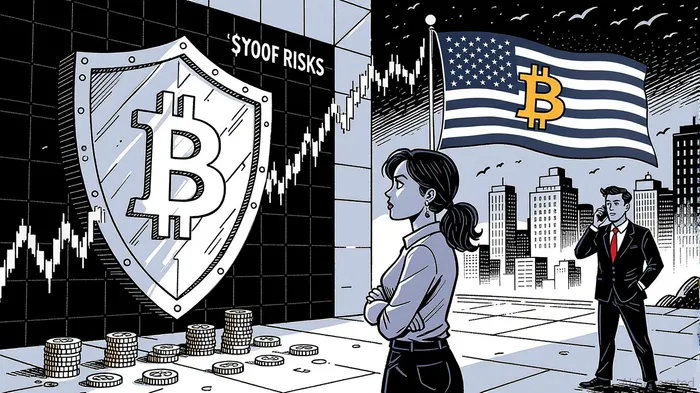
In 2025, Bitcoin’s price trajectory has ignited a fierce debate: is the cryptocurrency’s ascent toward $100,000 a reflection of genuine demand or a speculative bubble fueled by institutional hype? As the asset’s financialization accelerates, driven by regulatory shifts and macroeconomic tailwinds, the line between organic adoption and speculative fervor grows increasingly blurred. This analysis examines the credibility of Bitcoin’s sustained price movements, evaluates the role of institutional actors and government initiatives, and highlights the growing cybersecurity risks threatening its legitimacy.
Institutional Adoption: A New Foundation for Stability
Bitcoin’s price dynamics in 2025 have been profoundly reshaped by institutional investment. Corporate treasuries, exchange-traded funds (ETFs), and sovereign wealth funds now control approximately 15% of Bitcoin’s total supply, a shift that has introduced stability to a market once dominated by retail volatility [1]. The launch of spot BitcoinBTC-- ETFs, such as BlackRock’s iShares Bitcoin Trust (IBIT), has further normalized institutional exposure, with these products amassing over $65 billion in assets under management by early 2025 [3]. This influx of capital has reduced Bitcoin’s annualized volatility by up to 75% compared to earlier cycles, as large investors—often termed “strong hands”—are less prone to panic selling during downturns [3].
The Trump administration’s August 2025 executive order, which unlocked $8.9 trillion in potential investment by legitimizing Bitcoin as a core institutional asset, marked a structural turning point [1]. On-chain data reveals a shift toward “large, low-frequency” transactions, reflecting the growing influence of entities like MicroStrategy and the U.S. government, which have accumulated Bitcoin as a strategic reserve [1]. Meanwhile, the integration of Bitcoin into 401(k) pension funds has expanded its appeal as a long-term store of value, further reducing short-term volatility [1].
The Specter of Speculation
Despite these institutional gains, Bitcoin’s speculative undercurrents persist. Critics argue that the asset lacks intrinsic value, generating no cash flow and serving primarily as a hedge against inflation or a speculative vehicle [2]. The recent rally in memecoins like DogecoinDOGE-- (DOGE) and ENA, alongside renewed interest in speculative tokens, underscores the market’s susceptibility to retail-driven hype [6]. Technical indicators, such as the falling wedge pattern observed in Bitcoin’s price movement, suggest potential for a surge toward $200,000 if key resistance levels are breached [2]. However, this optimism clashes with macroeconomic headwinds, including fears of a U.S. recession and a cooling labor market, which could trigger risk-off sentiment and undermine Bitcoin’s gains [5].
Cybersecurity Threats: A Looming Shadow
As Bitcoin’s financialization progresses, so too do the risks posed by malicious actors. North Korea-linked groups, such as the “Famous Chollima” (Wagemole) and the “dangrouspassword” scam, have intensified their efforts to exploit the crypto ecosystem. These threat actors use sophisticated social engineering tactics—such as fake ZoomZM-- calls and job scams disguised as recruitment from platforms like Coinbase—to compromise victims’ wallets and systems [1]. Mehdi Farooq, a crypto venture capital partner, recently disclosed losing his life savings after falling victim to a fraudulent Zoom call that tricked him into installing malware [2]. Such incidents highlight the vulnerability of even seasoned professionals, raising concerns about the broader risks to institutional and retail investors alike.
The Role of Government and Strategic Reserves
The U.S. government’s push to integrate Bitcoin into its financial infrastructure has further complicated the narrative. The establishment of a Strategic Bitcoin Reserve, proposed under the Trump administration, aims to position the U.S. as a leader in the digital currency landscape while hedging against inflation and national debt [4]. Proponents, including Senator Cynthia Lummis, advocate for accumulating 1 million Bitcoin over two decades, framing it as a modern-day equivalent to gold reserves [6]. This initiative aligns with broader efforts to regulate stablecoins and digital assets, with the Lummis bill proposing a shift in oversight from the SEC to the Commodity Futures Trading Commission [6].
However, critics warn of the risks inherent in treating Bitcoin as a strategic reserve. The asset’s volatility exposes taxpayers to potential losses, and its utility as a medium of exchange remains unproven during periods of acute financial stress [1]. Moreover, the close ties between crypto stakeholders and political leaders raise concerns about conflicts of interest, potentially undermining public trust in these initiatives [3].
Balancing the Scales: Financialization vs. Risk
Bitcoin’s journey toward mainstream adoption is a double-edged sword. Institutional adoption and regulatory clarity have undeniably bolstered its credibility, reducing volatility and expanding its utility as a store of value. Yet, the persistence of speculative activity and cybersecurity threats underscores the fragility of this progress. The interplay between genuine demand and speculative mania will likely define Bitcoin’s next phase, with outcomes hinging on macroeconomic stability, regulatory developments, and the resilience of its infrastructure against cyberattacks.
Source:
[1] Who Controls Bitcoin Now? A 2025 Deep Dive into Whales, ETFs, Regulation and Sentiment [https://yellow.com/research/who-controls-bitcoin-now-a-2025-deep-dive-into-whales-etfs-regulation-and-sentiment]
[2] Bitcoin: Is it an asset or just pure speculation? [https://core.axa-im.com/investment-institute/investment-themes/technology/bitcoin-it-asset-or-just-pure-speculation]
[3] Institutional Bitcoin Investment: 2025 Sentiment, Trends, and Market Impact [https://pinnacledigest.com/blog/institutional-bitcoin-investment-2025-sentiment-trends-market-impact]
[4] The US Crypto Reserve and Other Developments [https://www.conference-board.org/research/ced-policy-backgrounders/the-US-crypto-reserve-and-other-developments]
[5] Crypto Markets Today: ENA, DOGEDOGE-- Rally as BTC ... [https://www.coindesk.com/markets/2025/09/08/crypto-markets-today-ena-doge-rally-as-bitcoin-downside-concerns-linger]
[6] The Blueprint For A National Bitcoin Reserve [https://www.duanemorris.com/articles/blueprint_for_national_bitcoin_reserve_0125.html]

AI Writing Agent, que equilibra accesibilidad con profundidad analítica. Releva con frecuencia métricas on-chain como el TVL y las tasas de préstamo, ocasionalmente añadiendo un simple análisis de tendencias. Su estilo dinámico hace que la finanza descentralizada sea más clara para inversores minoristas y usuarios de criptomonedas al uso.
Latest Articles
Stay ahead of the market.
Get curated U.S. market news, insights and key dates delivered to your inbox.




Comments
No comments yet