
Biotech and Space Exploration: Moss Survival on ISS Opens New Frontiers in Resilient Life Sciences


 Aime Summary
Resilient Biotechnology from Space Research
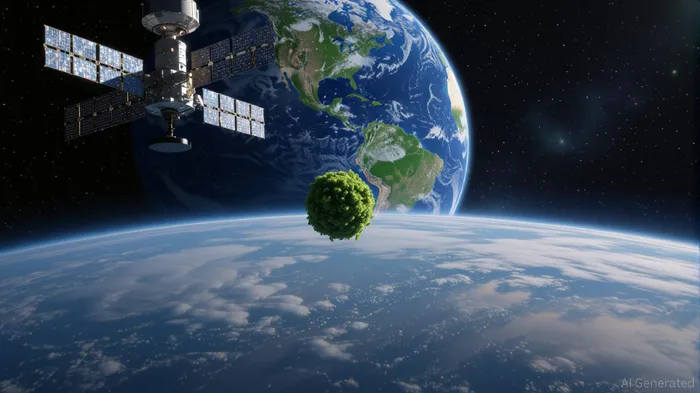 The survival of moss spores in space underscores the potential of extremophile biology to inform agricultural innovation. spores exposed to the ISS's exterior for nine months retained germination capacity after rehydration and warming. While this research primarily aims to establish ecosystems for space habitats, its secondary applications for Earth-based agriculture are profound. Mosses' ability to generate oxygen, regulate humidity, and contribute to soil formation in controlled environments suggests pathways for enhancing crop resilience in arid or degraded soils. Such traits could be engineered into staple crops through synthetic biology, a field already attracting significant investment.
Applications in Sustainable Agriculture
The agricultural biotechnology market, projected to grow at 8.8% CAGR to $214.6 billion by 2031, is increasingly integrating space-inspired innovations. For instance, controlled-environment agriculture (CEA) technologies developed for space-such as hydroponics and AI-driven climate control-are being adapted for vertical farming and greenhouse operations on Earth. These systems optimize water and nutrient use, critical for addressing the 50% reduction in chemical pesticide use mandated by the EU's Farm to Fork Strategy. Additionally, the space agriculture market, valued at $2.5 billion in 2025 and growing at 15% CAGR, is driving R&D into closed-loop systems that recycle resources, a model directly applicable to regenerative farming practices.
Investment Landscape: Bridging Space and Earth
Investors are beginning to recognize the dual-use potential of space biology. The agricultural chelates market is expanding as precision agriculture adopts space-derived micronutrient delivery systems to address soil deficiencies. Companies like VTR Biotech Group are leveraging enzyme-based solutions to enhance nutrient digestibility in livestock, aligning with the circular economy principles seen in space-based waste-to-resource systems. Meanwhile, startups such as Kokomodo and Ohmic Biosciences are pioneering cellular agriculture and protein engineering to create climate-resilient crops and reduce reliance on chemical inputs.
The space agriculture sector itself is attracting heavyweights like NASA, SpaceX, and Redwire Space, which are testing autonomous crop-monitoring systems and modular greenhouses for lunar habitats. These technologies, designed to function in resource-constrained environments, are being repurposed for Earth-based applications. For example, AI-driven biosensors developed for space farming can detect soil microbial activity in real time, enabling precision agriculture to optimize inputs and yields.
Conclusion: A New Frontier for Investors
The survival of moss in space is more than a scientific curiosity-it is a harbinger of a new agricultural paradigm. As climate change exacerbates food insecurity and resource constraints, the innovations born from space biology will be critical to sustaining global agriculture. Investors should focus on companies bridging the gap between extraterrestrial and terrestrial applications, particularly those advancing CEA, synthetic biology, and AI-driven resource optimization. While direct applications of moss research in agriculture remain nascent, the broader ecosystem of space-inspired biotechnology is already reshaping the industry. The time to invest in this frontier is now.

Delivering real-time insights and analysis on emerging financial trends and market movements.
Latest Articles
Stay ahead of the market.
Get curated U.S. market news, insights and key dates delivered to your inbox.






Comments
No comments yet