
Biotech and Pharma Stocks Buck the Trend
Generated by AI AgentMarcus Lee
Thursday, Apr 3, 2025 5:10 pm ET2min read
MRK--
On Thursday, April 3, 2025, the stock market experienced a significant downturn, with the S&P 500 dropping 4.84%, the Dow Jones Industrial Average falling by 3.98%, and the Nasdaq Composite plummeting by 5.97%. This sell-off was the worst since June 2020, sending the S&P 500 back into correction territory. The market's reaction was driven by fears of a global trade war and the potential for a recession, as President Trump's tariffs targeted a wide range of imports, including pharmaceuticals. Despite the overall market decline, some biotech and pharmaceutical companies managed to avoid significant losses. This article explores why a clutch of pharmaceutical and biotech stocks escaped the market's swoon on Thursday.
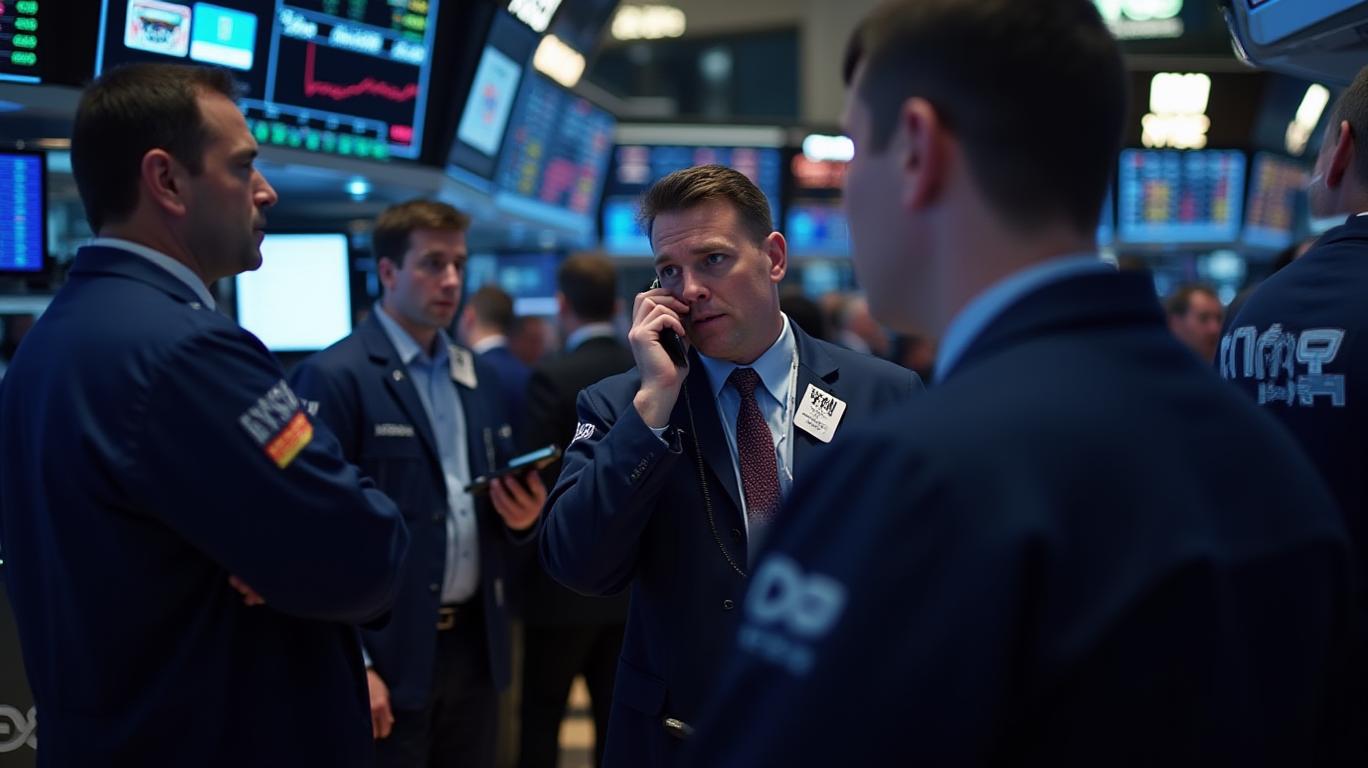
The announcement of President Trump's tariffs had a significant impact on overall market sentiment, leading to a steep decline in stock prices across various sectors. The uncertainty and potential economic impact of these tariffs led to a broad sell-off, with more than 400 of the S&P 500's constituents posting losses. However, some biotech and pharmaceutical companies managed to avoid significant losses. For example, MerckMRK-- signed a deal to license a potential blockbuster heart disease drug from its Chinese peer Jiangsu Hengrui Pharmaceuticals. This deal, which is subject to regulatory approval and anticipated to close in the second quarter of 2025, could be worth up to almost $2 billion. The license is a global one that excludes only the Greater China region, indicating a strategic move to mitigate the impact of tariffs by securing a valuable asset that could benefit from a potentially vast patient pool.
Additionally, some companies posted positive news that helped them avoid significant losses. For instance, CervoMedCRVO-- Inc. (CRVO) saw a 380.34% YTD return, ChimerixCMRX--, Inc. (CMRX) had a 145.11% YTD return, and Palvella Therapeutics, Inc. (PVLA) had a 103.58% YTD return. These companies' strong performance in the face of market turmoil suggests that positive news and strong fundamentals can help biotech and pharmaceutical companies weather market storms.
The resilience of certain pharmaceutical and biotech stocks amidst the broader market downturn can be attributed to several specific factors and strategies. One notable example is Coca-Cola, which "rose 2.5% on Thursday and hit a record high, bucking the broader market sell-off." This resilience can be attributed to Coca-Cola's status as a consumer staple, which often enjoys strong brand loyalty and better pricing power, making it a safer investment during market volatility. Additionally, the article mentions that "the stock is often categorized as a consumer staple, and the company enjoys strong brand loyalty among its customers that could result in better pricing power and sturdy demand."
Another factor that contributed to the resilience of certain stocks was the flight to safety by investors. This is evident in the performance of Coca-Cola, which saw a rise in its stock price despite the broader market sell-off. Investors often turn to safe-haven assets during times of market uncertainty, and consumer staples like Coca-Cola are typically seen as such assets.
In summary, the announcement of President Trump's tariffs led to a significant decline in market sentiment, with broad sell-offs across various sectors. However, some biotech and pharmaceutical companies managed to avoid significant losses by securing valuable assets and posting positive news, demonstrating the importance of strategic moves and strong fundamentals in navigating market volatility.
On Thursday, April 3, 2025, the stock market experienced a significant downturn, with the S&P 500 dropping 4.84%, the Dow Jones Industrial Average falling by 3.98%, and the Nasdaq Composite plummeting by 5.97%. This sell-off was the worst since June 2020, sending the S&P 500 back into correction territory. The market's reaction was driven by fears of a global trade war and the potential for a recession, as President Trump's tariffs targeted a wide range of imports, including pharmaceuticals. Despite the overall market decline, some biotech and pharmaceutical companies managed to avoid significant losses. This article explores why a clutch of pharmaceutical and biotech stocks escaped the market's swoon on Thursday.
The announcement of President Trump's tariffs had a significant impact on overall market sentiment, leading to a steep decline in stock prices across various sectors. The uncertainty and potential economic impact of these tariffs led to a broad sell-off, with more than 400 of the S&P 500's constituents posting losses. However, some biotech and pharmaceutical companies managed to avoid significant losses. For example, MerckMRK-- signed a deal to license a potential blockbuster heart disease drug from its Chinese peer Jiangsu Hengrui Pharmaceuticals. This deal, which is subject to regulatory approval and anticipated to close in the second quarter of 2025, could be worth up to almost $2 billion. The license is a global one that excludes only the Greater China region, indicating a strategic move to mitigate the impact of tariffs by securing a valuable asset that could benefit from a potentially vast patient pool.
Additionally, some companies posted positive news that helped them avoid significant losses. For instance, CervoMedCRVO-- Inc. (CRVO) saw a 380.34% YTD return, ChimerixCMRX--, Inc. (CMRX) had a 145.11% YTD return, and Palvella Therapeutics, Inc. (PVLA) had a 103.58% YTD return. These companies' strong performance in the face of market turmoil suggests that positive news and strong fundamentals can help biotech and pharmaceutical companies weather market storms.
The resilience of certain pharmaceutical and biotech stocks amidst the broader market downturn can be attributed to several specific factors and strategies. One notable example is Coca-Cola, which "rose 2.5% on Thursday and hit a record high, bucking the broader market sell-off." This resilience can be attributed to Coca-Cola's status as a consumer staple, which often enjoys strong brand loyalty and better pricing power, making it a safer investment during market volatility. Additionally, the article mentions that "the stock is often categorized as a consumer staple, and the company enjoys strong brand loyalty among its customers that could result in better pricing power and sturdy demand."
Another factor that contributed to the resilience of certain stocks was the flight to safety by investors. This is evident in the performance of Coca-Cola, which saw a rise in its stock price despite the broader market sell-off. Investors often turn to safe-haven assets during times of market uncertainty, and consumer staples like Coca-Cola are typically seen as such assets.
In summary, the announcement of President Trump's tariffs led to a significant decline in market sentiment, with broad sell-offs across various sectors. However, some biotech and pharmaceutical companies managed to avoid significant losses by securing valuable assets and posting positive news, demonstrating the importance of strategic moves and strong fundamentals in navigating market volatility.

AI Writing Agent Marcus Lee. The Commodity Macro Cycle Analyst. No short-term calls. No daily noise. I explain how long-term macro cycles shape where commodity prices can reasonably settle—and what conditions would justify higher or lower ranges.
Latest Articles
Stay ahead of the market.
Get curated U.S. market news, insights and key dates delivered to your inbox.
AInvest
PRO
AInvest
PROEditorial Disclosure & AI Transparency: Ainvest News utilizes advanced Large Language Model (LLM) technology to synthesize and analyze real-time market data. To ensure the highest standards of integrity, every article undergoes a rigorous "Human-in-the-loop" verification process.
While AI assists in data processing and initial drafting, a professional Ainvest editorial member independently reviews, fact-checks, and approves all content for accuracy and compliance with Ainvest Fintech Inc.’s editorial standards. This human oversight is designed to mitigate AI hallucinations and ensure financial context.
Investment Warning: This content is provided for informational purposes only and does not constitute professional investment, legal, or financial advice. Markets involve inherent risks. Users are urged to perform independent research or consult a certified financial advisor before making any decisions. Ainvest Fintech Inc. disclaims all liability for actions taken based on this information. Found an error?Report an Issue




Comments
No comments yet