
Biotech Breakthroughs: Assessing Novartis' $1.4B Pacibekitug Bet


 Aime Summary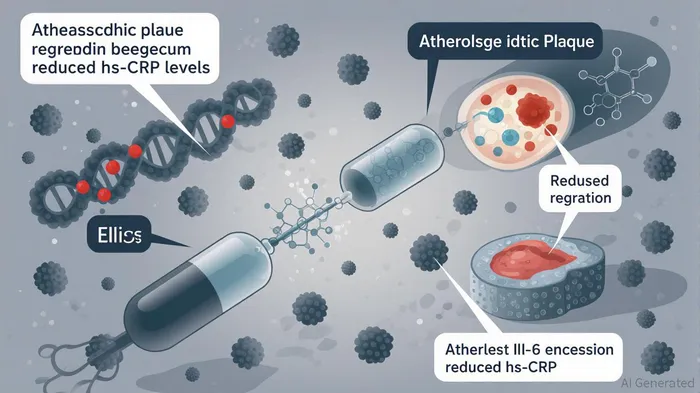
In the ever-evolving landscape of pharmaceutical innovation, Novartis' $1.4 billion acquisition of Tourmaline BioTRML-- in late 2025 stands as a bold bet on the future of cardiovascular care. At the heart of this deal lies pacibekitug, a long-acting anti-IL-6 monoclonal antibody that has demonstrated unprecedented efficacy in Phase 2 trials for reducing systemic inflammation—a key driver of atherosclerotic cardiovascular disease (ASCVD). This acquisition is not just a transaction; it is a strategic signal of how Big Pharma is redefining its R&D playbook to prioritize late-stage, high-impact assets in an era of patent cliffs and therapeutic stagnation.
Strategic R&D Positioning: From Me-Too to First-in-Class
Novartis' move reflects a broader industry shift toward innovation-driven consolidation. For decades, pharma giants relied on incremental improvements to existing therapies—think statins, beta-blockers, or even newer GLP-1 agonists. But as these markets mature and face generic competition, the focus has pivoted to first-in-class mechanisms that address unmet needs. Pacibekitug, with its IL-6 inhibition and quarterly dosing, exemplifies this shift.
The drug's Phase 2 TRANQUILITY trial results are staggering: an 86% reduction in high-sensitivity C-reactive protein (hs-CRP) in the 50 mg quarterly arm, outperforming even Novo Nordisk's ziltivekimab, which requires monthly injections. This dosing flexibility is a game-changer for patient adherence and commercial viability. By acquiring Tourmaline, NovartisNVS-- is not just securing a drug—it's capturing a differentiated mechanism that could redefine ASCVD management.
Risk-Reward Balance: A High-Stakes Gamble?
The risk-reward calculus for pacibekitug hinges on three pillars: clinical validation, regulatory hurdles, and competitive positioning.
- Clinical Validation: Pacibekitug's Phase 2 data are robust, but Phase 3 trials will determine its true potential. The drug must prove it can reduce major adverse cardiovascular events (MACEs) in a large, diverse patient population. If successful, it could become a blockbuster in a $274 billion anti-inflammatory drugs market by 2034.
- Regulatory Hurdles: The FDA and EMA will demand long-term cardiovascular outcomes data. Novartis' experience with Entresto and Leqvio (its PCSK9 inhibitor) positions it well to navigate these challenges, but delays or safety concerns could erode value.
- Competitive Positioning: While IL-6 inhibitors like tocilizumab exist, none are tailored for ASCVD. Pacibekitug's quarterly dosing and superior hs-CRP reductions give it a first-mover advantage, but it will face scrutiny from emerging gene-editing therapies (e.g., Verve Therapeutics' VERVE-102) and RNA-based approaches.
Industry Trends: The New Era of Pharma M&A
Novartis' Tourmaline acquisition is part of a tectonic shift in pharma M&A. In 2025, deals like Eli Lilly's $1.3 billion purchase of Verve Therapeutics (for gene-editing PCSK9 inhibition) and Novartis' $3.1 billion Anthos Therapeutics buy (for Factor XI inhibitor abelacimab) highlight a pattern: late-stage assets with clear clinical pathways are now the gold standard.
This trend is driven by three factors:
- De-risking pipelines: Upfront payments for Phase 2/3 assets reduce the R&D gamble.
- Portfolio longevity: Acquiring therapies with 10–15 years of patent life mitigates revenue erosion from expiring drugs.
- Partnership ecosystems: Collaborations (e.g., Novartis and ProFound Therapeutics) enable access to cutting-edge platforms like proteome-based drug discovery.
Investment Implications: Where to Place Your Chips?
For investors, the key takeaway is pipeline visibility. Biotech and pharma stocks with late-stage assets in high-unmet-need areas (e.g., inflammation, gene editing, anticoagulation) are poised for outperformance. Novartis' $1.4 billion bet on pacibekitug is a case study in this thesis.
- Short-term: The acquisition's $1.4 billion price tag is steep, but it's justified by pacibekitug's Phase 2 data and Novartis' ability to scale Phase 3 trials.
- Long-term: If pacibekitug secures FDA approval and captures 10–15% of the $15 billion ASCVD market, it could generate $1.5–2.5 billion in annual revenue by 2030.
- Broader sector play: Look for companies with partnership potential and computational drug discovery platforms (e.g., ProFound Therapeutics, Argenx).
Conclusion: A New Dawn for Cardiovascular Innovation
Novartis' acquisition of Tourmaline Bio is more than a strategic move—it's a blueprint for the future of pharma innovation. By targeting IL-6 inhibition in atherogenesis, Novartis is betting on a mechanism that could transform ASCVD from a chronic, managed condition to a treatable, curable one. For investors, this signals a shift toward high-impact, precision-driven therapies that align with the industry's need for sustainable growth.
The question is no longer whether biotech and pharma can deliver—it's whether they can execute. And in that arena, Novartis has just placed its flag on the hill.

Stay ahead of the market.
Get curated U.S. market news, insights and key dates delivered to your inbox.
AInvest
PRO
AInvest
PRO



Comments
No comments yet