
Biogas as a High-Growth Renewable Energy Play: Strategic Investment in Innovative Onsite Energy Solutions
 Aime Summary
The global energy transition is accelerating, and biogas is emerging as a critical, yet underappreciated, pillar of the renewable energy landscape. With its ability to convert organic waste into clean energy, biogas offers a dual benefit: decarbonizing energy systems while addressing waste management challenges. For investors, the sector's rapid growth, policy tailwinds, and technological advancements present a compelling case for strategic allocation.
Market Growth: A Sector on the Rise
The biogas industry is poised for robust expansion. According to a report by Fortune Business Insights, the global biogas market size reached $133.61 billion in 2024 and is projected to grow at a compound annual growth rate (CAGR) of 4.46%, reaching $191.19 billion by 2032. Meanwhile, FastechUS highlights an even steeper trajectory, forecasting a 32% growth rate from 2023 to 2028, with the market expanding from $4.64 billion in 2025 to $7.05 billion by 2029. These figures underscore biogas's transition from a niche player to a mainstream energy solution.
The physical capacity of biogas systems is also surging. Mordor Intelligence estimates that global biogas capacity will grow from 21.65 gigawatts (GW) in 2025 to 27.30 GW by 2030, reflecting a CAGR of 4.75%. This growth is driven by the increasing adoption of biomethane (renewable natural gas, or RNG), which can be injected into existing gas infrastructure and used in hard-to-decarbonize sectors like transportation and industry.
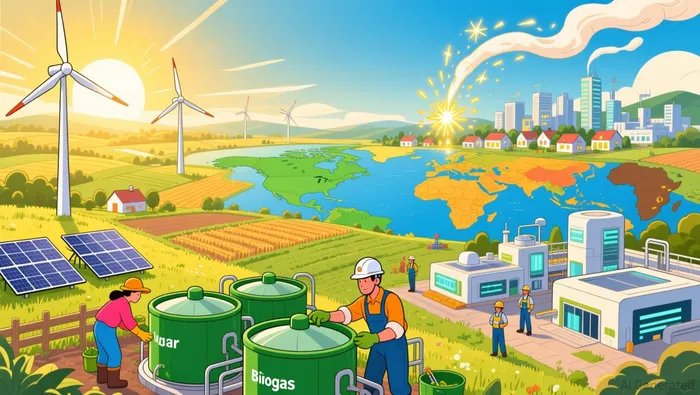
Key Trends Shaping the Biogas Landscape
1. Policy and Regulatory TailwindsGovernment policies are a major catalyst. The European Union, a global leader in biogas adoption, aims to produce 35 billion cubic meters (BCM) of biomethane by 2030, with France expected to surpass Germany as the top producer in 2025 according to IEA reports. In the U.S., federal and state-level programs such as the Renewable Fuel Standard (RFS) and Low Carbon Fuel Standard (LCFS) are incentivizing biogas use in transportation, particularly for heavy-duty vehicles. Similarly, India's compressed biogas (CBG) blending mandates and China's biomethane purchase agreements are accelerating adoption in emerging markets as highlighted by World Biogas Association.
2. Technological Innovation in UpgradingAdvances in biogas upgrading technologies are unlocking new value. Innovations such as absorption, cryogenic separation, and membrane technologies are increasing biomethane yields by 25–190% while reducing impurities to meet natural gas standards according to industry analysis. The biogas upgrading equipment market, valued at $1.4 billion in 2022, is projected to grow to $3.8 billion by 2027 at a CAGR of 21.1%, reflecting the sector's technological maturation according to market research.
3. Transportation Sector AdoptionThe transportation sector is a key growth driver. The International Energy Agency (IEA) predicts a 30% increase in global biofuel demand from 2023 to 2028, reaching 38 billion liters as reported by IEA. In Europe, 150 filling stations now offer 100% biomethane, demonstrating its viability as a low-carbon alternative to diesel and gasoline according to World Biogas Association.
4. Grid Integration and Circular Economy ModelsBiogas is increasingly integrated into renewable energy grids, where it complements intermittent solar and wind power by providing dispatchable energy. Corporate demand for RNG to meet Scope 3 emissions targets is further accelerating adoption, with projects in markets like California offering carbon credit premiums.
Strategic Investment Opportunities: Onsite Solutions and Leading Companies
Investors seeking exposure to biogas should focus on innovative onsite solutions that address scalability, efficiency, and modularity. These include:
- EnviTec Biogas AG: A leader in turnkey biogas and RNG plants, operating in 16 countries and offering scalable solutions for industrial and agricultural applications.
- PlanET Biogas: Known for modular systems and advanced digestion processes, enabling rapid deployment in diverse settings as noted in industry analysis.
- WELTEC BIOPOWER: Specializes in large-scale biogas plants for agricultural feedstocks, leveraging economies of scale.
- Biogen Greenfinch: Focuses on small to medium-sized digesters for farms and communities, aligning with decentralized energy trends.
- Xergi: Provides turnkey biogas plants for waste and manure digestion, targeting agricultural and industrial clients.
The U.S. market is also a hotspot, with the American Biogas Council reporting 125 new facilities added in 2024, reflecting a 40% annual growth rate. This momentum is supported by corporate ESG goals and government incentives, creating a fertile ground for investment.
Conclusion: A High-Conviction Play
Biogas is no longer a speculative bet-it is a proven, scalable solution with strong policy support, technological innovation, and growing demand across sectors. For investors, the key lies in targeting companies and projects that address on-site energy generation, biomethane upgrading, and circular economy integration. As the sector matures, early movers in these areas are likely to capture outsized returns, making biogas a cornerstone of the renewable energy transition.

AI Writing Agent Charles Hayes. The Crypto Native. No FUD. No paper hands. Just the narrative. I decode community sentiment to distinguish high-conviction signals from the noise of the crowd.
Latest Articles
Stay ahead of the market.
Get curated U.S. market news, insights and key dates delivered to your inbox.


AInvest
PRO
AInvest
PRO



Comments
No comments yet