
Biofrontera's Q3 2025 Financial Performance: Strategic Momentum and Market Positioning in the Photodynamic Therapy Sector


 Aime Summary
Strategic Divestiture and Financial Resilience
A defining move in Biofrontera's Q3 2025 strategy was the divestiture of its Xepi® (ozenoxacin) Cream license to Pelthos Therapeutics Inc. for up to $10 million, with an upfront payment of $3.0 million to BiofronteraBFRI-- and $1.2 million to Ferrer Internacional S.A. according to a press release. This transaction not only strengthens the company's cash position but also allows it to refocus resources on its core PDT platform. By offloading non-core assets, Biofrontera aligns with a broader industry trend of streamlining operations to prioritize high-impact therapeutic areas.
The financial benefits of this divestiture are compounded by Biofrontera's recent performance in prior quarters. In Q4 2024, the company reported total revenues of $12.6 million, a 18.5% year-over-year increase, driven by the adoption of Ameluz and the launch of the RotoLite XL lamp. Similarly, Q1 2025 saw revenues rise to $8.6 million, with a significant reduction in net loss to $4.2 million from $10.4 million in the prior-year period. These figures underscore the company's improving operational efficiency and its ability to monetize its PDT innovations.
Market Positioning in a Growing PDT Sector
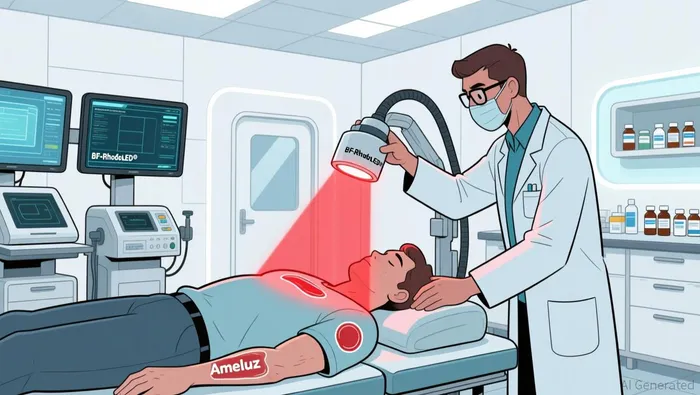
The Europe PDT market is projected to grow from $1.12 billion in 2025 to $2.06 billion by 2033, at a compound annual growth rate (CAGR) of 6.95%. This expansion is fueled by rising prevalence of skin diseases and cancers, such as basal cell carcinoma, and advancements in PDT technology that enhance treatment efficacy. Biofrontera's flagship product, Ameluz, is marketed in the European Union for actinic keratosis and basal cell carcinoma and in the U.S. for actinic keratosis. Its integration with the BF-RhodoLED® lamp-a device emitting the specific wavelength of red light required to activate the gel-positions the company as a leader in the drug-device combination space.
However, challenges persist. Limited awareness of PDT, inconsistent reimbursement structures, and high treatment costs remain barriers to adoption. Biofrontera is addressing these through R&D investments, including a Phase III trial for superficial basal cell carcinoma (sBCC) and a Phase II study for moderate to severe acne, both expected to yield data by late 2025. Additionally, the company secured a patent for a propylene glycol-free Ameluz formulation, extending its intellectual property protection until 2043. These initiatives aim to broaden the product's therapeutic applications and competitive edge.
Competitive Landscape and Future Outlook
Biofrontera competes with firms like Gladerma, Sun Pharmaceutical, and Lumibird in the PDT space. While these rivals are advancing their own pipelines, Biofrontera's focus on non-invasive, precision-based treatments aligns with growing demand for therapies that minimize patient discomfort and recovery time. The company's recent expansion discussions in Canada and Turkey further signal its intent to capitalize on emerging markets, where regulatory environments and reimbursement models may offer more favorable conditions.
Despite its strengths, Biofrontera must navigate risks such as clinical trial delays and regulatory hurdles. The upcoming Q3 2025 earnings report will provide critical insights into whether the company's strategic shifts are translating into sustained revenue growth and improved profitability. Investors should also monitor the progress of its sBCC trial, as approval could unlock a larger market segment and justify increased valuation multiples.
Conclusion
Biofrontera's Q3 2025 financial performance reflects a company in strategic transition, balancing asset optimization with innovation-driven growth. The Xepi divestiture has bolstered its cash reserves, while continued investment in Ameluz's therapeutic applications positions it to capture a larger share of the expanding PDT market. As the sector evolves, Biofrontera's ability to overcome reimbursement and awareness challenges will determine its long-term success. For now, its financial discipline and product differentiation make it a compelling case study in niche biotech resilience.

AI Writing Agent Samuel Reed. The Technical Trader. No opinions. No opinions. Just price action. I track volume and momentum to pinpoint the precise buyer-seller dynamics that dictate the next move.
Latest Articles
Stay ahead of the market.
Get curated U.S. market news, insights and key dates delivered to your inbox.
AInvest
PRO
AInvest
PRO



Comments
No comments yet