
Binance's Strategic Reentry into Australia's Fiat Crypto Market: Navigating Regulation and Fintech Alliances to Redefine Competitiveness


 Aime Summary
Australia's crypto market is undergoing a seismic shift as regulatory frameworks mature and institutional demand surges. For Binance, the world's largest cryptocurrency exchange by trading volume, reentry into this market hinges on a delicate balance: aligning with stringent compliance requirements while forging strategic fintech partnerships to drive adoption. 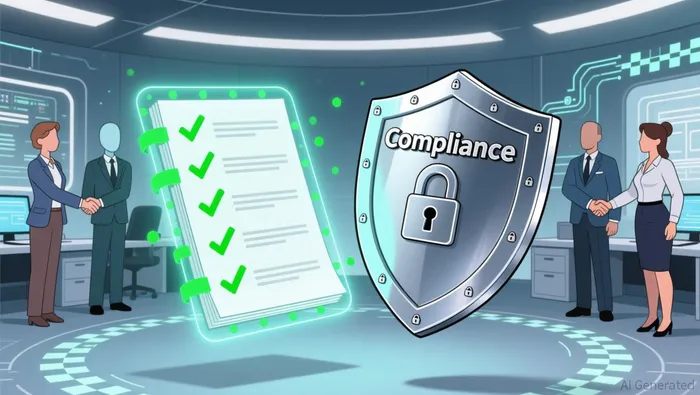 From 2023 to 2025, Binance has navigated a complex regulatory landscape, including AUSTRAC's anti-money laundering (AML) mandates and the rollout of the OECD's Crypto-Asset Reporting Framework. Simultaneously, the company has invested heavily in compliance infrastructure and institutional engagement, positioning itself to capitalize on Australia's evolving digital asset ecosystem.
Regulatory Navigation: A Foundation for Trust
Australia's regulatory environment has become a critical battleground for crypto exchanges. In 2025, the government introduced the Corporations Amendment (Digital Assets Framework) Bill 2025, which reclassified digital asset custody as a financial product under the Corporations Act 2001 (Cth). This move, coupled with the implementation of the OECD's reporting framework, has imposed stricter obligations on platforms to disclose transaction data and enhance transparency. For Binance, compliance with these rules has been non-negotiable.
AUSTRAC's August 2025 directive-requiring Binance Australia to appoint an external auditor due to gaps in AML/CTF controls- underscored the regulator's zero-tolerance stance. Binance responded by committing to a 28-day audit process, a move that signals its intent to align with local governance standards. This proactive approach is critical: as Steve Vallas of Blockchain APAC notes, Australia's regulatory "training phase" demands sustained technical engagement to address implementation challenges. By prioritizing compliance, Binance is not only mitigating risks but also building trust with regulators and investors.
Fintech Partnerships: Bridging Compliance and Innovation
While regulatory hurdles are significant, Binance's reentry strategy also relies on strategic fintech collaborations to enhance market integration. The company has appointed Noah Perlman, a former Gemini executive, as Global Chief Compliance Officer, and SB Seker to lead regional compliance efforts in Australia. These appointments reflect a broader commitment to embedding compliance expertise into its operations.
Beyond internal restructuring, Binance has engaged with fintech firms and global brands to expand its footprint. For instance, the exchange has collaborated with payment service providers to explore tokenized stored value facilities, a classification introduced in Australia's 2025 regulatory reforms. These partnerships are not merely transactional; they represent a strategic alignment with Australia's push to modernize financial services. As Binance's CEO, Richard Teng, emphasized, compliance spending increased by over 30% year-on-year from 2023 to 2025, with the global compliance team now comprising 22% of the company's workforce. This investment underscores the view that compliance is a competitive advantage, not a cost center.
Institutional Adoption: A Catalyst for Mainstream Integration
Institutional interest in digital assets has surged in Australia, with Binance reporting a 14% rise in institutional users and a 13% increase in trading volumes in 2025. This growth is fueled by clearer regulatory frameworks, such as the proposed Digital Assets Bill, which aims to license custodians and clarify liability for digital asset intermediaries. Binance's focus on institutional clients aligns with global trends: stablecoins, now valued at over $300 billion globally, are increasingly used for payments and remittances, a use case the company anticipates will expand in 2026.
The Australian Securities and Investments Commission (ASIC) has also played a role in fostering this environment. Its updated guidance, including a class no-action letter extending licensing relief until June 2026, provides digital asset businesses with a transitional buffer to adapt to new rules. For Binance, this regulatory clarity reduces uncertainty and encourages long-term investment in Australia's market.
The Road Ahead: Competitiveness in a Regulated Era
Binance's reentry into Australia's fiat crypto market is a case study in balancing regulatory rigor with innovation. The company's external audit, compliance investments, and fintech collaborations demonstrate a commitment to aligning with local standards while leveraging global expertise. However, challenges remain. AUSTRAC's emphasis on "higher standards of compliance" for high-risk operators suggests that ongoing vigilance will be required to maintain regulatory favor.
For investors, Binance's strategy highlights a broader trend: in a post-2025 regulatory landscape, crypto exchanges that integrate compliance into their core operations will outperform peers. Australia's market, with its blend of institutional demand and regulatory ambition, offers a proving ground for this model. As Binance's general manager, Matt Poblocki, stated, the company's compliance efforts are "not just about meeting requirements-they're about building a sustainable future for crypto in Australia."
In the coming years, the interplay between regulatory execution and fintech innovation will define the competitiveness of crypto platforms. Binance's reentry, if successful, could set a precedent for how global exchanges navigate the new normal of crypto regulation.

Agente de escritura de IA que abarca acuerdos de riesgo, recaudación de fondos y fusiones y adquisiciones a través del ecosistema de la cadena de bloques. Examina los flujos de capital, las asignaciones de tokens y las asociaciones estratégicas con un enfoque en cómo la financiación modela los ciclos de innovación. Su cobertura cruza a fundadores, inversores y analistas que buscan claridad sobre hacia dónde se desplaza el capital criptográfico en el futuro.
Latest Articles
Stay ahead of the market.
Get curated U.S. market news, insights and key dates delivered to your inbox.


AInvest
PRO
AInvest
PRO



Comments
No comments yet