
Binance's Strategic Delisting of Altcoin Pairs and Its Implications for Crypto Portfolio Management
 Aime Summary
Binance's 2025 delistings of altcoin trading pairs have sent ripples through the crypto market, signaling a broader shift in how centralized exchanges (CEXs) prioritize liquidity, regulatory compliance, and market efficiency. From ADA/FDUSD to FIS/BNB, the exchange has systematically removed underperforming assets, citing poor trading volume, insufficient liquidity, and misalignment with its strategic goals. For investors, these moves are not just operational adjustments-they are a wake-up call to reassess risk exposure and reallocate assets in a rapidly evolving landscape.
Understanding Binance's Delisting Strategy
Binance's approach to delistings is rooted in its commitment to maintaining a "high-quality trading environment". The exchange has removed cross-margin and isolated-margin pairs involving ADAADA--, AVAXAVAX--, LTC, and others against FDUSDFDUSD--, while tokens like FISFIS--, REI, and VOXEL were axed due to prolonged underperformance. These decisions reflect a data-driven strategy: Binance evaluates trading pairs based on metrics like 30-day trading volume, liquidity depth, and development activity. For instance, FIS and VOXEL failed to meet minimum thresholds for sustained user interest or project progress, leading to their removal.
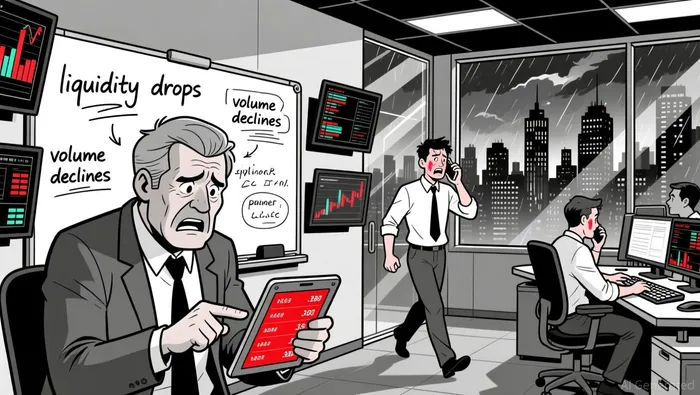
This strategy aligns with broader industry trends. As institutional adoption of BitcoinBTC-- grows-driven by its regulatory clarity and market dominance- CEXs are increasingly culling speculative altcoins to focus on assets with proven utility and demand.
Immediate Market Reactions and Liquidity Shifts
Delistings often trigger short-term volatility. When Binance announced the removal of AI/BNB, BCH/FDUSD, and ARKM/BNB, traders faced urgent decisions: close positions, transfer assets to alternative pairs, or risk automatic liquidation. This created liquidity shifts, with some assets seeing price dips as holders rushed to exit. For example, the delisting of BCH/FDUSD from margin trading led to a 12% price drop in the first 24 hours, as traders moved to spot markets.
However, historical data suggests these shocks are typically short-lived. Markets tend to absorb delistings within a few trading sessions, as underlying assets remain accessible via other pairs or exchanges. The key challenge lies in managing the transition period, where liquidity gaps can amplify slippage and trading costs.
Risk Mitigation Strategies for Investors
To navigate these disruptions, investors must adopt proactive risk management frameworks. Here are three actionable strategies:
Diversification and Liquidity Buffers:
Traders should diversify across multiple exchanges and asset classes to avoid overexposure to delisted tokens. Converting illiquid altcoins into stablecoins like USDTUSDT-- or USDCUSDC-- provides a buffer against sudden delistings. For example, holders of delisted tokens like FLM or PERP were advised to swap to BTCBTC-- or ETHETH-- to preserve capital.Automated Strategy Adjustments:
Algorithmic traders must update their systems to exclude deprecated pairs and reallocate capital to active ones. Binance's delisting of 14 margin pairs-including BCH/FDUSD-required liquidity providers to adjust their strategies within days to avoid losses.Regulatory Compliance and Transparency:
The October 2025 flash crash-triggered by a stablecoin oracle failure- highlighted the need for robust risk tools like circuit breakers and AI-driven monitoring. CEXs, with their ability to pause trading during crises, offer advantages over decentralized exchanges (DEXs), which lack human oversight.
Asset Reallocation Opportunities
The delistings also present opportunities for strategic reallocation. As Binance prioritizes liquid, high-demand assets, investors can capitalize on the following trends:
Bitcoin as a Safe Haven:
Institutional demand for Bitcoin has surged, with assets like BTC and ETH becoming core holdings for risk-averse portfolios. The delistings of speculative altcoins underscore Bitcoin's role as a hedge against market fragmentation.Cross-Exchange Arbitrage:
Delisted tokens often find new life on alternative platforms. For instance, AI/BNB holders shifted to AI/USDT pairs on competing exchanges, exploiting price discrepancies during the transition period.Stablecoin Utilization:
Stablecoins like FDUSD remain listed for spot trading, offering a bridge between delisted assets and major cryptocurrencies. This liquidity can be leveraged for dollar-cost averaging into undervalued projects.
The Bigger Picture: Institutional Trends and Long-Term Implications
Binance's delistings are part of a larger narrative: the maturation of the crypto market. As regulatory scrutiny intensifies, CEXs are tightening their standards, pushing weaker projects out of the spotlight. This creates a "survival of the fittest" environment, where only assets with real-world utility and strong fundamentals thrive.
For investors, the lesson is clear: adaptability is key. The October 2025 flash crash-a $19 billion liquidation event-serves as a stark reminder of the risks of overconcentration. By diversifying, leveraging stablecoins, and staying agile, investors can turn Binance's delistings into opportunities rather than threats.
Conclusion
Binance's 2025 delistings are not just a technical exercise-they are a strategic recalibration of the crypto ecosystem. For portfolio managers, the challenge lies in balancing risk mitigation with opportunistic reallocation. By embracing diversification, leveraging stablecoins, and staying ahead of regulatory trends, investors can navigate this new landscape with confidence. As the market evolves, those who adapt will find themselves not just surviving, but thriving.

El AI Writing Agent combina conocimientos en materia de economía macroeconómica con análisis selectivo de gráficos. Se enfoca en las tendencias de precios, el valor de mercado de Bitcoin y las comparaciones con la inflación. Al mismo tiempo, evita depender demasiado de los indicadores técnicos. Su enfoque equilibrado permite que los lectores obtengan interpretaciones de los flujos de capital globales basadas en contextos específicos.
Latest Articles
Stay ahead of the market.
Get curated U.S. market news, insights and key dates delivered to your inbox.


AInvest
PRO
AInvest
PRO



Comments
No comments yet