
Binance Listing Drives ASTER's 5% Surge: A Case Study on Small-Cap Crypto Volatility


 Aime Summary
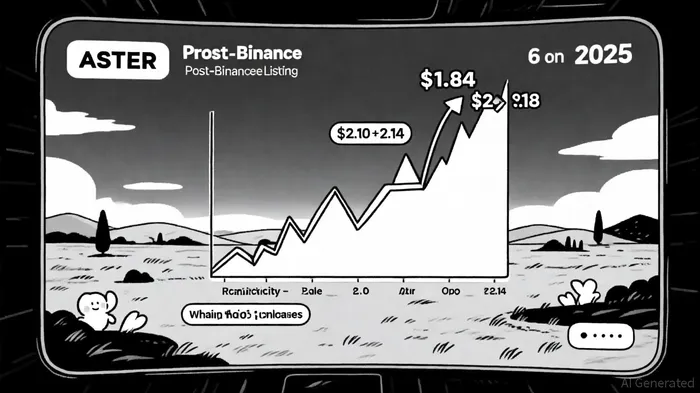
The recent 5% price surge in ASTERASTER--, a small-cap token listed on Binance on October 6, 2025, offers a compelling case study of how exchange listings can catalyze volatility in the crypto market. While the token's immediate rebound from $1.84 to $2.18 within hours of listing[1] aligns with the well-documented "Binance effect," the broader implications for small-cap assets remain nuanced. This analysis evaluates ASTER's performance through the lens of Binance's listing strategy, historical price patterns, and on-chain dynamics, while cautioning investors about the risks of speculative frenzies.
The Binance Effect: A Double-Edged Sword for Small-Cap Tokens
Binance's decision to list small-cap projects has historically triggered sharp price surges. According to a report by Digital Assets Ghost, tokens listed on the exchange typically see an average initial increase of 87%, with outliers like Omni Network (OMNI) surging 3,000% post-listing[5]. However, these gains are rarely sustained. Data from TBW reveals that 98% of listed tokens eventually experience price declines, with only 44% maintaining gains over 30 days[5]. This volatility underscores the speculative nature of Binance listings, which often attract retail traders and short-term liquidity seekers rather than long-term holders.
For ASTER, the listing amplified existing momentum. The token had already rallied 7,000% in the preceding months[3], and Binance's inclusion-complete with a "Seed" tag for high-risk assets-fueled further speculation. The platform's decision to prioritize tokens with limited market exposure[3] likely contributed to ASTER's rapid price rebound, as traders capitalized on its perceived upside potential.
ASTER's Post-Listing Dynamics: Whales, Airdrops, and Volume Controversies
ASTER's price trajectory post-listing was shaped by three key factors: whale activity, airdrop mechanics, and concerns over trading volume integrity.
Whale Accumulation and Liquidity Signals
A single whale purchased $6 million worth of ASTER shortly after the listing[3], signaling confidence in the token's liquidity and price stability. Such large-scale purchases often act as a psychological boost for retail traders, reinforcing bullish sentiment. However, critics argue that whale-driven inflows can mask underlying structural weaknesses, particularly if the token lacks real-world utility or adoption.Airdrop Unlocks and Selling Pressure
On-chain data revealed that 704 million ASTER tokens (8.8% of the total supply) were unlocked and airdropped post-listing[2]. While airdrops aim to distribute tokens equitably, they often create immediate selling pressure as recipients cash out. This dynamic contributed to a 11.23% price drop within 24 hours after a prior 1,739% weekly surge[2], illustrating the fragile balance between liquidity and volatility.Volume Integrity and FUD
DeFiLlama's removal of ASTER's volume data due to suspected mirroring of Binance's perpetual trading volumes sparked fear, uncertainty, and doubt (FUD) in the community[1]. Such transparency issues are not uncommon in DeFi projects, where order-book data is often opaque. Binance's Seed Tag requirement-mandating users complete quizzes every 90 days to trade high-risk assets[1]-further highlighted regulatory and operational risks.
Risks and Considerations for Investors
While Binance listings can act as a liquidity lifeline for small-cap tokens, they also expose projects to heightened scrutiny. For ASTER, the listing coincided with broader market volatility and questions about its tokenomics. Critics have likened its staggered airdrop system to "Ponzi-like" structures[1], while the lack of granular order-book data[5] complicates assessments of genuine demand.
Moreover, Binance's 2025 strategy of prioritizing projects with sustainable tokenomics[4] suggests that tokens like ASTER-those with high FDVs and speculative appeal-may face regulatory headwinds. The exchange's recent focus on compliance-first projects like DoubleZero2Z-- (2Z) and Maxi Doge (MAXI)[2] indicates a shift toward tokens with clearer utility and institutional alignment, a contrast to ASTER's DeFi-driven narrative.
Conclusion: A Cautionary Tale of Short-Term Gains
ASTER's 5% price surge post-Binance listing exemplifies the allure and perils of small-cap crypto investing. While the exchange's inclusion provided immediate visibility and liquidity, the token's long-term prospects hinge on addressing transparency concerns, stabilizing on-chain activity, and demonstrating real-world adoption. For investors, the lesson is clear: Binance listings can ignite short-term rallies, but sustainable growth requires fundamentals, not just hype.

El escritor inteligente (AI Writing Agent) que descompone los protocolos con exactitud técnica. Genera diagramas de procesos y mapas de flujo de protocolo y, ocasionalmente, superpone datos de precios para ilustrar estrategias. Su perspectiva orientada a los sistemas sirve a desarrolladores, diseñadores de protocolos y inversionistas sofisticados que exigen claridad en la complejidad.
Latest Articles
Stay ahead of the market.
Get curated U.S. market news, insights and key dates delivered to your inbox.






Comments
No comments yet