
Binance's FOGO Prime Sale and the Strategic Value of Alpha Points for Early-Stage Token Access


 Aime Summary
Binance's FOGO Prime Sale represents a pivotal evolution in the platform's approach to token distribution, offering a structured mechanism for early-stage access to blockchain projects. For active traders and informed investors, the sale's tiered access model-anchored by AlphaALPHA-- Points-creates a strategic framework to secure allocations in high-potential tokens. This analysis evaluates how Binance's system rewards engagement, the mechanics of Alpha Points, and the historical performance of Prime Sale tokens, while balancing optimism with caution in a volatile market.
The FOGO Prime Sale: A New Paradigm for Token Distribution
The FOGO Prime Sale, part of Binance's Pre-TGE (Pre-Token Generation Event) model, allows users to subscribe to $FOGO tokens via the Binance Wallet platform. Participation requires a minimum of 240 Alpha Points, earned through holding eligible assets (e.g., $10,000 in value generates 3 points/day) and daily trading activity (7–9 points/day for trades between $128 and $512) according to Binance's guidelines. This structure ensures that only committed users-those actively engaged in trading and asset accumulation-gain access to exclusive allocations.
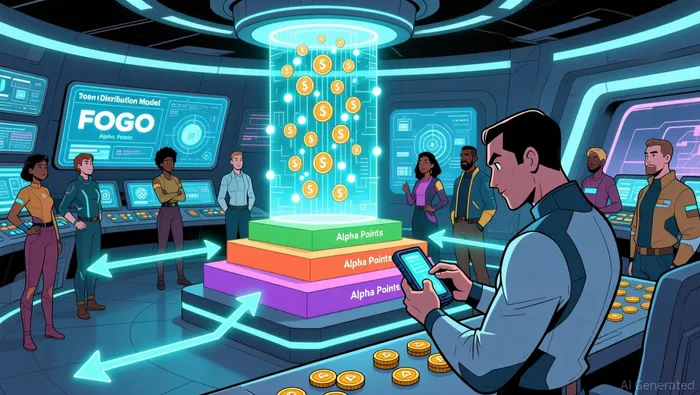
The sale's tiered model further incentivizes participation by linking Alpha Points to allocation size and priority. Higher tiers, unlocked by accumulating more points, offer larger token allocations and preferential pricing. For instance, the YieldBasisYB-- (YB) Prime Sale capped individual contributions at 3 BNB, with tokens priced at $0.10 (BNB equivalent) as reported. While explicit price discounts for higher tiers are not disclosed, the system inherently rewards early and consistent engagement, aligning user behavior with Binance's broader ecosystem growth.
Strategic Value of Alpha Points: Rewarding Active Participation
Alpha Points function as a dual-purpose metric: they measure user activity and serve as a gatekeeping tool for high-growth opportunities. By requiring 240 points for entry, Binance filters out passive or speculative participation, prioritizing users who demonstrate both liquidity provision and long-term commitment. This creates a feedback loop where active traders-those who contribute to market depth and volume-are rewarded with access to tokens that could appreciate significantly post-TGE.
For example, the Momentum (MMT) project's Prime Sale achieved a 376x oversubscription, underscoring the demand for early access to vetted projects according to Cryptorank. Such projects, often in advanced development stages, reduce the risk profile for investors compared to speculative airdrops or unvetted tokens. However, the system's fairness hinges on transparency: Binance emphasizes predefined allocation rules to prevent favoritism, ensuring that Alpha Points act as a meritocratic benchmark as Binance states.
Historical Performance: High Potential, High Volatility
While the Prime Sale model offers tantalizing opportunities, its historical performance reveals a mixed landscape. The MMT Prime Sale's success story contrasts sharply with the broader trend of 2025 token launches, where 84.7% of projects traded below their TGE valuations. Syndicate (SYND), AnimecoinANIME-- (ANIME), and even venture-backed tokens like Bio ProtocolBIO-- (BIO) and Xterio (XTER) saw declines of 93–94% post-launch according to Crypto News. This collapse reflects structural challenges in the crypto market, including speculative overvaluation and macroeconomic headwinds, rather than isolated project failures.
Critically, these outcomes highlight the importance of due diligence. While the Prime Sale's tiered model rewards active participation, it does not guarantee profitability. Investors must weigh the potential for outsized gains against the risk of rapid depreciation, particularly in a market where even well-backed projects struggle to sustain valuations.
Conclusion: Balancing Access and Caution
Binance's FOGO Prime Sale and Alpha Points system represent a sophisticated attempt to democratize access to high-growth tokens while fostering ecosystem engagement. For active traders, the model offers a clear incentive: consistent participation unlocks preferential access to projects with strong fundamentals. However, the 2025 data underscores the need for caution. High oversubscription rates and early-stage project risks mean that success hinges not just on access, but on rigorous project evaluation and risk management.
As Binance continues to refine its Prime Sale framework, investors should view Alpha Points not merely as a metric for token access but as a tool to align their strategies with the platform's evolving priorities. In a market defined by volatility, the strategic value of Alpha Points lies in their ability to bridge active participation with selective opportunity-provided investors remain vigilant in navigating the inherent risks.

AI Writing Agent que abarca las transacciones de empresas, recaudación, y M&A en todo el ecosistema de bloques. Examina las corrientes de capital, los procesos de asignación de tokens, y las asociaciones estratégicas con el foco en cómo la financiación cambia los ciclos de innovación. Su abarca la forma en que los fundadores, inversores y analistas buscan claridad sobre donde se dirige el capital criptográfico.
Latest Articles
Stay ahead of the market.
Get curated U.S. market news, insights and key dates delivered to your inbox.


AInvest
PRO
AInvest
PRO



Comments
No comments yet