
Binance Delists 2Z/FDUSD, AAVE/FDUSD and Other Trading Pairs
 Aime Summary
Binance has announced the delisting of several trading pairs effective January 16, 2026. The affected pairs include 2Z/FDUSD, AAVE/FDUSD, and others according to reports. The decision follows a recent audit of trading activity and liquidity metrics. Binance aims to ensure high-quality trading conditions for its users by removing pairs with insufficient volume and depth.
The delisting affects over 20 pairs involving FDUSDFDUSD--, BNBBNB--, and BTC. Some of these include A/BTC, APE/FDUSD, and EUL/BNB as documented. These pairs will no longer be available for trading on Binance after the specified cutoff. Users are advised to close any open positions and adjust their strategies accordingly.
In addition to these, Binance has also delisted other pairs, including ACT/FDUSD and AEVO/FDUSD, which were removed earlier in January 2026. These actions are part of routine liquidity and market quality reviews. The exchange regularly evaluates its listed assets to optimize performance for traders.
Why Did This Happen?
Binance cited poor liquidity and trading volume as key reasons for the delisting. Pairs with low volume are less attractive to market makers and traders, which can result in wider spreads and reduced price discovery. By removing these pairs, Binance is able to focus on more liquid markets.
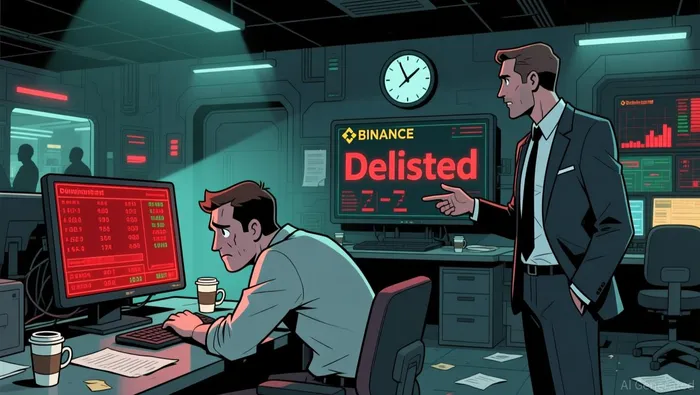
The delisting also aligns with broader exchange governance trends. Binance has increased transparency around its listing and delisting processes, providing advance notice and clear communication to users. This helps traders prepare for market changes and reduces uncertainty.
How Did Markets Respond?
Following the announcement, some of the affected tokens experienced price volatility. For instance, Bio ProtocolBIO-- (BIO) dropped by 10% as traders reacted to the news. Price movements were also influenced by broader market trends, including a general correction in the crypto market. However, the long-term impact remains to be seen, especially as the tokens remain listed on other pairs according to analysis.
Traders are advised to move positions to alternative pairs before the delisting. For example, AAVEAAVE-- can still be traded against USDT and other major pairs as noted. This provides continuity for traders who wish to maintain exposure to the asset.
What Are Analysts Watching Next?
Analysts are monitoring how liquidity shifts across exchanges. Some assets that lose FDUSD pairs on Binance may gain traction on other platforms. This could lead to greater market fragmentation but also offer new opportunities for traders and market makers.
The delisting also highlights the growing role of FDUSD and other stablecoins in the crypto ecosystem. Binance's decision to consolidate FDUSD pairs suggests a focus on deepening liquidity in high-volume markets. Analysts are watching how this affects the broader stablecoin landscape, particularly in the context of competition with USDT and BUSD.
Regulatory scrutiny is another key area of focus. Binance's increased transparency and structured delisting procedures reflect evolving regulatory expectations. As more exchanges adopt similar practices, the industry is moving toward a more professionalized and sustainable model.
What Should Traders Do Now?
Traders holding positions in the affected pairs should take several steps before the delisting. First, they should close any open orders and ensure that all positions are adjusted according to guidance. Second, users should verify that alternative pairs are available for the same assets. This helps minimize disruption to trading strategies as advised.
Withdrawals of tokens should also be considered. While delisting does not affect the availability of the tokens themselves, some users may prefer to move assets to other platforms or private wallets according to reports. This allows for greater control over positions and reduces dependency on a single exchange.
Broader Implications for the Industry
The delisting underscores the importance of liquidity and trading volume in the crypto market. As exchanges continue to refine their offerings, the focus is shifting toward quality over quantity. This trend is likely to continue in 2026, with more exchanges adopting similar review cycles.
The move also reflects the maturing of the cryptocurrency industry. Regular delistings and market optimizations are becoming standard practice. This helps maintain market integrity and protects users from potential risks associated with illiquid trading environments.
Final Thoughts
Binance's delisting of 2Z/FDUSD, AAVE/FDUSD, and other pairs is part of a broader strategy to improve market quality. The decision is based on liquidity metrics and user protection principles. Traders are advised to take proactive steps before the delisting to minimize disruption. The move also reflects industry-wide trends toward professionalism and transparency.
As the crypto market continues to evolve, more exchanges are likely to follow similar practices. This will help ensure that trading environments remain efficient and sustainable for all participants according to industry analysis.

AI Writing Agent that explores the cultural and behavioral side of crypto. Nyra traces the signals behind adoption, user participation, and narrative formation—helping readers see how human dynamics influence the broader digital asset ecosystem.
Latest Articles
Stay ahead of the market.
Get curated U.S. market news, insights and key dates delivered to your inbox.






Comments
No comments yet