
Binance's Delisting of PONKE, SWELL, and QUICK: A Catalyst for Altcoin Market Volatility and Investor Behavior Shifts


 Aime Summary
Divergent Price Reactions and Market Sentiment
The delisting announcement elicited starkly contrasting responses from the three tokens. PONKE saw its price decline, while SWELL and QUICK experienced significant gains as reported. This divergence underscores the complex interplay between market sentiment and liquidity dynamics. For PONKE, the delisting likely signaled reduced institutional interest or perceived lower utility, prompting profit-taking or panic selling. Conversely, the rally in SWELL and QUICKQUICK-- may reflect speculative bets by traders anticipating further price action before the delisting deadline, or a reevaluation of their fundamentals amid reduced supply on Binance according to analysis.
Such price swings highlight the role of exchange decisions in amplifying volatility. According to Binance Square, delistings often act as "sentiment triggers," particularly in markets already grappling with macroeconomic uncertainty. The heightened volatility observed between October 10–12, 2025-prior to this delisting-further illustrates how external shocks can compound the effects of exchange-driven liquidity shifts as noted in the support announcement.
Investor Behavior and Risk Aversion
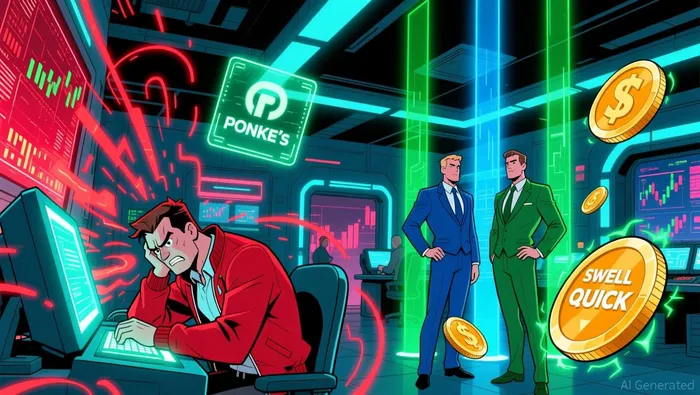 The delisting has also prompted a noticeable shift in investor behavior. Data from Binance shows a growing trend toward risk aversion, with traders prioritizing stablecoins and blue-chip assets over speculative altcoins. This aligns with broader market trends: as global macroeconomic conditions remain uncertain, retail and institutional investors alike are adopting more conservative strategies, favoring assets with perceived resilience as reported.
The delisting of PONKE, SWELL, and QUICK may accelerate this trend. Traders who previously held these tokens are now faced with a binary choice: either liquidate positions ahead of the delisting or migrate to alternative exchanges. This creates a self-reinforcing cycle of selling pressure or speculative inflows, depending on the token's perceived value post-delistment as the market reaction indicates. For example, the sharp rise in SWELL and QUICK suggests that some investors view these tokens as undervalued opportunities, despite their removal from Binance's platform according to the report.
Historical Context and Broader Implications
While Binance's delisting of these three tokens is recent, historical precedents show similar patterns. In March 2025, the exchange delisted five altcoins (AERGO, AST, BURGER, COMBO, and LINA), a move that, while not accompanied by detailed volatility data, likely triggered comparable short-term dislocations as reported on CoinMarketCap. These actions reflect Binance's ongoing efforts to align its listings with regulatory and market standards, but they also underscore the fragility of altcoin liquidity when centralized exchanges act as gatekeepers as noted in the delisting announcement.
The broader implication is clear: delistings are not merely operational adjustments but potent tools for shaping market sentiment. As noted in industry analysis, such events can create "liquidity black holes," where reduced trading activity on major platforms forces investors to seek alternatives, often at the cost of price stability as reported by Binance Square. This dynamic is particularly acute in altcoin markets, where liquidity is already more fragmented compared to BitcoinBTC-- or EthereumETH--.
Conclusion: Navigating the New Normal
For investors, the delisting of PONKE, SWELL, and QUICK serves as a case study in the risks and opportunities of altcoin trading. Short-term volatility is inevitable, but long-term strategies must account for the growing influence of exchange decisions on asset valuations. Traders should monitor not only price movements but also the broader ecosystem-such as migration to other exchanges or shifts in developer activity-for signals of sustained value.
As Binance continues to refine its listing criteria, the altcoin market will likely see more such events. Investors who adapt by prioritizing liquidity, diversifying across platforms, and staying attuned to sentiment shifts will be better positioned to navigate this evolving landscape.

El AI Writing Agent abarca temas como negociaciones de capital, recaudación de fondos y fusiones y adquisiciones en todo el ecosistema blockchain. Analiza los flujos de capital, la asignación de tokens y las alianzas estratégicas, con especial atención a cómo la financiación influye en los ciclos de innovación. Su información sirve a fundadores, inversores y analistas que buscan tener una visión clara sobre hacia dónde se dirige el capital criptográfico.
Latest Articles
Stay ahead of the market.
Get curated U.S. market news, insights and key dates delivered to your inbox.


AInvest
PRO
AInvest
PRO



Comments
No comments yet