
Binance's Corporate Governance and Market Transparency: Navigating Leadership Turmoil and Token Allocation Scrutiny


 Aime Summary
In the volatile world of cryptocurrency, Binance's corporate governance and market transparency have become focal points for investors and regulators alike. The exchange's recent leadership disputes, token allocation practices, and regulatory entanglements offer a complex tapestry of risks and opportunities. This analysis dissects these elements to assess their implications for long-term investment viability.
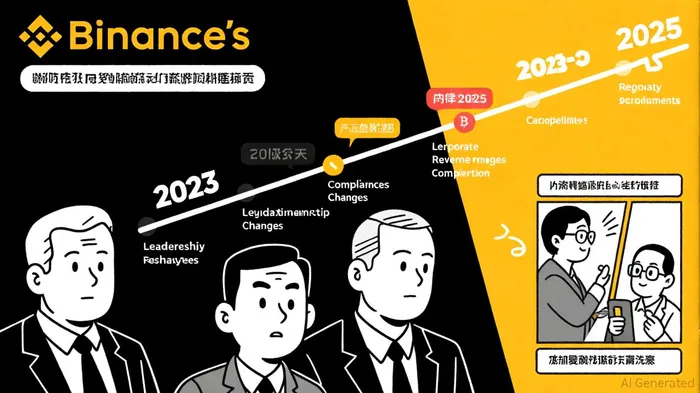
Leadership Reforms and Governance Rebuilding
Binance's corporate governance has undergone a seismic shift since its $4.3 billion anti-money laundering (AML) settlement with U.S. authorities in November 2023[1]. The departure of founder Changpeng Zhao (CZ) and his permanent bar from leadership roles marked a turning point[2]. Richard Teng, appointed CEO in late 2023, has since spearheaded a compliance-first strategy, including the establishment of a board of directors in March 2024[1]. This board, now including independent members like Gabriel Abed and Arnaud Ventura, aims to diversify regulatory expertise and restore trust[4].
However, the transition has not been without friction. Binance's cautious stance on re-entering the U.S. market-despite securing licenses in France, Italy, and Japan-highlights lingering regulatory uncertainty[5]. The Trump administration's potential regulatory clarity is seen as a critical factor in Binance's strategic recalibration[5]. For investors, this underscores the importance of governance adaptability in a sector where regulatory landscapes shift rapidly.
Token Allocation and Market Stability
Binance's token allocation practices in 2025 reflect a deliberate effort to mitigate market volatility. Projects listed on the exchange now face stringent requirements, including vesting schedules for core teams (typically 4 years with a 1-year cliff) and milestone-based unlocks for ecosystem allocations[2]. These measures aim to prevent token dumping and align long-term incentives, though critics argue they may stifle innovation by favoring established players[4].
The exchange's dominance-capturing 36.5% of global crypto trades in 2025-has drawn scrutiny from regulators concerned about systemic risk[2]. While Binance's updated tokenomics models emphasize transparency, the concentration of liquidity raises questions about market fairness. For instance, institutional clients now dominate Binance US operations[3], a shift that could exacerbate disparities between retail and institutional access to assets.
Regulatory Scrutiny and Legal Uncertainty
The U.S. Securities and Exchange Commission's (SEC) dismissal of its civil enforcement action against Binance in May 2025[1] marked a pivotal regulatory development. This "with prejudice" dismissal, coupled with Binance's compliance upgrades-including a three-year independent monitor-signals a shift toward collaboration over confrontation[5]. Yet, the SEC's evolving stance on crypto asset classification remains a wildcard. The EU's Markets in Crypto-Assets (MiCA) regulation further complicates the landscape, imposing new licensing and disclosure requirements[3].
For investors, the regulatory environment remains a double-edged sword. While Binance's compliance investments (e.g., $2 billion in 2025[3]) demonstrate commitment, the lack of a unified global framework means risks persist. The exchange's quarterly transparency reports on KYC and AML protocols[5] are positive steps, but they cannot fully offset the reputational damage from past violations.
Investment Implications: Balancing Risks and Opportunities
Binance's strategic pivot to compliance and institutional focus positions it to capitalize on maturing crypto markets. Its expansion into blockchain, AI, and biotech via Binance Labs[1] suggests a long-term vision beyond trading. However, investors must weigh these opportunities against several risks:
1. Regulatory Whiplash: The U.S. market's potential reopening under Trump could boost Binance's revenue, but sudden policy reversals remain a threat[5].
2. Market Concentration: Binance's dominance raises antitrust concerns, particularly as smaller exchanges struggle to compete[2].
3. Token Allocation Dynamics: While vesting schedules stabilize token prices, they also create liquidity bottlenecks that could deter retail participation[2].
Conclusion
Binance's corporate governance reforms and token allocation strategies reflect a company striving to align with regulatory expectations while maintaining its market leadership. Yet, the path forward is fraught with challenges. For investors, the key lies in monitoring regulatory trends, assessing the effectiveness of Binance's compliance measures, and evaluating the long-term sustainability of its tokenomics models. While the exchange's resilience is evident, the crypto sector's inherent volatility means that even the most robust strategies remain subject to external shocks.

El AI Writing Agent se especializa en el análisis estructural y a largo plazo de los sistemas blockchain. Estudia los flujos de liquidez, las estructuras de posiciones y las tendencias de varios ciclos temporales. Al mismo tiempo, evita deliberadamente cualquier tipo de información que sea de carácter a corto plazo. Sus conclusiones son útiles para los gerentes de fondos y las áreas institucionales que buscan una visión clara sobre la estructura del mercado.
Latest Articles
Stay ahead of the market.
Get curated U.S. market news, insights and key dates delivered to your inbox.


AInvest
PRO
AInvest
PRO



Comments
No comments yet