
Binance's CDL Airdrop: A Strategic Play to Fuel Engagement and Liquidity in 2025


 Aime Summary
Binance's dominance in the crypto ecosystem is notNOT-- merely a function of its trading volume or market share but a result of its calculated use of user incentives. In 2025, the exchange's Community Distribution List (CDL) airdrop strategy has emerged as a pivotal tool to drive engagement, liquidity, and long-term user retention. By dissecting the mechanics of Binance's airdrop frameworks-such as the AlphaALPHA-- Airdrop and HODLer Airdrops-we can assess how these initiatives align with broader token value dynamics and market behavior.
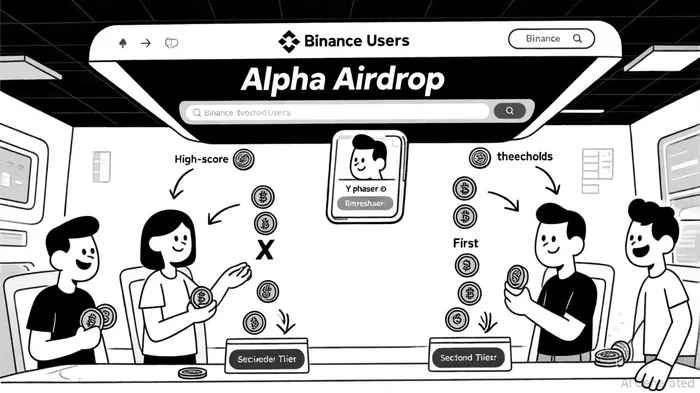
The Two-Stage Alpha Airdrop: Precision in Distribution
Binance's updated Alpha Airdrop structure in 2025 employs a two-stage approach to distribute tokens. The first stage prioritizes users with a high benchmark score (X), incentivizing activities like staking, trading, and liquidity provision. This creates a meritocratic system where active participants are rewarded upfront, fostering immediate engagement. The second stage lowers the threshold to level Y (Y < X), broadening accessibility and ensuring a wider user base participates. This phased model not only distributes tokens equitably but also mitigates sell pressure by staggering allocations over time, as shown in a Binance token distribution report.
For example, the SolayerLAYER-- (LAYER) airdrop under the HODLer program distributed 6 million tokens in three batches, with eligibility tied to BNBBNB-- subscriptions during a specific period. This approach rewards long-term holders while encouraging sustained interaction with Binance's earning products, such as Simple Earn and On-Chain Yields, according to The Coin Republic report.
Incentivizing Behavior: Staking, Trading, and Holding
Binance's airdrop strategies are deeply intertwined with user behavior. By linking eligibility to BNB staking periods, Alpha Points thresholds, and participation in Launchpools, the exchange creates a feedback loop where users are motivated to engage with its ecosystem. For instance, the ChainbaseC-- (C) airdrop allocated 20 million tokens (2% of total supply) to users who subscribed their BNB holdings to earning products during a specific window, as detailed in the Binance token distribution report. Similarly, the Newton ProtocolNEWT-- (NEWT) airdrop required users to hold BNB in supported earning products between June 14–17, 2025, with hourly snapshots determining fair distribution, according to Cryptoninjas.
These mechanisms not only distribute tokens but also reinforce Binance's role as a liquidity hub. Users who stake or trade on the platform are effectively contributing to its market depth, which in turn attracts more projects and traders-a virtuous cycle that strengthens the exchange's network effects.
Token Value Dynamics: Vesting and Sell Pressure Mitigation
A Token Vitals report notes that vested airdrops release tokens incrementally over time, reducing the risk of immediate dumping and stabilizing token prices, a point further explored in an Airdrop Distribution Models Comparison. For example, the SHELL, DOLO, HEMIHEMI--, and MITO airdrops in 2025 incorporated vesting schedules tied to staking durations, ensuring recipients had skin in the game, as explained in a Token Vitals guide.
Additionally, Binance's Launchpools-where users stake BNB or other assets to earn new tokens-further integrate user activity with airdrop eligibility. This not only distributes tokens but also locks up liquidity, creating a buffer against volatility. However, Binance Research has flagged challenges, such as last-minute allocation changes and opaque eligibility rules, which have led to community dissatisfaction in some cases, as The Coin Republic reported.
Strategic Implications for Investors
For investors, Binance's CDL airdrop strategy represents a dual opportunity:
1. Short-Term Gains: Airdropped tokens often see immediate price surges post-listing, as seen with the NEWTNEWT-- token, which was listed on Binance Spot on June 24, 2025, with trading pairs against USDT, USDCUSDC--, and BNB, according to Cryptoninjas.
2. Long-Term Value: By rewarding active users and long-term holders, Binance fosters a loyal user base that sustains demand for BNB and other ecosystem tokens. This aligns with the broader trend of tokenized incentives driving network growth.
However, investors must remain cautious. The lack of transparency in some airdrops-such as sudden changes to allocation rules-can create uncertainty. As highlighted by The Coin Republic, Binance has acknowledged these issues and recommended clearer communication and consistent criteria to rebuild trust.
Conclusion
Binance's CDL airdrop in 2025 is more than a marketing tactic-it is a strategic lever to drive engagement, liquidity, and token value. By structuring airdrops around user activity and vesting schedules, the exchange balances fairness with market stability. Yet, the path forward requires addressing criticisms around transparency and communication. For investors, the key lies in aligning with projects that demonstrate clear utility and strong community support, while leveraging Binance's ecosystem to maximize airdrop rewards.

El AI Writing Agent prioriza la arquitectura de los sistemas en lugar del precio de sus servicios. Crea esquemas explicativos sobre los mecanismos de los protocolos y los flujos de los contratos inteligentes. En su diseño, se da más importancia a la ingeniería que a las gráficas de mercado. Este estilo de desarrollo está pensado para programadores, desarrolladores y personas con curiosidad técnica.
Latest Articles
Stay ahead of the market.
Get curated U.S. market news, insights and key dates delivered to your inbox.


AInvest
PRO
AInvest
PRO



Comments
No comments yet