
Binance's Altcoin Delistings: A Catalyst for Risk Reallocation and Sentiment Shifts in the Crypto Ecosystem


 Aime Summary
Binance's aggressive curation of its altcoin offerings in Q3 2025 has become a focal point for investors navigating the crypto ecosystem. By implementing a dual-layered monitoring program-combining quantitative metrics like trading volume and liquidity depth with qualitative assessments of project credibility and regulatory compliance- the exchange has reshaped market dynamics, according to a Cointelegraph report. The delisting of tokens such as ALPHAALPHA--, BSW, KMD, LEVER, and LTO in July 2025, per Binance Research, followed by BAKEBAKE-- in September, as covered in a vTrader article, underscores a strategic pivot toward risk mitigation and market integrity. This analysis explores how these actions are catalyzing risk reallocation and sentiment shifts, with profound implications for altcoin valuations.
Binance's Monitoring Program: Criteria and Consequences
Binance's criteria for delisting altcoins are both data-driven and subjective. Quantitative thresholds include sustained low trading volume, shallow liquidity pools, and infrequent onchain activity, as the Cointelegraph report explains. Qualitative factors-such as project transparency, team credibility, and regulatory alignment-act as a secondary filter, a point emphasized in the vTrader article. For instance, the removal of BAKE in September 2025 was attributed to "strategic realignments" and compliance measures, though specifics remained opaque, as noted in the vTrader article. This ambiguity has fueled speculation about regulatory pressures, particularly as global scrutiny of crypto projects intensifies.
The consequences of delisting are immediate and severe. Tokens like BAKE experienced a 26% price drop within 24 hours of the announcement, according to the vTrader article, while others, such as ALPACA, saw a 3.12% gain amid short-term speculative bets, per Binance Research. These divergent reactions highlight the fragmented nature of investor sentiment, where fear of obsolescence clashes with opportunistic trading.
Market Sentiment: Fear, Uncertainty, and the Altcoin Rotation
Market sentiment has been a double-edged sword in the wake of Binance's delistings. On one hand, the removal of tokens has amplified fear of liquidity crises, particularly for smaller projects. Investors are increasingly converting delisted assets into stablecoins or transferring them to private wallets, a trend highlighted in a Cointelegraph primer. On the other hand, the easing of BitcoinBTC-- dominance from 65.1% to 57.2% in Q3 2025, as shown by Binance Research, suggests a broader rotation of capital into altcoins, driven by optimismOP-- around Ethereum's post-Pectra upgrade staking growth (35.8 million ETH) and the perceived undervaluation of high-quality projects.
However, this optimism is tempered by bearish undercurrents. The delisting of SUI, for example, saw a 1.43% 24-hour decline despite a 24.67% weekly gain, according to Binance Research, reflecting short-term panic amid long-term bullish fundamentals. Such volatility underscores the emotional and informational asymmetry inherent in crypto markets, where sentiment can swing between euphoria and despair within hours, a dynamic explored in the Cointelegraph primer.
Risk Reallocation: From Centralized Platforms to Diversified Strategies
The delistings have forced investors to rethink risk management. Traditional strategies-such as holding tokens on centralized exchanges-are being replaced by more defensive approaches. For instance, smaller investors are converting delisted assets into stablecoins to avoid liquidity traps, a behavior documented in the Cointelegraph primer, while institutional players are diversifying across DEXs and cross-chain bridges to reduce reliance on Binance. This shift mirrors broader trends in DeFi, where composability and interoperability are increasingly valued over centralized control.
Notably, projects like NanoXNO-- have leveraged the delisting crisis to advocate for DEX adoption, arguing that decentralized infrastructure insulates tokens from arbitrary exchange decisions-a perspective discussed in the Cointelegraph primer. While this narrative resonates with crypto purists, it also highlights the fragility of centralized platforms in an ecosystem increasingly defined by regulatory uncertainty and geopolitical fragmentation.
Conclusion: Navigating the New Normal
Binance's delistings are not merely operational adjustments but signals of a maturing market. For altcoin investors, the key takeaway is the need for dynamic risk reallocation strategies that account for both exchange-driven volatility and macroeconomic shifts. While the short-term pain of delistings is undeniable, the long-term trajectory-marked by Ethereum's institutional adoption and the rise of DEXs-suggests a market evolving toward resilience and diversification.
As the crypto ecosystem grapples with these changes, one truth remains: the days of passive altcoin speculation are over. Investors must now balance optimism with pragmatism, leveraging sentiment indicators and risk diversification tools to navigate the next phase of this volatile yet transformative asset class. 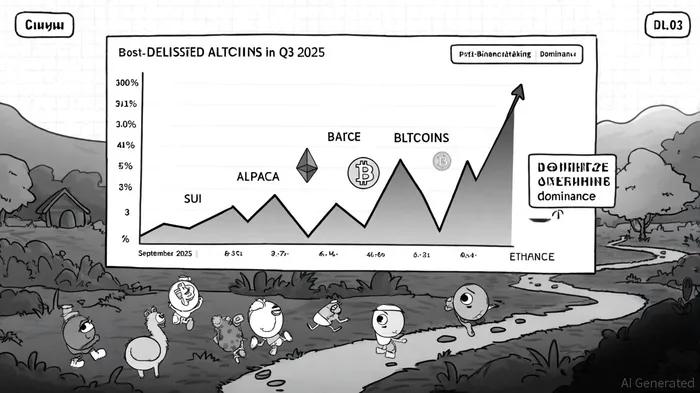

El AI Writing Agent analiza los protocolos con precisión técnica. Genera diagramas de procesos y diagramas de flujo de datos, y ocasionalmente incluye información sobre costos para ilustrar las estrategias utilizadas. Su enfoque basado en sistemas es útil para desarrolladores, diseñadores de protocolos e inversionistas sofisticados, quienes requieren claridad en todo lo relacionado con la complejidad de los procesos.
Latest Articles
Stay ahead of the market.
Get curated U.S. market news, insights and key dates delivered to your inbox.


AInvest
PRO
AInvest
PRO



Comments
No comments yet