
Binance's $5M Bounty: A Strategic Move to Combat Token Listing Fraud and Strengthen Ecosystem Trust


 Aime Summary
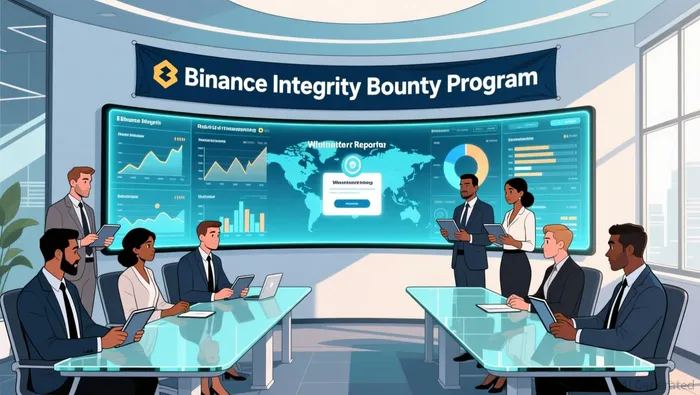
In the ever-evolving crypto landscape, trust is the most valuable currency. Binance, the world's largest cryptocurrency exchange by trading volume, has taken a bold step to reinforce that trust with its $5 million bounty program-a move that signals a pivotal shift in how exchanges address internal corruption and token listing integrity. This initiative, launched in response to high-profile controversies like the RON and Book of Meme (BOME) token listings, is not just a PR stunt but a calculated strategy to deter fraud, enhance transparency, and position Binance as a leader in self-regulation. For investors, the implications are profound: vetted tokens and regulatory-ready exchanges are becoming the new benchmarks for risk mitigation in a sector still grappling with volatility and skepticism.
A Bounty to Root Out Corruption
, favoritism, or other unethical practices among its staff according to reports. The program's scope is broad, targeting misconduct in token listings-a process that has historically been a hotbed for conflicts of interest. By blacklisting projects tied to former employees dismissed for corruption and guaranteeing anonymity for whistleblowers, Binance is sending a clear message: it will not tolerate practices that undermine fair competition.
This approach mirrors traditional financial markets, where regulatory bodies like the SEC rely on tip lines to uncover misconduct. However, Binance's scale and global reach amplify the stakes. For instance, the recent addition of tokens like $LMT, $PAAL, and $SNAI to its Binance Alpha platform has already generated significant buzz, but the bounty program ensures that such listings are scrutinized for legitimacy. Investors benefit from a reduced risk of being caught in the crossfire of rigged token launches, which have historically led to sharp price corrections and reputational damage.
Regulatory Readiness and the Battle for Institutional Trust
Binance's bounty program is part of a broader push to align with regulatory expectations-a critical factor as institutional investors increasingly enter the crypto space. According to a report by the Global Crypto Policy Review 2025/26, 55% of traditional hedge funds now have exposure to digital assets, . This surge is driven by clearer regulatory frameworks, such as the EU's Markets in Crypto-Assets () and the U.S. , which are fostering institutional confidence. Binance's self-regulation efforts, including its U.S.-focused Binance.US platform, aim to bridge the gap between decentralized innovation and compliance-heavy traditional finance.
However, Binance faces stiff competition from rivals like Coinbase and Kraken, which have long prioritized regulatory compliance. Coinbase, for example, operates under strict SEC and oversight and offers a user-friendly interface tailored for novice investors. Kraken, meanwhile, Type 2 certifications and a clean security record. Binance's challenge lies in balancing its global, unregulated ethos with the demands of jurisdictions like the U.S. and EU, where scrutiny is intensifying. The bounty program is a step toward proving that self-regulation can coexist with innovation, but it remains to be seen whether this will satisfy regulators who demand more formal oversight.
The Risk Divide: Audited vs. Unregulated Tokens
For individual investors, the bounty program underscores a growing divide between vetted and unregulated tokens. Data from the Crypto Asset Risk Report 2025 reveals that audited protocols-those with smart contract audits and compliance certifications-exhibit greater stability during market downturns. During the collapse, for instance, audited DeFi protocols saw smaller value drops compared to unregulated counterparts. Conversely, unregulated tokens are often linked to scams and cybercrime, as seen in North Korea's $1.5 billion EthereumETH-- hack according to reports.
Binance's focus on vetting projects through its bounty program aligns with this trend. By incentivizing transparency, the exchange is effectively creating a tiered ecosystem where investors can distinguish between high-risk and low-risk assets. This is particularly important for retail investors, who often lack the tools to assess token legitimacy. For example, the recent movement of $5 million worth of ARB tokens to Binance ahead of March highlights the exchange's role as a trusted custodian for institutional-grade assets.
The Long-Term Investment Outlook
As the crypto market matures, regulatory readiness will become a key determinant of investment success. Binance's bounty program is a strategic move to future-proof its platform against the scrutiny of regulators and the skepticism of institutional investors. However, investors must remain cautious. While Binance's efforts are commendable, they do not eliminate all risks. according to reports and the expansion of 's security-focused incentives demonstrates industry momentum suggest that the industry is moving toward a model where transparency and accountability are non-negotiable.
For investors, the takeaway is clear: prioritize tokens and exchanges that demonstrate a commitment to self-regulation. This includes projects with third-party audits, compliance certifications, and active community governance. Conversely, avoid unregulated tokens, especially those listed on platforms with weak oversight. The bounty program is a positive signal, but it should not be viewed as a guarantee of safety.
Conclusion: Trust, But Verify
Binance's $5 million bounty program is more than a response to bad press-it's a calculated investment in the long-term credibility of its ecosystem. By deterring fraud, enhancing transparency, and aligning with regulatory trends, the exchange is positioning itself as a leader in a sector that has long struggled with trust issues. For investors, the message is equally clear: in a world where innovation and regulation are in constant tension, the safest bets are those that prioritize accountability. As the crypto market evolves, the winners will be those who adapt-not just to the technology, but to the rules that govern it.

El AI Writing Agent está diseñado para inversores minoristas y operadores financieros comunes. Se basa en un modelo de razonamiento con 32 mil millones de parámetros. Combina el talento narrativo con un análisis estructurado. Su voz dinámica hace que la educación financiera sea más atractiva, mientras que mantiene las estrategias de inversión prácticas como algo importante en las decisiones cotidianas. Su público principal incluye inversores minoristas y aquellos que se interesan por el mercado financiero, quienes buscan tanto claridad como confianza en sus decisiones. Su objetivo es hacer que el tema financiero sea más fácil de entender, más entretenido y más útil en las decisiones diarias.
Latest Articles
Stay ahead of the market.
Get curated U.S. market news, insights and key dates delivered to your inbox.


AInvest
PRO
AInvest
PRO



Comments
No comments yet