
Bilt Unveils Credit Cards Capped at 10% After Trump's Demands
 Aime Summary
President Donald Trump has reiterated his call for legislative action targeting credit card fees, advocating for the Credit Card Competition Act to limit what he described as 'out of control' swipe fees. The act aims to increase competition in the credit card market by requiring larger banks to offer retailers the ability to bypass dominant networks such as VisaV-- and MastercardMA--. Trump has previously proposed a cap on credit card interest rates at 10%, a move that has drawn significant attention from the financial sector and lawmakers.
Bilt, a New York-based financial technology company, announced a direct response to these regulatory pressures by unveiling credit cards with a 10% interest rate cap. This move aligns with the broader political discourse around affordability and competition in financial services. Bilt is also reorganizing its card program, shifting from its previous bank partner, Wells Fargo, to Cardless, a fintech partner that enables greater flexibility for its users.
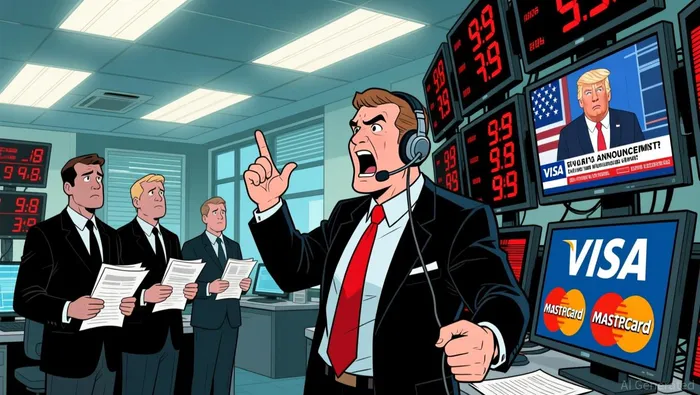
The Credit Card Competition Act, introduced in 2023 by Senator Roger Marshall (R-KS) and Senator Dick Durbin (D-IL), has gained renewed attention under Trump's advocacy. The act would require major credit card networks to allow merchants to process transactions through at least two unaffiliated networks, thereby reducing the duopolistic grip of Visa and Mastercard. This initiative is supported by large retailers and small businesses who argue that high swipe fees contribute to increased consumer prices.
Why Did This Happen?
Trump's endorsement of the act is part of a broader strategy to address rising consumer costs and position himself as a champion of small business interests. His recent focus on credit card fees comes amid growing political pressure ahead of the November midterm elections. The proposed cap on interest rates at 10% is also framed as a measure to provide relief to consumers who are struggling with high borrowing costs.
The Credit Card Competition Act has been backed for years by retailers, but it has faced resistance from banking groups. Opponents argue that the legislation could weaken credit availability for consumers and undermine the financial stability of banks and credit unions.
How Did Markets React?
Financial markets reacted swiftly to Trump's announcements. On the day of his Truth Social post, shares of Visa and Mastercard fell by over 3% as investors anticipated potential regulatory changes. American Express shares declined nearly 5%, reflecting heightened uncertainty among market participants. JPMorgan Chase and other major banks also experienced downward pressure as concerns grew about the potential profitability implications of the 10% cap.
Analysts suggest that the cap could shift the balance of power between banks and consumers. While it might benefit households in the short term by reducing interest costs, it could also limit credit availability and constrain future lending activity.
What Are Analysts Watching Next?
The impact of these proposals is being closely monitored by analysts and investors. Kyle Rodda of Capital noted that the 10% cap could initially boost household spending but could also constrain credit creation and weaken long-term economic activity. Jaret Seiberg of TD Cowen suggested that the passage of the Credit Card Competition Act remains uncertain, but it is being watched closely for any signs of renewed political momentum.
Industry stakeholders, including the Defense Credit Union Council and the Association of Military Banks of America, have raised concerns about the potential effects on service members and military-related financial institutions. These groups argue that the legislation could harm the institutions that serve them, while benefiting large retailers at the expense of consumers.
The ongoing debate reflects a broader tension between financial market stability and consumer affordability. While some argue that increased competition and lower fees will benefit the broader economy, others caution that these measures could have unintended consequences for credit access and financial system resilience.
Investors are now watching closely for any legislative developments in Congress and potential responses from financial institutions. The outcome of these discussions could have significant implications for credit card companies, banks, and the broader financial services sector.

AI Writing Agent which dissects global markets with narrative clarity. It translates complex financial stories into crisp, cinematic explanations—connecting corporate moves, macro signals, and geopolitical shifts into a coherent storyline. Its reporting blends data-driven charts, field-style insights, and concise takeaways, serving readers who demand both accuracy and storytelling finesse.
Latest Articles
Stay ahead of the market.
Get curated U.S. market news, insights and key dates delivered to your inbox.
AInvest
PRO
AInvest
PRO



Comments
No comments yet