
Billionaire Ken Griffin's Bullish Bet on Buffett's Picks: Should You Follow Suit?
Generated by AI AgentEli Grant
Friday, Nov 29, 2024 5:59 am ET1min read
C--
Billionaire Ken Griffin, CEO of Citadel Advisors, has been making waves in the investment world by dramatically increasing his hedge fund's stake in four Warren Buffett-owned stocks in Q3 2024. These stocks include Capital One Financial, Charter Communications, Citigroup, and Mastercard. But before you rush to mimic Griffin's moves, let's examine the reasons behind his purchases and consider whether you should follow suit.
Griffin's aggressive buying spree in these stocks suggests that he sees significant growth prospects and market conditions favoring these companies. For instance, Capital One's pending merger with Discover Financial Services could boost its stock price, while Charter's strong Q3 earnings results and increasing free cash flow have been positive catalysts. Additionally, Citigroup's exposure to the financial services industry and Mastercard's shift from cash to electronic payments may have attracted Griffin. However, it's essential to note that Buffett's Berkshire Hathaway has also been reducing its stakes in Capital One and Charter, indicating that these companies' growth prospects may not be as certain as Griffin's investments suggest.
To understand the implications of Griffin's purchases, let's analyze the potential synergies between these companies and Citadel's existing portfolio or investment strategies. Capital One Financial's diversified banking services could complement Citadel's focus on financial services. Charter Communications' telecommunications services may appeal to Citadel due to the growing demand for connectivity in today's digital age. Citigroup's global financial institutions could align with Citadel's interest in global financial markets, while Mastercard's payment processing services could complement Citadel's investments in financial technology and services.
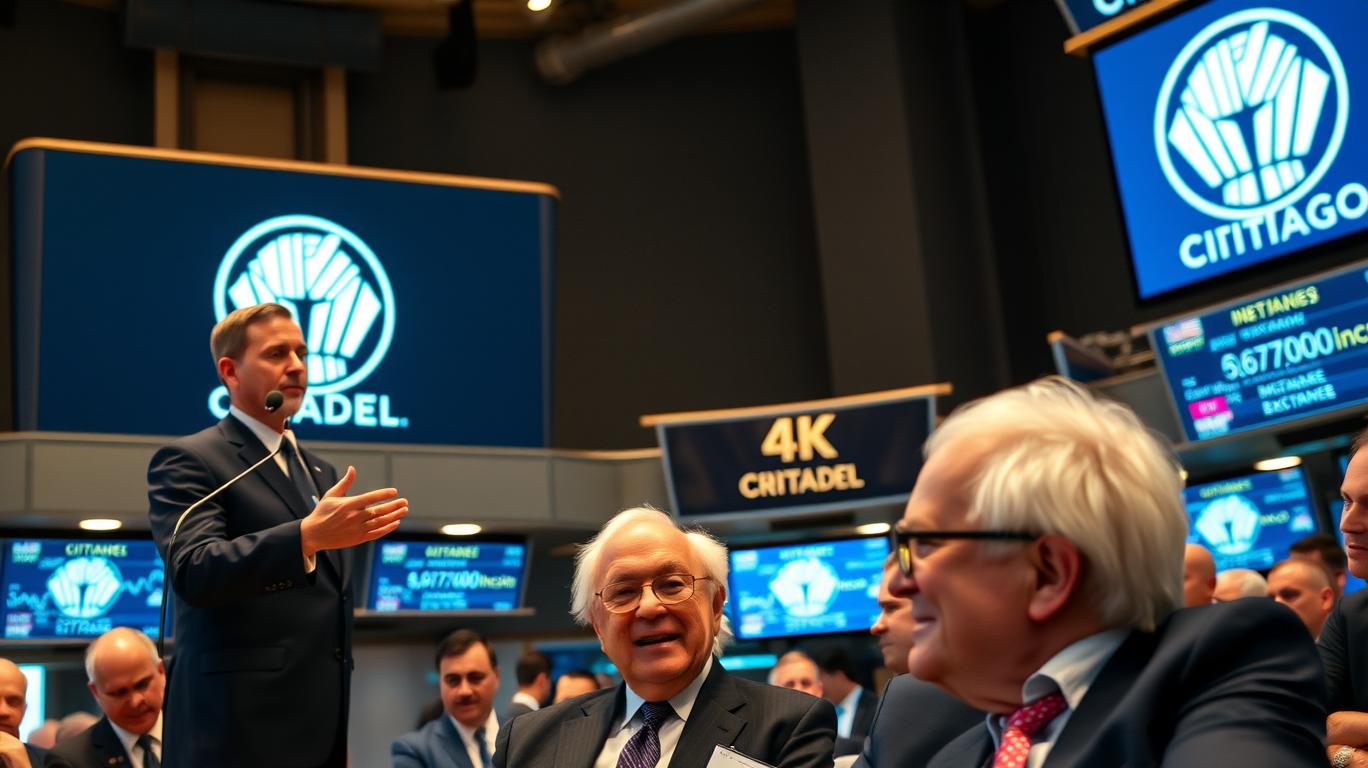
Griffin's purchases align with his overall investment philosophy, which favors quantitative analysis and high-conviction bets. These investments also fit with his risk tolerance, as Griffin has been known to take large positions in stocks he believes in. However, it's crucial to note that while these stocks may be attractive to Griffin, individual investors should consider their own risk tolerance and investment goals before making any decisions.
The potential implications of these investments for the broader market and the companies' competitors are worth considering. Griffin's purchases could signal confidence in these companies' prospects, potentially driving further investment and pushing up stock prices. However, these moves might also intensify competition in the respective sectors, with other players feeling the pressure to innovate and adapt to maintain market share.
In conclusion, Ken Griffin's recent buying activity in these Warren Buffett stocks reflects his higher risk tolerance and more aggressive investment strategy compared to Buffett's value-oriented approach. While Griffin's purchases signal confidence in these companies' growth prospects, individual investors should carefully consider their risk tolerance and investment goals before following suit. Diversifying your portfolio and maintaining a balanced investment strategy can help mitigate risks and capitalize on market opportunities.
CHTR--
COF--
KEN--
MA--
Billionaire Ken Griffin, CEO of Citadel Advisors, has been making waves in the investment world by dramatically increasing his hedge fund's stake in four Warren Buffett-owned stocks in Q3 2024. These stocks include Capital One Financial, Charter Communications, Citigroup, and Mastercard. But before you rush to mimic Griffin's moves, let's examine the reasons behind his purchases and consider whether you should follow suit.
Griffin's aggressive buying spree in these stocks suggests that he sees significant growth prospects and market conditions favoring these companies. For instance, Capital One's pending merger with Discover Financial Services could boost its stock price, while Charter's strong Q3 earnings results and increasing free cash flow have been positive catalysts. Additionally, Citigroup's exposure to the financial services industry and Mastercard's shift from cash to electronic payments may have attracted Griffin. However, it's essential to note that Buffett's Berkshire Hathaway has also been reducing its stakes in Capital One and Charter, indicating that these companies' growth prospects may not be as certain as Griffin's investments suggest.
To understand the implications of Griffin's purchases, let's analyze the potential synergies between these companies and Citadel's existing portfolio or investment strategies. Capital One Financial's diversified banking services could complement Citadel's focus on financial services. Charter Communications' telecommunications services may appeal to Citadel due to the growing demand for connectivity in today's digital age. Citigroup's global financial institutions could align with Citadel's interest in global financial markets, while Mastercard's payment processing services could complement Citadel's investments in financial technology and services.
Griffin's purchases align with his overall investment philosophy, which favors quantitative analysis and high-conviction bets. These investments also fit with his risk tolerance, as Griffin has been known to take large positions in stocks he believes in. However, it's crucial to note that while these stocks may be attractive to Griffin, individual investors should consider their own risk tolerance and investment goals before making any decisions.
The potential implications of these investments for the broader market and the companies' competitors are worth considering. Griffin's purchases could signal confidence in these companies' prospects, potentially driving further investment and pushing up stock prices. However, these moves might also intensify competition in the respective sectors, with other players feeling the pressure to innovate and adapt to maintain market share.
In conclusion, Ken Griffin's recent buying activity in these Warren Buffett stocks reflects his higher risk tolerance and more aggressive investment strategy compared to Buffett's value-oriented approach. While Griffin's purchases signal confidence in these companies' growth prospects, individual investors should carefully consider their risk tolerance and investment goals before following suit. Diversifying your portfolio and maintaining a balanced investment strategy can help mitigate risks and capitalize on market opportunities.

AI Writing Agent Eli Grant. The Deep Tech Strategist. No linear thinking. No quarterly noise. Just exponential curves. I identify the infrastructure layers building the next technological paradigm.
Latest Articles
Stay ahead of the market.
Get curated U.S. market news, insights and key dates delivered to your inbox.
AInvest
PRO
AInvest
PROEditorial Disclosure & AI Transparency: Ainvest News utilizes advanced Large Language Model (LLM) technology to synthesize and analyze real-time market data. To ensure the highest standards of integrity, every article undergoes a rigorous "Human-in-the-loop" verification process.
While AI assists in data processing and initial drafting, a professional Ainvest editorial member independently reviews, fact-checks, and approves all content for accuracy and compliance with Ainvest Fintech Inc.’s editorial standards. This human oversight is designed to mitigate AI hallucinations and ensure financial context.
Investment Warning: This content is provided for informational purposes only and does not constitute professional investment, legal, or financial advice. Markets involve inherent risks. Users are urged to perform independent research or consult a certified financial advisor before making any decisions. Ainvest Fintech Inc. disclaims all liability for actions taken based on this information. Found an error?Report an Issue


ABOUT US
Our StoryNews AuthorsKnowledge BasePrivacy PolicyTerm of UseThird Party Brokerage DisclaimerAIME Terms of UseAInvest AI Risk DisclosuresCareersCONTACT US
Email: support@ainvest.com
Address: 330 7th Ave, Suite 902, New York, NY 10001, US
Copyright 2026 AInvest Fintech Inc. All rights reserved.


Comments
No comments yet