
Bill Gates Warns AI Progress Surpasses Expectations, Could Replace Jobs in 1-10 Years
 Aime Summary
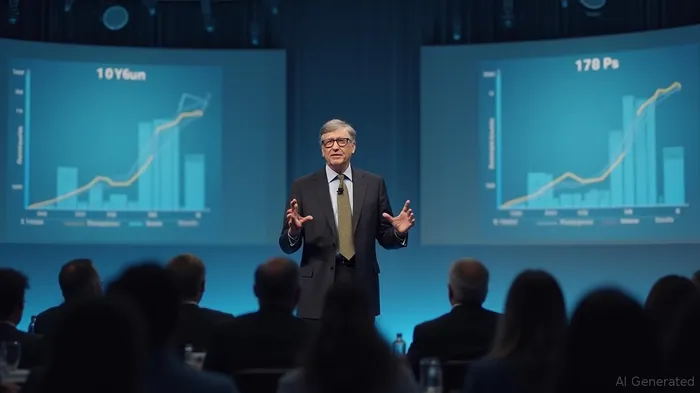
Bill Gates, co-founder of MicrosoftMSFT--, has voiced concerns over the rapid pace of artificial intelligence (AI) development, stating that even he is surprised by how quickly the technology is advancing. In an interview with CNN, Gates highlighted that AI is already performing tasks once reserved for humans, such as telesales and administrative work, and is steadily improving its ability to handle more complex functions like coding [1]. He emphasized that the speed of AI’s progress has outpaced expectations, making it difficult to predict when it might fully replace human labor in many fields [2].
Gates noted that while AI is not yet capable of replacing humans in the most complex roles, it is progressing at an unprecedented rate. For example, he shared how he tests AI with complex questions and has been impressed by its ability to gather and summarize information efficiently. “It’s improving at a rate that surprises me,” he said [1]. Despite this, he acknowledged that experts remain divided on a key issue: whether AI will replace most human tasks within the next one to two years or more like a decade [2].
The uncertainty surrounding AI’s future capabilities has led to calls for immediate action. Gates encouraged Gen Z workers to begin learning how to work effectively with AI tools, suggesting that those who adapt early will be better prepared for the changes ahead [1]. At the same time, other industry leaders have echoed similar sentiments. Anthropic CEO Dario Amodei estimated that up to 50% of entry-level white-collar jobs could be replaced by AI within five years, while Amazon’s Andy Jassy confirmed that AI is already reducing roles such as customer service and software development [1].
The shift is not limited to tech roles. In May, IBMIBM-- announced the reduction of approximately 8,000 jobs across departments like HR and administration, as AI tools take over routine tasks. Instead, the company is focusing on hiring more engineers and sales personnel, signaling a move toward roles requiring creativity and strategic thinking [1].
While concerns about job displacement are widespread, Gates argued that AI’s rise in productivity should not be seen as purely negative. He suggested that increased efficiency could free people to pursue activities beyond traditional employment, such as education, creative endeavors, or leisure [1]. A survey also found that 40% of users reported that AI has helped improve their work-life balance, reduce stress, and enhance decision-making [1].
However, the transition has not been without friction. A major Australian bank recently eliminated 90 positions and replaced them with AI systems, underscoring the speed at which automation is reshaping the labor market [3]. Despite these changes, trust in AI remains limited, particularly in technical fields. According to Stack Overflow, 84% of developers are using or planning to use AI tools, but only 33% express confidence in their accuracy [4].
As major tech companies race to integrate AI into their operations, the landscape continues to evolve rapidly. Google is leveraging its early lead in the AI space, while AppleAAPL-- faces criticism for lagging behind [5][6]. These developments suggest that the next few years will be pivotal in determining how AI is adopted and regulated across industries.
In sum, Gates’ comments reflect a growing consensus that AI is advancing faster than expected, with uncertain consequences for the workforce. While some adapt quickly, the broader societal impact remains unclear. The challenge now is to ensure that the benefits of AI are distributed fairly and that workers are equipped to navigate the shifting landscape.
---
Sources:
[1] "Bill Gates says AI is moving at a speed that 'surprises' even him—and he says the experts can’t tell if it’ll replace humans in one year or ten", Fortune, https://fortune.com/2025/08/01/billionaire-microsoft-bill-gates-says-ai-is-moving-at-a-speed-that-surprises-even-him-experts-cant-tell-if-it-will-replace-humans-in-one-year-or-ten/
[2] "Jobs easily replaceable by ai", Facebook, https://www.facebook.com/groups/769782850345135/posts/178****345820742/
[3] "Commonwealth Bank sacks 90 workers and replaces them", RedditRDDT--, https://www.reddit.com/r/australia/comments/1mdwclp/commonwealth_bank_sacks_90_workers_and_replaces/
[4] "The Cyberspace Administration of China questioned ...", Techmeme, https://www.techmeme.com/250731/p8
[5] "Contents - Bloomberg News", Advisor, https://www.advisorperspectives.com/firm/bloomberg-news
[6] "The Overspill: when there's more that I want to say | Charles ...", The, https://theoverspill.blog

Stay ahead of the market.
Get curated U.S. market news, insights and key dates delivered to your inbox.




Comments
No comments yet