
Bill Gates' AI Portfolio and the Future of Tech Investing: A Strategic Bet on Microsoft's AI Ecosystem
 Aime Summary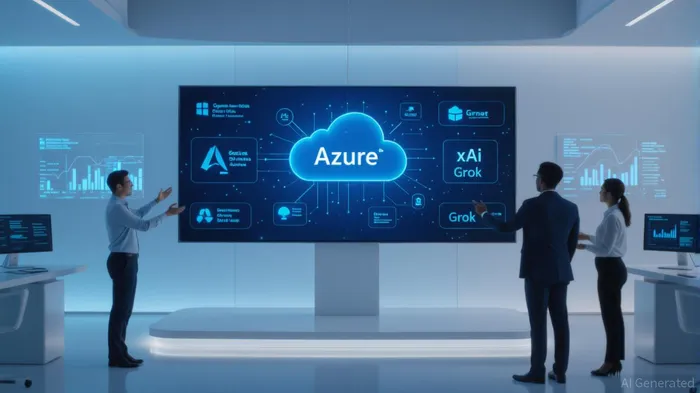
Bill Gates' 2025 investment strategy has crystallized around a single, bold thesis: MicrosoftMSFT-- is the linchpin of the AI revolution. By allocating 25% of his portfolio—valued at $10.7 billion—to Microsoft, Gates has not only signaled a shift in long-term capital strategy but also underscored the company's unique position to monetize the next decade of technological progress. For investors, this move raises critical questions: Why is Gates betting so heavily on one stock? And how does it reflect broader opportunities in the AI sector?
Microsoft's AI Infrastructure Dominance: A Flywheel of Innovation
Microsoft's Azure cloud platform has become the de facto infrastructure for AI development, a position solidified by its open-ecosystem approach. Unlike competitors that favor proprietary models, Azure offers access to a diverse array of generative AI tools, from OpenAI's ChatGPT to Meta's Llama and xAI's Grok. This strategy has attracted a critical mass of developers and enterprises, creating a self-reinforcing cycle of adoption. Azure's 33% year-over-year revenue growth in Q3 2025—contributing $26.8 billion to Microsoft's Intelligent Cloud division—demonstrates the scale of this momentum.
The company's $11.8 billion investment in OpenAI further cements its leadership. With exclusive access to GPT-5, Microsoft is poised to capitalize on the next generation of AI models, which promise even greater efficiency and capabilities. Meanwhile, its integration of AI Copilot tools into Office 365, LinkedIn, and GitHub has accelerated enterprise adoption, with 230,000 organizations now leveraging these services.
Valuation Concerns and Strategic Resilience
Critics may point to Microsoft's current valuation—nearly 40 times trailing earnings—as a red flag, especially when compared to peers like Meta PlatformsMETA-- (META), which trades at 28 times earnings. However, Gates' long-term perspective prioritizes durable competitive advantages. Azure's recurring revenue model, global infrastructure, and alignment with the Gates Foundation's global health and development goals provide a buffer against near-term volatility.
Moreover, Microsoft's AI-driven productivity gains are translating into tangible economic value. By Q1 2025, Azure processed 100 trillion tokens, a fivefold increase year-over-year, driven largely by OpenAI's APIs. This growth trajectory suggests that Microsoft's current premium valuation is justified by its ability to scale AI infrastructure at a pace outstripping rivals.
The Broader Implications for Tech Investing
Gates' allocation to Microsoft reflects a broader trend: the shift from speculative bets on AI startups to investments in established platforms that can operationalize AI at scale. While the sector is rife with hype, Microsoft's approach—combining infrastructure, enterprise adoption, and strategic partnerships—offers a blueprint for sustainable innovation.
For investors, this signals an opportunity to focus on companies with clear paths to monetizing AI. Microsoft's dominance in the “Frontier Firm” model—where AI agents augment human judgment—highlights the importance of enterprise adoption. As 81% of leaders plan to expand AI integration within 18 months, companies that facilitate this transition will likely outperform.
Investment Advice: Balancing Long-Term Vision and Prudence
While Microsoft's stock has more than doubled since 2023, its valuation demands careful scrutiny. Investors should consider the following:
1. Diversification: Microsoft is a cornerstone holding, but it should be balanced with smaller, undervalued AI enablers (e.g., chipmakers, data infrastructure firms).
2. Valuation Metrics: Monitor Azure's contribution to Microsoft's revenue and EBITDA margins to assess whether growth justifies the premium.
3. Strategic Alignment: Look for companies with similar flywheel effects—those that combine infrastructure, ecosystem, and enterprise adoption.
Bill Gates' bet on Microsoft is more than a personal investment; it's a statement about the future of tech. By anchoring capital to a company with a proven ability to innovate and scale, Gates has set a benchmark for investors seeking to navigate the AI revolution. The key takeaway? In an era of rapid disruption, long-term success favors those who build, not just speculate.

Delivering real-time insights and analysis on emerging financial trends and market movements.
Latest Articles
Stay ahead of the market.
Get curated U.S. market news, insights and key dates delivered to your inbox.
AInvest
PRO
AInvest
PRO



Comments
No comments yet