
Bill Ackman Exits Alphabet For Netflix: Why He Dumped GOOGL
 Aime Summary
- Bill Ackman’s Pershing SquarePS-- completely liquidated its AlphabetGOOGL-- (GOOGL) position and initiated a new stake in NetflixNFLX-- (NFLX) during the second quarter of 2026.
- The exit from Alphabet was driven by the company posting its first-ever negative free cash flow and doubling its capital expenditure guidance to $200 billion for the year.
- Ackman views Netflix as an undervalued mega-cap opportunity, as the stock has fallen 42% from its recent peak despite strong underlying subscriber metrics and profit margins.
- This portfolio realignment highlights a broader institutional rotation away from high-capital, cash-burning AI infrastructure plays toward beaten-down consumer subscription giants.
- Wall Street analysts project Netflix will deliver 21% annual earnings growth over the next three years, suggesting the current valuation offers significant upside relative to its market dominance.
Ackman’s latest moves are a clear signal that even the most concentrated value investors are growing wary of the short-term financial strain caused by the artificial intelligence arms race. By exiting one of the biggest beneficiaries of the AI boom and buying into a struggling entertainment giant, the hedge fund manager is prioritizing near-term cash flow stability over long-term infrastructure growth. For retail investors, this trade offers a fascinating look into how institutional capital is reassessing risk in a market where massive spending does not always translate into immediate profitability.
Why Bill Ackman Sold Alphabet Stock Despite Strong Earnings?
Alphabet delivered a masterclass in top-line growth during the second quarter, yet the underlying financials told a cautionary tale that likely prompted Ackman’s exit. The company reported revenue of $120 billion, representing a robust 24% increase year over year, while operating income surged 31% to $41 billion. Google Cloud, the crown jewel of Alphabet’s enterprise ambitions, saw its revenue skyrocket by 82%, marking the fifth consecutive quarter of accelerating growth driven by insatiable demand for AI infrastructure. On the surface, these numbers would make Alphabet the undisputed king of the tech sector, and its stock has roughly doubled over the past 18 months.
However, the cash flow statement revealed a stark reality that investors cannot ignore. For the first time in its public history, Alphabet generated negative free cash flow. This metric is critical for value investors like Ackman, who rely on a company’s ability to generate excess cash to fund operations, buy back stock, or pay dividends. The negative free cash flow was not an anomaly but a symptom of a much larger trend: aggressive capital expenditure. Management raised its full-year capital expenditure guidance to an staggering $200 billion, a massive leap from the $91 billion spent the previous year.
This dramatic increase in spending is necessary to compete with rivals like Nvidia, but it introduces significant near-term volatility. Ackman’s decision to liquidate the position suggests he is uncomfortable with the uncertainty surrounding the payoffs of such aggressive AI infrastructure spending. While Alphabet remains the cheapest of the Magnificent Seven stocks at roughly 16 times forward earnings, the combination of negative free cash flow and doubled capex creates a risk profile that may not align with his current mandate. The stock has gained only about 8% this year, significantly underperforming the broader market as investors weigh the heavy financial burden against the promise of future dominance.
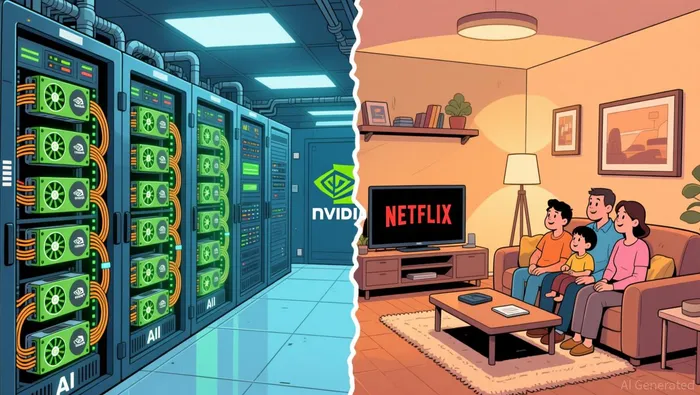
What Is Bill Ackman Buying In Netflix Stock?
In stark contrast to his exit from Alphabet, Ackman is doubling down on a beaten-down consumer giant by initiating a position in Netflix. The streaming service’s stock has retreated 42% from its all-time high of $126.71 in June 2025, currently trading around $78.25. This sharp decline was largely triggered by failed acquisition bids for Warner Bros. Discovery and Roku, which raised concerns about the company’s ability to expand its content library through mergers. However, Ackman appears to view the market’s reaction as a mispricing of the underlying business, which continues to dominate the streaming landscape.
Netflix’s fundamental metrics remain exceptionally strong. The company leads the industry in monthly active users, subscriber retention rates, and total television viewing duration across key global markets. During its most recent quarterly report, Netflix delivered an earnings per share of $0.80, beating analyst estimates, while revenues grew 13.4% annually to $12.56 billion. The company boasts an impressive net profit margin of 28.22% and a return on equity of 40.02%, demonstrating a highly efficient and profitable business model that generates substantial cash flow.
The valuation profile makes the current price even more attractive to value-oriented investors. Trading at roughly 24.7 times earnings, Netflix appears cheap relative to its dominant market position and untapped growth opportunities in advertising and live sports. Wall Street analysts project 21% annual earnings growth over the next three years, with a consensus price target of $96.65, implying approximately 24% upside from current levels. Institutional ownership stands at a robust 81%, with notable additions from firms like NEOS Investment Management, signaling that smart money is beginning to recognize the value in a streaming giant that has been unfairly punished by short-term acquisition failures.
This strategic shift from Alphabet to Netflix represents a broader rotation in the market. Investors are increasingly prioritizing risk-adjusted returns in undervalued subscription businesses over high-growth but capital-intensive AI winners. By exiting a crowded AI play and entering a beaten-down mega-cap, Ackman is positioning his fund to capitalize on a company with proven pricing power, strong cash generation, and a dominant market moat that is currently trading at a significant discount.

Stay ahead of the market.
Get curated U.S. market news, insights and key dates delivered to your inbox.


AInvest
PRO
AInvest
PRO




Comments
No comments yet