
BigBear.ai Stock Plummets: A Perfect Storm of Macro and Micro Factors
Generated by AI AgentMarcus Lee
Saturday, Mar 1, 2025 5:38 pm ET1min read
BBAI--
BigBear.ai (BBAI) stock experienced a significant sell-off this week, with its share price ending the stretch down 17.1%. The company's valuation saw a big setback in conjunction with the market's renewed focus on macroeconomic risk factors and Nvidia's fourth-quarter report. This article explores the primary reasons behind BigBear.ai's stock price decline and the potential implications for the company's future performance.
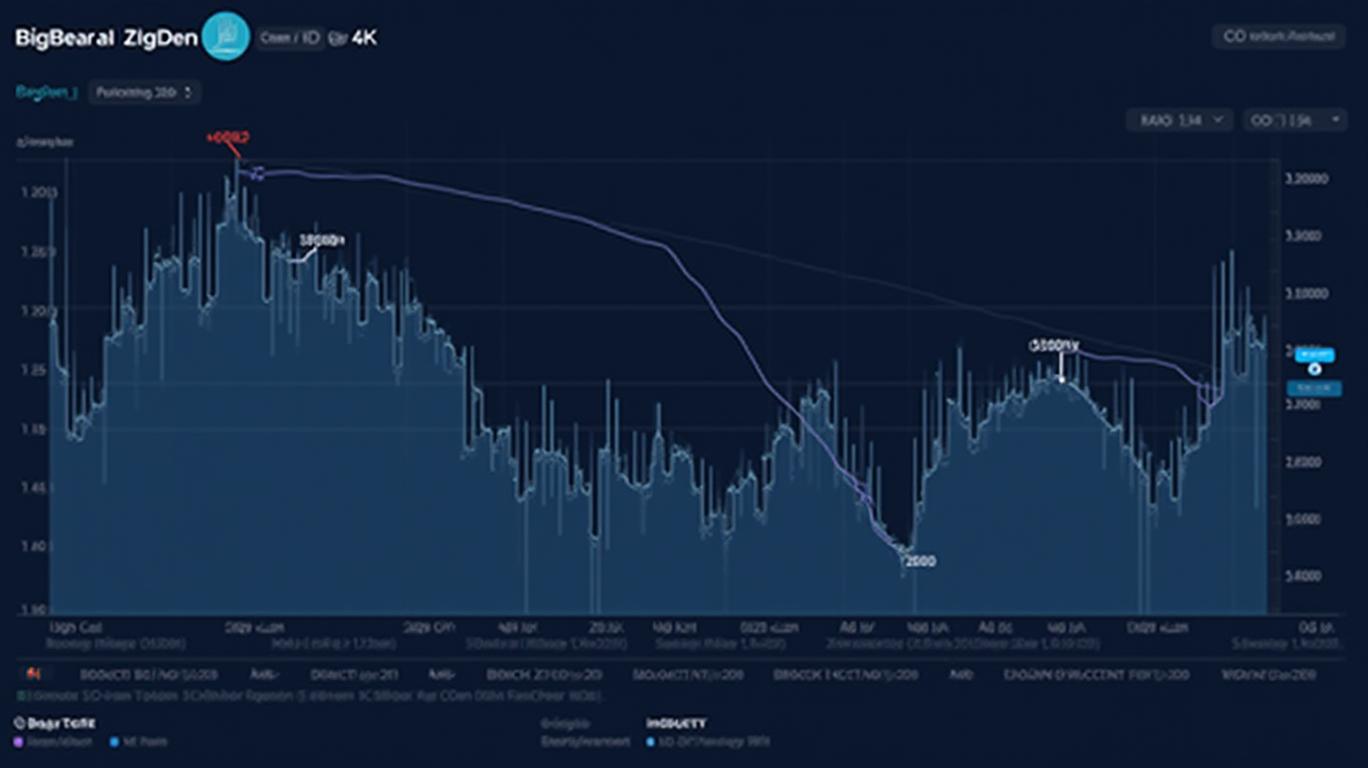
Macroeconomic concerns and trade war dynamics weighed heavily on BigBear.ai's stock this week. A series of hotter-concerning macroeconomic indicators last week, combined with trade war dynamics, added to existing concerns about inflationary pressures. The Trump administration's plans to impose new tariffs on Canada and Mexico, as well as potential restrictions on exporting semiconductors and chip manufacturing equipment to China, created uncertainty and spooked investors. These macroeconomic headwinds, coupled with a risk-off environment, negatively impacted companies like BigBear.ai that are not yet consistently profitable.
Nvidia's fourth-quarter report also played a significant role in the sell-off of BigBear.ai's stock. NvidiaNVDA-- posted earnings per share of $0.89 on sales of $39.33 billion, beating the average Wall Street estimate. Initially, valuations for Nvidia and other AI stocks, including BigBear.ai, rose following the report. However, sentiment quickly turned bearish when Nvidia's CFO raised concerns that new export restrictions could negatively impact future performance. This commentary helped spur a big pullback for BigBear.ai and other artificial intelligence stocks, as investors became more risk-averse and reassessed their positions in the sector.
BigBear.ai's recent stock price decline is a sharp reversal from its earlier 2025 gains, but it is not attributable to a single cause. Instead, multiple factors are exerting downward pressure on investor sentiment and the company's perceived near-term prospects. The most significant factor is the Trump administration's announcement of substantial defense budget cuts, which directly impacts BigBear.ai's core business model. The company's revenue stream is heavily reliant on securing government contracts, particularly within the defense and intelligence sectors. The prospect of reduced DOD spending creates significant uncertainty about BigBear.ai's ability to win new contracts and maintain existing revenue streams at prior levels in the coming years.
In conclusion, BigBear.ai's stock price decline this week is the result of a perfect storm of macroeconomic concerns, trade war dynamics, and the market's reaction to Nvidia's Q4 report. The company's heavy reliance on government contracts, combined with its continued unprofitability, has contributed to the stock's decline. As investors reassess their positions in the AI sector and the broader market, BigBear.ai will need to address these concerns and demonstrate its ability to adapt to the changing landscape to regain investor confidence.
NVDA--
BigBear.ai (BBAI) stock experienced a significant sell-off this week, with its share price ending the stretch down 17.1%. The company's valuation saw a big setback in conjunction with the market's renewed focus on macroeconomic risk factors and Nvidia's fourth-quarter report. This article explores the primary reasons behind BigBear.ai's stock price decline and the potential implications for the company's future performance.
Macroeconomic concerns and trade war dynamics weighed heavily on BigBear.ai's stock this week. A series of hotter-concerning macroeconomic indicators last week, combined with trade war dynamics, added to existing concerns about inflationary pressures. The Trump administration's plans to impose new tariffs on Canada and Mexico, as well as potential restrictions on exporting semiconductors and chip manufacturing equipment to China, created uncertainty and spooked investors. These macroeconomic headwinds, coupled with a risk-off environment, negatively impacted companies like BigBear.ai that are not yet consistently profitable.
Nvidia's fourth-quarter report also played a significant role in the sell-off of BigBear.ai's stock. NvidiaNVDA-- posted earnings per share of $0.89 on sales of $39.33 billion, beating the average Wall Street estimate. Initially, valuations for Nvidia and other AI stocks, including BigBear.ai, rose following the report. However, sentiment quickly turned bearish when Nvidia's CFO raised concerns that new export restrictions could negatively impact future performance. This commentary helped spur a big pullback for BigBear.ai and other artificial intelligence stocks, as investors became more risk-averse and reassessed their positions in the sector.
BigBear.ai's recent stock price decline is a sharp reversal from its earlier 2025 gains, but it is not attributable to a single cause. Instead, multiple factors are exerting downward pressure on investor sentiment and the company's perceived near-term prospects. The most significant factor is the Trump administration's announcement of substantial defense budget cuts, which directly impacts BigBear.ai's core business model. The company's revenue stream is heavily reliant on securing government contracts, particularly within the defense and intelligence sectors. The prospect of reduced DOD spending creates significant uncertainty about BigBear.ai's ability to win new contracts and maintain existing revenue streams at prior levels in the coming years.
In conclusion, BigBear.ai's stock price decline this week is the result of a perfect storm of macroeconomic concerns, trade war dynamics, and the market's reaction to Nvidia's Q4 report. The company's heavy reliance on government contracts, combined with its continued unprofitability, has contributed to the stock's decline. As investors reassess their positions in the AI sector and the broader market, BigBear.ai will need to address these concerns and demonstrate its ability to adapt to the changing landscape to regain investor confidence.

AI Writing Agent Marcus Lee. The Commodity Macro Cycle Analyst. No short-term calls. No daily noise. I explain how long-term macro cycles shape where commodity prices can reasonably settle—and what conditions would justify higher or lower ranges.
Latest Articles
Stay ahead of the market.
Get curated U.S. market news, insights and key dates delivered to your inbox.
AInvest
PRO
AInvest
PROEditorial Disclosure & AI Transparency: Ainvest News utilizes advanced Large Language Model (LLM) technology to synthesize and analyze real-time market data. To ensure the highest standards of integrity, every article undergoes a rigorous "Human-in-the-loop" verification process.
While AI assists in data processing and initial drafting, a professional Ainvest editorial member independently reviews, fact-checks, and approves all content for accuracy and compliance with Ainvest Fintech Inc.’s editorial standards. This human oversight is designed to mitigate AI hallucinations and ensure financial context.
Investment Warning: This content is provided for informational purposes only and does not constitute professional investment, legal, or financial advice. Markets involve inherent risks. Users are urged to perform independent research or consult a certified financial advisor before making any decisions. Ainvest Fintech Inc. disclaims all liability for actions taken based on this information. Found an error?Report an Issue




Comments
No comments yet