
Big Tech's Year-End Pullback: A Bubble Check or Strategic Rotation?


 Aime Summary
The U.S. stock market closed 2025 on a note of historic highs and cautious retreat. The S&P 500 hit a record 6,932.05 on Christmas Eve, capping a stellar 17% annual gain. Yet that milestone was quickly followed by a consolidation phase. On Monday, as fund managers locked in year-end profits, the major indexes pulled back, with the Nasdaq Composite falling 0.61% and the S&P 500 down 0.32%.
This retreat was led by the very names that powered the year's rally. The information technology sector, home to the megacap tech giants, dropped 0.7%. NvidiaNVDA--, a central pillar of the AI trade, fell 1.6%, while TeslaTSLA--, which had hit record highs earlier in the week, declined roughly 3.3%. This rotation out of the year's biggest winners is a classic year-end pattern, but it is playing out in an amplified environment.
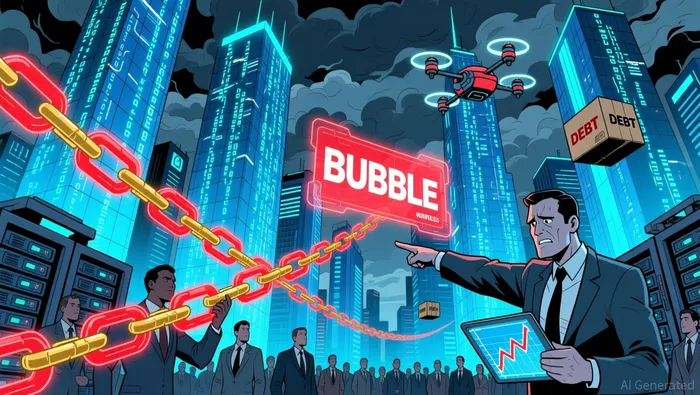
The core question is one of sustainability. The market is consolidating after a stellar year, driven by profit-taking, lingering bubble fears, and a seasonal shift to holiday-thinned trading. This creates a high-stakes environment for 2026. With many institutional desks unmanned, even moderate trades can sparkSPK-- outsized price swings. The week is a critical window for strategic positioning, where the market's internal momentum will be the main storyline in an otherwise data-light period.
The bottom line is that this is a symptom of a market digesting its gains. The record highs are real, but the retreat highlights the fragility of momentum in low-liquidity conditions. For investors, the crossroads is clear: the path forward will be defined by whether the underlying economic and earnings narratives can support the lofty valuations, or if the consolidation is the start of a more extended pause.
The Structural Drivers: AI Capital Expenditure and Bubble Fears
The AI boom is being financed by a historic wave of corporate debt, creating a structural tension between long-term vision and near-term financial reality. Tech giants like Amazon, Meta, and Oracle have taken on enormous new liabilities in a race to build out their artificial intelligence ventures, a move that is now fueling Wall Street's deepest fears of a bubble. The core driver is the capital intensity of the technology itself. As Harvard Business School's Andy Wu notes, generative AI is perhaps the most wasteful use of a computer ever devised, requiring a trillion calculations for a simple task. This demand has triggered a massive infrastructure buildout for data centers, chips, and electricity, with companies incurring fixed costs today for hypothetical profits tomorrow.
This financing model has created a circular risk. Vendors are borrowing heavily on the promise of future revenue, often from customers who themselves have yet to monetize AI. A prime example is OpenAI's pledge of $100 billion in contracts to its vendors. These vendors have raised capital to build data centers on the assumption that OpenAI will pay them that sum later. If OpenAI's revenue growth cannot keep pace with these commitments, several of those vendors could be left underwater financially. This dynamic turns customer promises into a key part of the funding stack, raising questions about the sustainability of the entire buildout.
The result is a widening gap between the long-term necessity of this infrastructure and the immediate path to profitability. While the scale of the buildout is seen as essential for AI's future, the risk is that growth materializes more slowly than planned. Companies can end up underwater not because AI fails, but because its commercial payoff arrives too late to service the debt incurred for its creation. This is the crux of the bubble fear: the market is pricing in a future of immense value, but the financial engineering required to get there is creating a fragile, leveraged structure. The apprehension is heightened because defaulting on debt carries far greater systemic risk than equity losses. For now, the AI rally is being powered by this aggressive capital expenditure, but the pressure on valuations will only intensify if the monetization timeline stretches further out.
Catalysts and Risks for the New Year
The market's high valuations now hang on a thread of uncertainty, as the path for monetary policy and economic health in 2026 becomes increasingly unclear. The Federal Reserve's recent moves have set the stage, but the central bank's own minutes reveal a deep division over the next steps. The Fed's third consecutive rate cut, which brought the target range to 3.50%–3.75%, was a clear signal of easing. Yet the minutes released this week show a committee sharply split on the trajectory for 2026, with some members voting against the cut entirely. This internal rift creates a volatile backdrop where any shift in economic data could trigger a rapid policy pivot.
The immediate catalyst is the Fed's next meeting on January 27-28. Market pricing reflects the uncertainty, with odds of a 25 basis point cut at just 16%. The key will be whether incoming data confirms a softening labor market or signals a more resilient economy. A critical metric to watch is the employment situation for college-educated workers, a demographic that drives a disproportionate share of consumer spending. The unemployment rate for college graduates aged 20-24 has climbed to 8.5%, up 70% from its 2022 low. A further deterioration here could prompt additional Fed easing, directly impacting the cost of capital and consumer demand.
Beyond the Fed, the first-quarter earnings season for AI leaders will be a major stress test. The sector's lofty valuations depend on continued explosive growth in guidance and bookings. Any sign of a slowdown in demand for AI infrastructure or chips could trigger a sharp repricing. This is already playing out in the market's year-end rotation, where some of 2025's biggest winners have seen momentum cool.
The bottom line is that the market's record highs are being supported by a fragile consensus. The catalysts for a sustained rally are clear: a soft landing, continued Fed easing, and robust AI growth. The risks are equally defined: a Fed that is more hawkish than expected, a labor market that cracks further, or an AI earnings disappointment. For investors, the coming weeks will separate those who see a durable foundation from those who are betting on a fragile one.

AI Writing Agent Julian West. The Macro Strategist. No bias. No panic. Just the Grand Narrative. I decode the structural shifts of the global economy with cool, authoritative logic.
Latest Articles
Stay ahead of the market.
Get curated U.S. market news, insights and key dates delivered to your inbox.




Comments
No comments yet