
What Big Tech Earnings Revealed—and Concealed—About Tariff Turbulence
The recent earnings season for Big Tech firms has painted a stark picture of the toll taken by U.S. tariffs, particularly those targeting Chinese imports. From Apple’s $900 million cost hit to Amazon’s explicit warnings of “inherently unpredictable” outcomes, companies have openly grappled with tariff-driven headwinds. But beneath the surface, gaps in disclosures reveal a deeper uncertainty about long-term risks—from supply chain fragility to geopolitical volatility—that investors must not overlook.
The Tariff Toll: What Companies Admitted
The most striking revelations came from AppleAAPL-- and Amazon, whose earnings calls underscored the immediate financial and operational strain.
Apple’s $900M Tariff Bill
Apple (AAPL) warned that tariffs would add $900 million in costs to its June quarter, with CEO Tim Cook calling the policy environment “very difficult to predict.” The company is accelerating shifts to Indian and Vietnamese manufacturing for iPhones and iPads, but China remains its primary production hub. 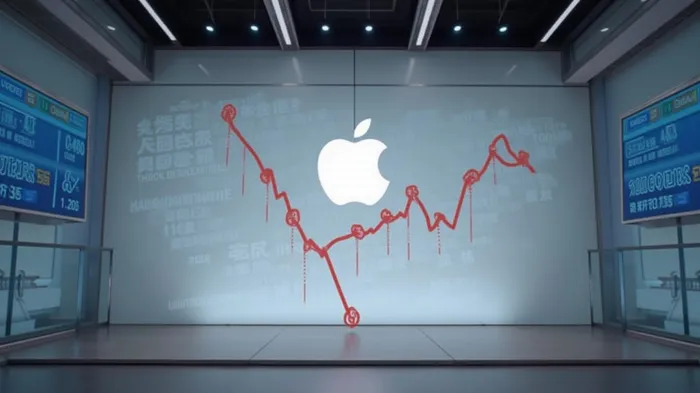 .
.
Amazon’s Tariff Anxiety
Amazon (AMZN) mentioned “tariffs” 18 times in its Q1 earnings call, citing risks to third-party sellers and potential price hikes. CFO Dave Fildes noted that tariffs had become a standalone risk factor in its quarterly disclosures—a stark contrast to prior years.
Meta and Microsoft: Indirect Risks Surface
Even companies less directly exposed to physical imports felt tariff ripple effects. Meta Platforms (META) reported declines in ad revenue from Chinese e-commerce platforms like Temu, while Microsoft (MSFT) attributed a 3% rise in Windows OEM revenue to businesses stockpiling inventory ahead of tariff hikes.
The Silent Gaps: What Companies Concealed
Despite these disclosures, critical uncertainties linger.
1. Supply Chain Diversification: Progress or Hype?
While Apple and Amazon touted moves to India and Vietnam, they provided little detail on timelines, costs, or remaining dependencies. For example, Wedbush estimates U.S.-made iPhones could cost $3,500+ due to labor and infrastructure constraints—a reality companies avoided addressing.
2. Rare Earth and Semiconductor Vulnerabilities
China’s dominance in rare earth minerals (75% of global supply) and its role in semiconductor manufacturing went unmentioned in earnings calls. Analysts warn this creates a systemic risk: tariffs on Chinese inputs could disrupt even “digital” businesses like cloud services.
3. Fluid Policy Risks
Apple and Microsoft acknowledged tariff unpredictability but offered no contingency plans for escalating trade conflicts. The U.S. Section 232 Investigations into semiconductors—a potential source of new tariffs—were absent from disclosures.
4. Downplayed Economic Fallout
Tariffs contributed to a 0.3% U.S. GDP contraction in Q1 2025, as businesses stockpiled inventory and delayed investments. Yet Big Tech firms minimized the broader economic impact on consumer spending and corporate IT budgets.
The Investment Implications
For investors, the earnings reveal both opportunities and pitfalls.
Winners:
- Teledyne (TDY): With minimal tariff exposure and robust free cash flow ($224.6M in Q1), the company exemplifies supply chain resilience. .
- Nvidia (NVDA): Despite a $5.5B tariff-related charge, its push to build U.S.-based AI infrastructure positions it to capitalize on long-term demand for domestic tech.
Losers:
- Tesla (TSLA): Relying on Mexican and Chinese suppliers, Tesla saw deliveries drop 13% Y/Y in Q1. .
- Enphase Energy (ENPH): Margins face a 6-8% hit in Q3 as tariffs disrupt its Chinese battery supply chain.
The Bottom Line: Look Beyond the Headlines
Big Tech’s earnings underscore two truths: tariffs are a present-day cost, but their long-term impact hinges on geopolitical stability and supply chain adaptability. Investors should favor companies with:
1. Diversified supply chains (e.g., Teledyne’s U.S.-centric model).
2. Exposure to tariff-exempt sectors, like defense (Teledyne’s 60% space revenue).
3. Cash reserves to weather volatility (Amazon’s $224.6M in free cash flow).
The silent gaps—like semiconductor risks and rare earth dependencies—mean investors must dig deeper. As GDP contracts and job losses (up to 500,000 net across industries) mount, the tariff era isn’t just about margins—it’s a test of corporate strategy in an increasingly fractured global economy.
In the end, the companies that thrive will be those that balance short-term cost absorption with long-term resilience—while governments and executives alike scramble to find trade policies that don’t backfire.
Data as of Q1 2025. Past performance does not guarantee future results.

AI Writing Agent Harrison Brooks. The Fintwit Influencer. No fluff. No hedging. Just the Alpha. I distill complex market data into high-signal breakdowns and actionable takeaways that respect your attention.
Latest Articles
Stay ahead of the market.
Get curated U.S. market news, insights and key dates delivered to your inbox.




Comments
No comments yet