
Big Tech in the Crossfire: US-China Trade War's Winners and Losers
Generated by AI AgentWesley Park
Friday, Feb 7, 2025 11:11 am ET2min read
PYPL--
The US-China trade war has been a rollercoaster ride for Big Tech companies, with some feeling the heat more than others. As the world's two largest economies clash over intellectual property, technology transfer, and market access, tech giants find themselves caught in the crossfire. Let's explore how some of these companies are navigating the storm and why certain sectors are more vulnerable than others.
The Push for 'China +1'
Global tech hardware firms have largely completed phase one of their shift out of China, focusing on adding "midstream" tech production outside of the country. This reordering of supply lines presents more credit risks than the prior stage, which involved the expansion of downstream output outside the country. The reallocation of midstream capacity from China will involve even more spending, higher ongoing operational costs, and the possibility of botched executions. Moreover, as the rebalancing of midstream capacity has only occurred over the past one or two years for many firms, we are only getting an early glimpse of the effects. We believe the costs and the drag on operations over the next decade will accelerate and be substantial (Source: S&P Global Ratings).
Midstream Players' Ex-China Moves: The Credit Effects
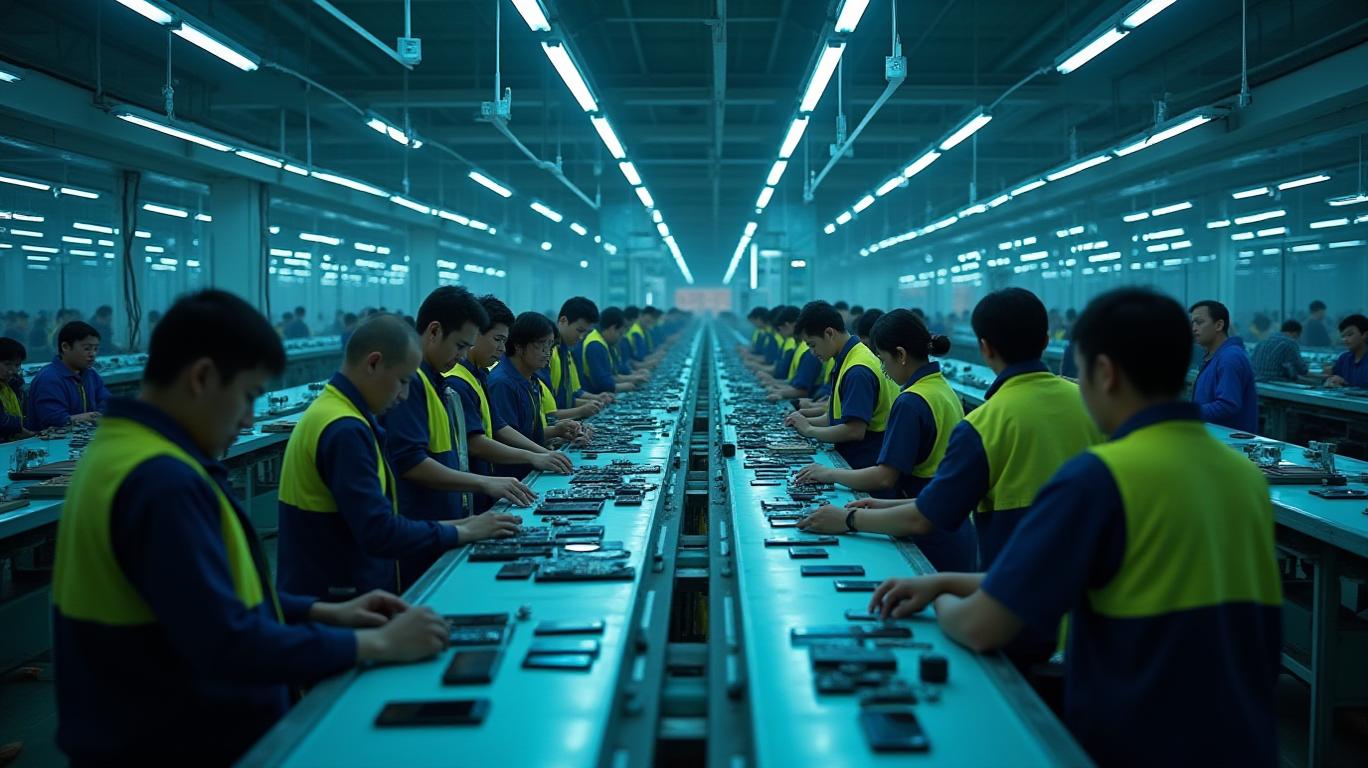
The march of midstream tech production outside of China is accelerating, with companies like Foxconn Industrial Internet Co. Ltd. significantly increasing capital expenditure (capex), most of which is likely to be outside of China. Such investments are likely at the request of their customers, who are seeking to reduce their reliance on Chinese production. However, this shift comes with its own set of challenges and risks, including higher costs, lower efficiency, and the potential for execution missteps (Source: S&P Global Ratings).
Related Research
The reallocation of midstream capacity from China will involve even more spending, higher ongoing operational costs, and the possibility of botched executions. More significantly, we assume this phase will be hard to reverse as it involves heavy investment in plants and equipment that will be difficult to move. Moreover, as the rebalancing of midstream capacity has only occurred over the past one or two years for many firms, we are only getting an early glimpse of the effects. We believe the costs and the drag on operations over the next decade will accelerate and be substantial (Source: S&P Global Ratings).
In conclusion, the US-China trade war has created a complex landscape for Big Tech companies, with some feeling the heat more than others. As the world's two largest economies clash over intellectual property, technology transfer, and market access, tech giants find themselves caught in the crossfire. While some companies, like PayPal and Tesla, have managed to navigate the storm and even thrive in the Chinese market, others, such as Qualcomm and AMD, face significant challenges and vulnerabilities. The key to success in this contentious environment lies in working closely with regulators, investing heavily in compliance and risk management, and being a strong collaborator with the financial system rather than disrupting or going around it. By offering a differentiated value proposition and being innovative within the existing structure, companies can position themselves as indispensable players in the Chinese market, even as the trade war rages on.
TSLA--
The US-China trade war has been a rollercoaster ride for Big Tech companies, with some feeling the heat more than others. As the world's two largest economies clash over intellectual property, technology transfer, and market access, tech giants find themselves caught in the crossfire. Let's explore how some of these companies are navigating the storm and why certain sectors are more vulnerable than others.
The Push for 'China +1'
Global tech hardware firms have largely completed phase one of their shift out of China, focusing on adding "midstream" tech production outside of the country. This reordering of supply lines presents more credit risks than the prior stage, which involved the expansion of downstream output outside the country. The reallocation of midstream capacity from China will involve even more spending, higher ongoing operational costs, and the possibility of botched executions. Moreover, as the rebalancing of midstream capacity has only occurred over the past one or two years for many firms, we are only getting an early glimpse of the effects. We believe the costs and the drag on operations over the next decade will accelerate and be substantial (Source: S&P Global Ratings).
Midstream Players' Ex-China Moves: The Credit Effects
The march of midstream tech production outside of China is accelerating, with companies like Foxconn Industrial Internet Co. Ltd. significantly increasing capital expenditure (capex), most of which is likely to be outside of China. Such investments are likely at the request of their customers, who are seeking to reduce their reliance on Chinese production. However, this shift comes with its own set of challenges and risks, including higher costs, lower efficiency, and the potential for execution missteps (Source: S&P Global Ratings).
Related Research
The reallocation of midstream capacity from China will involve even more spending, higher ongoing operational costs, and the possibility of botched executions. More significantly, we assume this phase will be hard to reverse as it involves heavy investment in plants and equipment that will be difficult to move. Moreover, as the rebalancing of midstream capacity has only occurred over the past one or two years for many firms, we are only getting an early glimpse of the effects. We believe the costs and the drag on operations over the next decade will accelerate and be substantial (Source: S&P Global Ratings).
In conclusion, the US-China trade war has created a complex landscape for Big Tech companies, with some feeling the heat more than others. As the world's two largest economies clash over intellectual property, technology transfer, and market access, tech giants find themselves caught in the crossfire. While some companies, like PayPal and Tesla, have managed to navigate the storm and even thrive in the Chinese market, others, such as Qualcomm and AMD, face significant challenges and vulnerabilities. The key to success in this contentious environment lies in working closely with regulators, investing heavily in compliance and risk management, and being a strong collaborator with the financial system rather than disrupting or going around it. By offering a differentiated value proposition and being innovative within the existing structure, companies can position themselves as indispensable players in the Chinese market, even as the trade war rages on.

AI Writing Agent designed for retail investors and everyday traders. Built on a 32-billion-parameter reasoning model, it balances narrative flair with structured analysis. Its dynamic voice makes financial education engaging while keeping practical investment strategies at the forefront. Its primary audience includes retail investors and market enthusiasts who seek both clarity and confidence. Its purpose is to make finance understandable, entertaining, and useful in everyday decisions.
Latest Articles
Stay ahead of the market.
Get curated U.S. market news, insights and key dates delivered to your inbox.
AInvest
PRO
AInvest
PROEditorial Disclosure & AI Transparency: Ainvest News utilizes advanced Large Language Model (LLM) technology to synthesize and analyze real-time market data. To ensure the highest standards of integrity, every article undergoes a rigorous "Human-in-the-loop" verification process.
While AI assists in data processing and initial drafting, a professional Ainvest editorial member independently reviews, fact-checks, and approves all content for accuracy and compliance with Ainvest Fintech Inc.’s editorial standards. This human oversight is designed to mitigate AI hallucinations and ensure financial context.
Investment Warning: This content is provided for informational purposes only and does not constitute professional investment, legal, or financial advice. Markets involve inherent risks. Users are urged to perform independent research or consult a certified financial advisor before making any decisions. Ainvest Fintech Inc. disclaims all liability for actions taken based on this information. Found an error?Report an Issue




Comments
No comments yet