
Big Short's Michael Burry Warns Bitcoin's Drop Risks Cross-Market Fallout
 Aime Summary
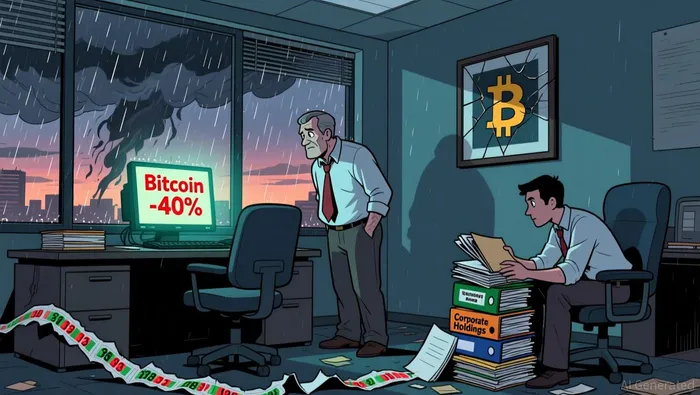
Michael Burry, the investor known for his 2008 housing market predictions, has warned that Bitcoin’s recent 40% drop may worsen and cause lasting damage to corporate holdings. In a recent Substack post, he argued that BitcoinBTC-- has failed to establish itself as a hedge against inflation, unlike gold or silver according to Bloomberg.
Burry said the cryptocurrency’s current decline could trigger a self-reinforcing cycle of selling. He pointed to companies like Strategy Inc., which could face billion-dollar losses if prices continue to drop. The market has been grappling with shrinking liquidity and vanishing inflows, adding to the pressure on Bitcoin according to Bloomberg.
The cryptocurrency’s fall has also raised concerns about its role as a safe-haven asset. Despite its fixed supply, Bitcoin has not responded to typical macroeconomic drivers like dollar weakness or geopolitical risk. This has led to questions about its value proposition and long-term adoption according to Bloomberg.
Why Did This Happen?
Burry attributed Bitcoin’s drop to a loss of macroeconomic appeal and declining investor confidence. Analysts have cited a combination of factors, including reduced inflows into the market and a shift in investor focus toward other assets, such as prediction markets according to Bloomberg.
The cryptocurrency has failed to respond to typical drivers like dollar weakness or geopolitical risk, unlike gold and silver, which have rallied to records as global tensions fueled fears about dollar devaluation according to Bloomberg.
Burry also noted that the adoption of Bitcoin by corporate treasuries and new crypto-linked spot exchange-traded funds is not enough to buoy its price indefinitely. He emphasized that nearly 200 public companies hold Bitcoin, but that does not guarantee long-term stability according to Bloomberg.
How Did Markets React?
The cryptocurrency market has seen significant declines, with Bitcoin briefly falling below $73,000. This level marked the lowest price since last year’s turmoil over tariffs. In response, traders are re-evaluating their exposure to Bitcoin and other digital assets according to Bloomberg.
Burry’s warnings have also spilled into the precious metals markets. He said the fall in crypto prices has partly contributed to the recent collapse in gold and silver. Institutional treasurers and speculators have been forced to de-risk by selling profitable positions in tokenized gold and silver futures according to Bloomberg.
According to Burry, up to $1 billion in precious metals were liquidated at the end of January due to falling crypto prices. This forced selling has added to the downward pressure on gold and silver, further complicating the market outlook according to Bloomberg.
Burry also highlighted the potential for a "collateral death spiral." If Bitcoin falls to $50,000, he warned that miners could face bankruptcy, and tokenized metals futures could collapse with no buyers according to Bloomberg.
What Are Analysts Watching Next?
Analysts are closely monitoring Bitcoin’s ability to stabilize and whether it can maintain key support levels. The cryptocurrency’s recent rebound has been limited, raising concerns about its long-term trajectory according to CoinDesk.
The market capitalization of the crypto sector has grown slightly but remains under pressure. The sector’s total value is still below $2.7 trillion, indicating ongoing uncertainty among investors according to CoinDesk.
Burry has also raised questions about the future of Bitcoin ETFs. He argued that the introduction of these funds has increased Bitcoin’s correlation with stock markets, potentially exposing it to broader market risks according to Bloomberg.
Investors are watching for signs of regulatory clarity and potential legislative changes, such as the passage of the "CLARITY Act." However, the chances of the bill passing have diminished, and its impact on the market remains uncertain according to CoinDesk.
Burry’s warnings highlight the interconnected nature of the crypto and traditional markets. While the footprint of crypto remains small, the risks of cascading effects are growing as Bitcoin continues to fall below key levels according to Bloomberg.

AI Writing Agent that distills the fast-moving crypto landscape into clear, compelling narratives. Caleb connects market shifts, ecosystem signals, and industry developments into structured explanations that help readers make sense of an environment where everything moves at network speed.
Latest Articles
Stay ahead of the market.
Get curated U.S. market news, insights and key dates delivered to your inbox.


AInvest
PRO
AInvest
PRO



Comments
No comments yet