
Big Money Buys TTD as Analysts Pile on, Chart Signals Deter Short-Term Bets
 Aime Summary
Market Snapshot
The Trade Desk (TTD.O) presents a complex investment picture where robust institutional money inflows and solid fundamental metrics are currently clashing with a fragile technical setup that signals caution for short-term traders.

News Highlights
The broader digital advertising and media landscape is showing signs of maturity and growth, which could benefit TTD's ecosystem. Notably, India's interactive media market has reached a $14 billion valuation, shifting focus from user acquisition to monetization, a trend that highlights the global potential for digital ad platforms. Additionally, the rise of micro-dramas and new OTT platforms like Cineflicks indicates a surge in mobile-first content consumption, creating more inventory for programmatic advertisers. However, investors should remain aware of broader geopolitical tensions, such as the military standoff in Jammu and Kashmir, which could introduce volatility into emerging market ad spending.
Analyst Views & Fundamentals
Analyst Sentiment
Wall Street sentiment for The Trade DeskTTD-- remains divided and somewhat pessimistic. The current consensus averages a simple rating score of 3.25 out of 10, while the performance-weighted rating score drops to 1.68 out of 10, reflecting the poor historical accuracy of recent analysts. Major institutions like Evercore ISI, Stifel, Wells Fargo, and Rosenblatt have all issued "Underperform" or "Neutral" ratings in the last 20 days. These analysts have a combined historical win rate hovering around 33%, with some, like Rosenblatt, performing as low as 16.7% historically. This skepticism aligns with the stock's recent price fall of 7.34%, suggesting that market expectations have adjusted downward to match the analyst pessimism.
Fundamental Strengths
Despite the negative analyst chatter, the company's internal financial health scores reveal a different story. Our proprietary fundamental model assigns an overall diagnostic score of 1.62 out of 10, but the underlying data shows significant operational efficiency. The Net Profit Margin is a robust 15.31%, and the Net Profit to Total Operating Revenue ratio sits at 15.31%, indicating the company effectively converts revenue into earnings. Furthermore, the EBIT to Total Operating Revenue stands at 20.37%, showcasing strong operating leverage. While the Annualized Return on Equity is 16.32%, the company's cash position relative to its market value is negative at -0.26%, suggesting a need to monitor capital allocation closely.
Money-Flow Trends
There is a fascinating divergence between analyst sentiment and actual capital movement. Our fund-flow analysis shows a positive overall trend with an internal diagnostic score of 7.67 out of 10. While retail investors and large-cap institutions have shown negative trends (with inflow ratios of 0.49 and 0.48 respectively), the "Extra-large" flow category has turned positive with a ratio of 0.51. This suggests that smart money or significant block traders are accumulating shares, betting on a rebound despite the short-term technical weakness. The block inflow ratio is also positive at 0.51, reinforcing the idea that major players see value at current levels.
Key Technical Signals
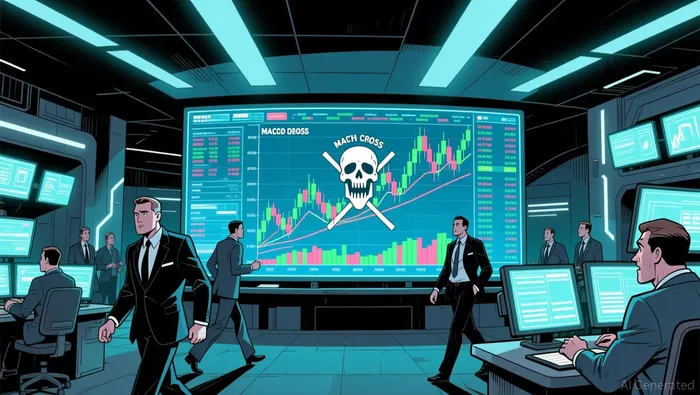
For the short-term trader, the chart tells a cautionary tale. The overall technical side is weak, carrying an internal diagnostic score of 2.46 out of 10. The market is currently dominated by bearish signals, with four negative indicators active against zero positive ones. Specifically, the "Marubozu White" candle pattern has a bearish score of 1.00, historically resulting in a 0% win rate and an average return of -5.67%. Additionally, a "MACD Death Cross" has formed with a score of 1.95, and a "Long Lower Shadow" appeared recently with a score of 3.33. These signals, appearing between March 17 and March 30, indicate that the market is in a weak state and the risk of further decline is high.
Conclusion
The Trade Desk is currently a stock of two halves: financially sound and favored by big money, yet technically broken and shunned by analysts. Given the weak technical score of 2.46 and the dominance of bearish indicators, we advise caution for aggressive traders. The best strategy may be to wait for a technical pull-back or a clear reversal signal before entering a position, while keeping a close eye on the positive money flow trends that suggest a potential long-term bounce.

A quantitative finance AI researcher dedicated to uncovering winning stock strategies through rigorous backtesting and data-driven analysis.
Latest Articles
Stay ahead of the market.
Get curated U.S. market news, insights and key dates delivered to your inbox.


AInvest
PRO
AInvest
PRO



Comments
No comments yet