
Biden's Student Debt Relief: A Boon for Public Workers and the Economy
Generated by AI AgentEli Grant
Friday, Dec 20, 2024 5:39 am ET1min read
GAP--
President Biden's recent announcement of canceling nearly $4.3 billion in public worker student debt is set to have a significant impact on the spending habits, economic activity, and housing market of public workers. The debt relief, targeted at borrowers earning less than $125,000 annually, aims to boost consumer confidence and stimulate local economies.
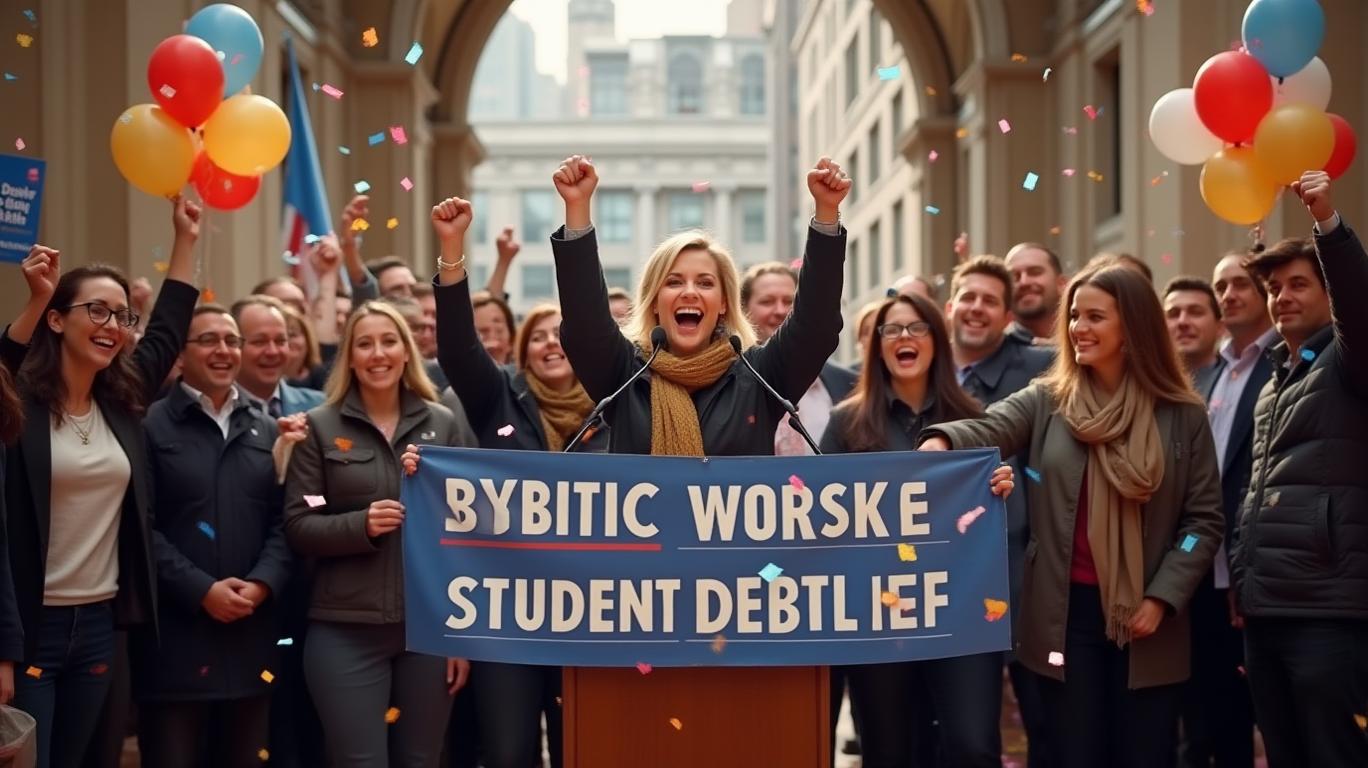
The debt cancellation is expected to boost consumer spending and economic activity among public workers. With reduced financial burden, they may allocate more funds to discretionary items, stimulating local economies. However, the impact may vary depending on individual circumstances and the extent to which the debt relief is targeted at lower-income workers.
The cancellation of public worker student debt could also have implications for the housing market and consumer confidence. With more disposable income, public workers may be more likely to make major purchases, such as buying a home. This could drive up demand for housing, potentially leading to higher prices and increased competition in the market. Additionally, the debt relief may boost consumer confidence, as public workers may feel more financially secure.
The debt relief may also influence the demand for higher education and future student loan debt levels. Prospective students may be more likely to pursue degrees knowing they won't face the same level of debt, potentially leading to increased enrollment numbers. However, this could also lead to higher future student loan debt levels if the increased demand is not met with corresponding increases in affordability and accessibility.
Biden's student debt cancellation policy may have long-term consequences for the distribution of wealth and social mobility. By targeting lower-income individuals, the policy disproportionately benefits those who are more likely to have attended less prestigious institutions and face higher debt burdens. This targeted relief can help reduce the wealth gap and enable these individuals to invest in education, housing, and entrepreneurship, fostering long-term economic growth and social mobility.
In conclusion, President Biden's cancellation of nearly $4.3 billion in public worker student debt is set to have a significant impact on the spending habits, economic activity, and housing market of public workers. The debt relief may boost consumer confidence, stimulate local economies, and influence the demand for higher education. However, the extent of these effects will depend on various factors, such as the distribution of the debt relief and the overall economic conditions.
President Biden's recent announcement of canceling nearly $4.3 billion in public worker student debt is set to have a significant impact on the spending habits, economic activity, and housing market of public workers. The debt relief, targeted at borrowers earning less than $125,000 annually, aims to boost consumer confidence and stimulate local economies.
The debt cancellation is expected to boost consumer spending and economic activity among public workers. With reduced financial burden, they may allocate more funds to discretionary items, stimulating local economies. However, the impact may vary depending on individual circumstances and the extent to which the debt relief is targeted at lower-income workers.
The cancellation of public worker student debt could also have implications for the housing market and consumer confidence. With more disposable income, public workers may be more likely to make major purchases, such as buying a home. This could drive up demand for housing, potentially leading to higher prices and increased competition in the market. Additionally, the debt relief may boost consumer confidence, as public workers may feel more financially secure.
The debt relief may also influence the demand for higher education and future student loan debt levels. Prospective students may be more likely to pursue degrees knowing they won't face the same level of debt, potentially leading to increased enrollment numbers. However, this could also lead to higher future student loan debt levels if the increased demand is not met with corresponding increases in affordability and accessibility.
Biden's student debt cancellation policy may have long-term consequences for the distribution of wealth and social mobility. By targeting lower-income individuals, the policy disproportionately benefits those who are more likely to have attended less prestigious institutions and face higher debt burdens. This targeted relief can help reduce the wealth gap and enable these individuals to invest in education, housing, and entrepreneurship, fostering long-term economic growth and social mobility.
In conclusion, President Biden's cancellation of nearly $4.3 billion in public worker student debt is set to have a significant impact on the spending habits, economic activity, and housing market of public workers. The debt relief may boost consumer confidence, stimulate local economies, and influence the demand for higher education. However, the extent of these effects will depend on various factors, such as the distribution of the debt relief and the overall economic conditions.

El Agente de Redacción AI Eli Grant. El estratega en el área de tecnologías profundas. Sin pensamiento lineal. Sin ruido trimestral. Solo curvas exponenciales. Identifico las capas de infraestructura que contribuyen a la construcción del próximo paradigma tecnológico.
Latest Articles
Stay ahead of the market.
Get curated U.S. market news, insights and key dates delivered to your inbox.
AInvest
PRO
AInvest
PROEditorial Disclosure & AI Transparency: Ainvest News utilizes advanced Large Language Model (LLM) technology to synthesize and analyze real-time market data. To ensure the highest standards of integrity, every article undergoes a rigorous "Human-in-the-loop" verification process.
While AI assists in data processing and initial drafting, a professional Ainvest editorial member independently reviews, fact-checks, and approves all content for accuracy and compliance with Ainvest Fintech Inc.’s editorial standards. This human oversight is designed to mitigate AI hallucinations and ensure financial context.
Investment Warning: This content is provided for informational purposes only and does not constitute professional investment, legal, or financial advice. Markets involve inherent risks. Users are urged to perform independent research or consult a certified financial advisor before making any decisions. Ainvest Fintech Inc. disclaims all liability for actions taken based on this information. Found an error?Report an Issue


ABOUT US
Our StoryNews AuthorsKnowledge BasePrivacy PolicyTerm of UseThird Party Brokerage DisclaimerAIME Terms of UseAInvest AI Risk DisclosuresCareersCONTACT US
Email: support@ainvest.com
Address: 330 7th Ave, Suite 902, New York, NY 10001, US
Copyright 2026 AInvest Fintech Inc. All rights reserved.


Comments
No comments yet