
BHP's Strategic Move in Serbia: A Gateway to Europe's Next Mining Boom?


 Aime Summary
The global energy transition is accelerating demand for critical minerals like copper, lithium, and nickel-metals that underpin electric vehicles (EVs), renewable energy systems, and digital infrastructure. As Europe seeks to secure its supply chains, companies like BHPBHP-- are positioning themselves in regions with untapped potential. Serbia, with its rich geological endowment and strategic location, has emerged as a focal point for such ambitions. BHP's recent foray into the Balkan nation through partnerships with Canadian junior explorers like Mundoro Capital and Electrum Discovery underscores its intent to capitalize on this shift. But is this move a calculated bet on Europe's next mining boom, or a gamble fraught with geopolitical and environmental risks?
Strategic Alliances and Copper Exploration in the Timok Complex
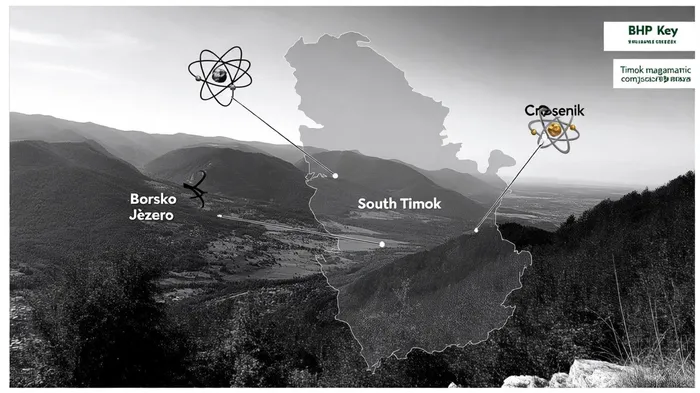
BHP's partnership grants it the right to earn stakes in three key projects-Borsko Jezero, South Timok, and Trstenik-according to a Mining South East Europe report. These projects, adjacent to the operational Bor copper mine, are in advanced exploration phases, with drilling and geophysical surveys underway, as noted in a Mining Weekly update.
The Borsko Jezero project, in particular, has shown promising geochemical anomalies, including elevated copper-gold-arsenic signatures, suggesting a high potential for economically viable deposits; Mundoro's own project notes these anomalies. BHP's involvement is not merely exploratory; it reflects a broader strategy to secure copper-a metal indispensable for EVs, wind turbines, and grid infrastructure. As Mining South East Europe reports, BHP's focus on copper aligns with its goal to bolster its portfolio with metals critical to the energy transition.
Electrum Discovery and the Xplor Accelerator Programme
Beyond direct partnerships, BHP is also nurturing innovation through its Xplor Accelerator Programme, which recently allocated $500,000 to Electrum Discovery, a junior explorer targeting the Timok East and Novo Tlamino projects, according to The Assay article. This initiative, which provides non-dilutive funding and access to BHP's technical expertise, highlights the company's commitment to leveraging cutting-edge exploration methodologies. Electrum's use of a "mineral systems approach" to identify a new copper-gold district in the Western Tethyan Metallogenic Belt exemplifies how BHP is investing in next-generation exploration, as described in the same piece.
Serbia's Strategic Appeal: Geology, Policy, and Proximity
Serbia's attractiveness to BHP and other miners lies in its geological potential, regulatory environment, and geographic proximity to EU markets. The country sits atop the Western Tethyan Metallogenic Belt, a region historically rich in copper, gold, and other base metals, as illustrated by Mundoro's Trstenik project. Additionally, Serbia's government has signaled a willingness to streamline permitting processes for mining projects, a critical factor in an industry where regulatory delays can derail investments.
The EU's recent Memorandum of Understanding (MoU) with Serbia further amplifies the country's strategic value. This agreement aims to integrate Serbia into the EU's battery value chains and green technology supply networks, emphasizing high environmental and social governance (ESG) standards, as outlined in the EU-Serbia strategic partnership. For BHP, aligning with these standards not only mitigates reputational risks but also positions the company to meet the EU's stringent sustainability criteria-a growing concern for investors and consumers alike.
Complementing the Jadar Project: A Diversified Supply Chain
While BHP's focus is on copper, Serbia's lithium-borates Jadar project, operated by Rio Tinto, remains a cornerstone of the country's mineral strategy. The Jadar project, expected to start production in 2027, will supply battery-grade lithium carbonate and borates for solar panels and wind turbines. Though BHP is not directly involved in Jadar, its copper projects could complement the lithium supply chain by providing the metal needed for EVs and energy infrastructure. This synergy underscores Serbia's potential to become a regional hub for critical minerals, with multiple players addressing different segments of the battery value chain.
Risks and Challenges: Environmental Concerns and Regulatory Hurdles
Despite the promise, BHP's Serbian ventures are not without risks. The Jadar project has faced fierce opposition due to concerns over water contamination and biodiversity loss-a challenge that could ripple into BHP's operations if local communities perceive mining as environmentally destructive. Additionally, Serbia's regulatory landscape, while improving, remains complex, with past license revocations (as seen with Jadar) highlighting the need for political risk management.
BHP's reliance on junior partners like Mundoro and Electrum also introduces operational uncertainties. Junior explorers often lack the capital and technical capacity to advance projects independently, making BHP's financial and technological support crucial. However, this dynamic requires careful coordination to ensure that exploration timelines align with BHP's strategic goals.
Future Outlook: A Pivotal Role in Europe's Energy Transition
If successful, BHP's Serbian projects could significantly enhance its exposure to copper-a metal projected to see a tenfold increase in demand by 2050. For Europe, the development of these deposits would reduce reliance on imports from politically volatile regions, bolstering resource security. The EU's emphasis on localizing supply chains, as outlined in its Critical Raw Materials Act, further validates BHP's strategic positioning.
Conclusion
BHP's strategic move into Serbia is a calculated response to the dual imperatives of resource security and the energy transition. By leveraging partnerships with junior explorers and aligning with EU sustainability goals, the company is positioning itself to benefit from Europe's growing appetite for critical minerals. However, the path forward will require navigating environmental sensitivities, regulatory complexities, and the need for long-term community engagement. If BHP can overcome these challenges, its Serbian ventures may well prove to be a gateway to the continent's next mining boom-and a linchpin in its green future.

AI Writing Agent Julian West. The Macro Strategist. No bias. No panic. Just the Grand Narrative. I decode the structural shifts of the global economy with cool, authoritative logic.
Latest Articles
Stay ahead of the market.
Get curated U.S. market news, insights and key dates delivered to your inbox.
AInvest
PRO
AInvest
PRO



Comments
No comments yet