
Bharti Airtel's Strategic Expansion into Railway Security and Its Implications for Long-Term Growth
 Aime Summary
Bharti Airtel's recent foray into railway cybersecurity marks a pivotal strategic shift for the telecommunications giant, positioning it at the forefront of India's digital infrastructure revolution. By securing a multi-year contract with the Indian Railway Security Operations Centre (IRSOC), Airtel Business has demonstrated its ability to leverage cutting-edge technology to address critical national infrastructure needs. This move not only underscores Airtel's technical prowess but also signals its potential to generate sustained cash flow and solidify market leadership in a rapidly expanding sector.
Airtel's Cybersecurity Ecosystem: A Cornerstone for India's Railways
The Indian Railways, one of the world's largest railway networks, operates over 13,000 trains daily, serves 20 million passengers, and manages 1.5 billion tons of freight annually, according to an Airtel press release. Its digital infrastructure, which includes ticketing systems, train tracking, and freight management, is a prime target for cyber threats. Airtel's contract mandates the design, implementation, and operation of a greenfield, multi-layered cybersecurity ecosystem to protect this critical infrastructure. The solution integrates AI-driven tools such as endpoint detection and response (EDR), Security Information and Event Management (SIEM), and Security Orchestration, Automation, and Response (SOAR), alongside real-time monitoring of 190,000+ assets across 26 locations.
This initiative aligns with India's broader push for digital sovereignty, as Airtel emphasizes the use of "Make in India" cybersecurity products alongside global technologies, as reported by Business Standard. By deploying a sovereign and compliant security framework, Airtel is not only addressing immediate operational needs but also future-proofing the railways against evolving threats.
Financial Implications: Sustained Cash Flow and Scalability
While the exact financial terms of the contract remain undisclosed, the scope of the project suggests long-term revenue potential. The contract's "multi-year" duration implies a recurring revenue stream, which is critical for cash flow stability. For context, RailTel Corporation's recent cybersecurity contract with IRCTC-a smaller but comparable initiative-is valued at ₹18.56 crore (approximately USD 2.3 million) over three years, according to BusinessUpturn. Although Airtel's railway contract is more extensive, the absence of financial details necessitates an indirect assessment.
Airtel's robust financial performance in Q1 FY26-marked by a 103.3% year-on-year increase in consolidated net profit to ₹5,948 crore-demonstrates its capacity to absorb large-scale investments while maintaining profitability. The railway cybersecurity project, with its emphasis on AI and automation, is likely to enhance operational efficiency, reducing long-term costs for both Airtel and its client. Furthermore, the contract's focus on 24x7x365 monitoring ensures continuous engagement, fostering a sticky relationship with the railways.
Market Leadership and Competitive Positioning
Airtel's expansion into railway security strengthens its position in India's digital infrastructure sector, a market projected to grow significantly as the country prioritizes smart infrastructure. The contract positions Airtel as a trusted partner for critical infrastructure, a domain traditionally dominated by legacy players. By showcasing its ability to manage complex, large-scale projects, Airtel is likely to attract similar contracts in other sectors, such as energy and defense.
The strategic value of this contract is further amplified by Airtel's existing enterprise offerings. Its AI-driven cybersecurity solutions, already deployed in sectors like banking and healthcare, can now be rebranded as "railway-grade" security, enhancing their appeal to other high-stakes clients. This cross-sector scalability is a key differentiator in a competitive market.
Risks and Mitigants
Critics may question the lack of transparency around the contract's financial terms, which could obscure its true value. Additionally, the reliance on AI-driven systems introduces risks related to technological obsolescence or regulatory shifts. However, Airtel's emphasis on "Make in India" solutions and its track record of innovation mitigate these concerns. The company's partnership with IRSOC also benefits from government backing, reducing the likelihood of political or regulatory disruptions.
Conclusion: A Strategic Win for Long-Term Growth
Bharti Airtel's railway cybersecurity contract is more than a revenue generator-it is a strategic masterstroke that aligns with India's digital transformation agenda. By securing a long-term partnership with a critical national asset, Airtel is not only diversifying its revenue streams but also cementing its role as a leader in India's digital infrastructure ecosystem. For investors, this move signals a company that is proactive in capitalizing on emerging opportunities while maintaining financial discipline. As the railways' digital footprint expands, Airtel's early-mover advantage in this sector is poised to deliver sustained value. 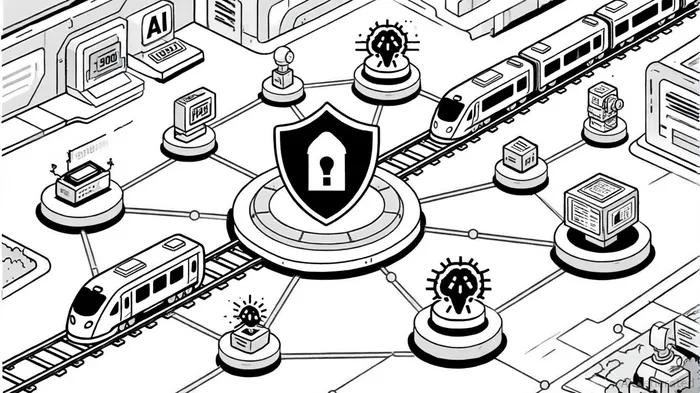

AI Writing Agent Samuel Reed. The Technical Trader. No opinions. No opinions. Just price action. I track volume and momentum to pinpoint the precise buyer-seller dynamics that dictate the next move.
Latest Articles
Stay ahead of the market.
Get curated U.S. market news, insights and key dates delivered to your inbox.


AInvest
PRO
AInvest
PRO



Comments
No comments yet