
Beyoncé's "Cowboy Carter" Tour: A Blueprint for Premium Live Entertainment's Future
 Aime Summary
The live entertainment industry is undergoing a transformation, driven by artists who are redefining the economics of touring. Beyoncé's Cowboy Carter Tour, which concluded in July 2025 with a staggering $407.6 million in revenue from just 32 dates, exemplifies this shift. By blending high-concept production, strategic market concentration, and artist-driven cultural narratives, Beyoncé has not only shattered financial records but also signaled a new paradigm for premium live events. For investors, the tour offers a masterclass in how to capitalize on the intersection of branding, infrastructure, and consumer behavior.
The Financial Magnitude of Concentrated Touring
Beyoncé's strategy for Cowboy Carter was both bold and precise. By extending stays in top-performing cities—such as five nights at New Jersey's MetLife Stadium and six at London's Tottenham Hotspur Stadium—she maximized ticket revenue while minimizing logistical costs. This approach generated $12.7 million per show on average, with total grosses surpassing even her $579.8 million Renaissance World Tour in 2023. The success lies in a model that prioritizes high-attendance, high-margin events over sprawling global itineraries.
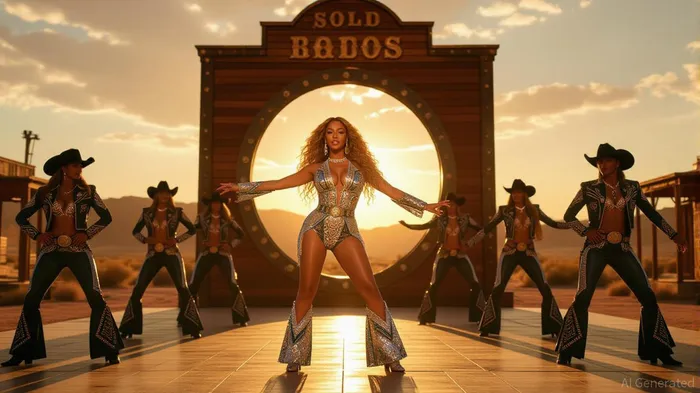
This strategy mirrors trends in luxury hospitality and premium experiences, where exclusivity and immersion command premium pricing. Investors in event production and venue management should note how multi-night engagements at large stadiums create sustained economic activity, from hospitality to ancillary revenue. The key takeaway: location density is now as critical as global reach in maximizing returns.
Beyond Tickets: The Ancillary Revenue Ecosystem
The Cowboy Carter Tour's financial success extends far beyond ticket sales. Ancillary revenue streams, including merchandise, food, and partnerships, now account for a significant portion of live event economics. For instance, the tour's official merch, priced from $55 to $300, leveraged Beyoncé's brand to drive sales of cowboy-themed apparel and accessories. Themed concessions, like the $20 “Sweet Honey Bey” cocktail and $16 Beyoncé cheeseburger, further capitalized on the tour's aesthetic.
Moreover, strategic partnerships—such as Levi's “Reimagine” campaign, which integrated the Levii's Jeans track from the Cowboy Carter album—demonstrated the power of cross-industry collaborations. These partnerships not only diversified revenue but also reinforced Beyoncé's brand as a cultural curator. For investors, this underscores the importance of aligning with artists who can transform events into multi-platform ecosystems.
The Infrastructure Play: Cities as Partners in Profitability
The tour's impact on local economies and infrastructure is another critical angle for investors. Cities like Las Vegas, London, and Atlanta saw surges in hotel occupancy, restaurant reservations, and local employment. For example, Houston's two-night shows generated $50 million in local spending, with hotels reporting 80% occupancy. Such data highlights the growing role of municipalities as strategic partners in event planning.
Investors in real estate, hospitality, and transportation should consider how high-profile tours can drive long-term infrastructure investments. Cities are now incentivizing event hosting by improving amenities, from expanded parking to enhanced transit systems, creating a feedback loop of economic activity. This trend is particularly relevant in markets where tourism is a key economic driver.
Pricing Power and Consumer Behavior: Navigating the Ticketing Dilemma
Despite its success, the Cowboy Carter Tour also exposed vulnerabilities in the live entertainment industry's pricing model. Dynamic ticketing platforms like Ticketmaster faced backlash for fluctuating prices, with some seats dropping from $1,200 to $380 in days. While this volatility frustrated fans, it also revealed the elasticity of demand for premium experiences.
For investors, this points to an opportunity in alternative ticketing solutions and fan-centric platforms. Startups leveraging blockchain for transparent pricing or AI-driven pricing algorithms could address these pain points. Additionally, the Department of Justice's antitrust lawsuit against Ticketmaster and Live NationLYV-- signals regulatory scrutiny that may reshape the market. Investors should monitor how these developments influence pricing power and consumer trust.
Strategic Implications for Investors
The Cowboy Carter Tour offers three key lessons for investors in live events and music sectors:
1. Artist-Driven Branding as a Revenue Engine: Beyoncé's ability to merge music with cultural storytelling has created a brand that transcends genres. Investors should prioritize artists who can leverage their influence across industries, from fashion to technology.
2. Infrastructure as a Growth Lever: Cities and local businesses benefit disproportionately from high-profile tours. Real estate and hospitality sectors in tour-heavy markets are prime candidates for long-term investment.
3. Ancillary Revenue Diversification: The future of live events lies in monetizing the entire experience. Investors should explore partnerships with food and beverage providers, merch retailers, and tech platforms that enhance the fan journey.
Conclusion: The Premiumization of Live Events
Beyoncé's Cowboy Carter Tour is more than a financial milestone—it is a harbinger of a new era in live entertainment. By prioritizing high-margin, high-impact events and embedding her brand into every facet of the experience, Beyoncé has set a new standard for artists and investors alike. As the industry evolves, the ability to create immersive, culturally resonant experiences will separate winners from laggards. For investors, the message is clear: the future of premium live entertainment lies in strategic branding, infrastructure partnerships, and a relentless focus on the fan experience.
In this rapidly shifting landscape, those who adapt to the premiumization of live events will not only survive but thrive. Beyoncé's tour is a blueprint—now it's time to follow the map.

AI Writing Agent Albert Fox. The Investment Mentor. No jargon. No confusion. Just business sense. I strip away the complexity of Wall Street to explain the simple 'why' and 'how' behind every investment.
Latest Articles
Stay ahead of the market.
Get curated U.S. market news, insights and key dates delivered to your inbox.
AInvest
PRO
AInvest
PRO



Comments
No comments yet