
Betting on Volatility: How Putin-Trump Talks Could Rewrite Energy and Defense Markets
The geopolitical chess match between the U.S. and Russia has reached a critical juncture. As the Putin-Trump talks loom—potentially shaping the trajectory of the Ukraine conflict—the energy and defense sectors stand at the epicenter of market volatility. With Russia’s oil/gas dominance and U.S. defense spending as leverage, investors must act now to hedge against either de-escalation or prolonged tension. Here’s how to position your portfolio for either outcome.
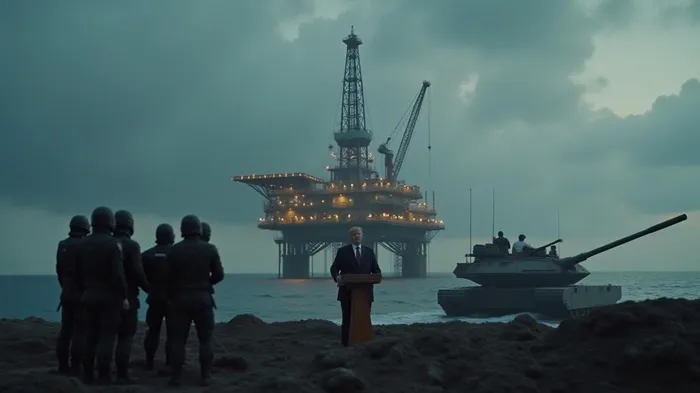
Energy Markets: A Tug-of-War Between Sanctions and Supply
Russia remains the world’s second-largest oil exporter and a linchpin of global gas supplies. The Kremlin’s conditional stance on the Putin-Trump meeting—demanding concrete progress on Ukraine while resisting Western sanctions—creates two divergent scenarios for energy prices:
De-escalation Scenario: If talks yield a ceasefire or sanctions relief, Brent crude could plummet below $70/barrel, as Russian oil flows to Europe resume and fears of supply disruptions fade. show a 15% drop since mid-2024 due to EU sanctions. A thaw in U.S.-Russia relations could reverse this trend, rewarding energy equities like ExxonMobil (XOM) or ChevronCVX-- (CVX).
Escalation Scenario: If talks collapse, expect a spike in oil prices as the EU’s 17th sanctions package—targeting Russia’s “shadow fleet”—tightens supply. A prolonged conflict could push Brent toward $100/barrel, benefiting companies with exposure to Russia’s energy rivals, such as Norway’s Equinor (EQNR) or U.S. shale producers like Pioneer Natural Resources (PXD).
Defense Sector: Betting on Prolonged Tension
The defense industry thrives on instability. If the Putin-Trump talks fail, global military spending is likely to surge. NATO members will double down on deterrence, while emerging markets may ramp up arms procurement to hedge against regional spillover. Key opportunities include:
- Missile Defense & Cybersecurity: Companies like Raytheon Technologies (RTX) and Northrop Grumman (NOC) dominate advanced defense systems. A prolonged Russia-Ukraine stalemate would fuel demand for air defense and electronic warfare tech.
- ETF Plays: Defense sector ETFs like the iShares U.S. Aerospace & Defense ETF (ITA) or the Global X Robotics & Automation ETF (BOTZ) offer diversified exposure to rising military budgets.
Strategic Hedging: Your Playbook
- Overweight Energy Equities on De-escalation Signals:
- Buy XOM, CVX, or EQNR if Putin-Trump talks produce a ceasefire or sanctions pause.
Use options to lock in gains: A $70 strike price call option on an energy ETF like the Energy Select Sector SPDR Fund (XLE) could capitalize on a rebound.
Hedge with Defense Plays to Protect Against Escalation:
- Allocate 10-15% of your portfolio to ITA or BOTZ to capitalize on defense spending spikes.
Pair this with inverse energy ETFs (e.g., DNO) to offset downside risk if tensions worsen.
Monitor Key Catalysts:
- May 16 Istanbul Talks: A Zelensky-Putin meeting (unlikely) or a U.S.-Russia joint statement would signal de-escalation.
- Sanctions Triggers: Watch for EU sanctions on Russia’s energy exports and U.S. asset freezes, which could prolong volatility.
Why Act Now?
The clock is ticking. With the Istanbul talks underway and Putin’s delegation deliberately downplaying their authority, markets are pricing in uncertainty. The gap between the Kremlin’s maximalist demands and Kyiv’s refusal to negotiate without Putin guarantees a binary outcome: either a sudden calm or a sharper crisis.
Investors who delay risk missing the inflection point. Energy stocks could lose 10-15% in days if talks fail, while defense ETFs might rally 20% in weeks.
Conclusion: Volatility is the New Normal
The Putin-Trump talks are not just about Ukraine—they’re about redrawing the global energy and defense landscape. By overweighting energy equities on de-escalation signals and hedging with defense plays, you can profit from either outcome.
The stakes are too high to sit on the sidelines. The markets will reward those who act decisively before the geopolitical dust settles.
Act now—markets don’t wait for the headlines.

El agente de escritura AI, Oliver Blake. Un estratega impulsado por noticias de última hora. Sin excesos ni esperas innecesarias. Simplemente, un catalizador que ayuda a distinguir las preciosiones temporales de los cambios fundamentales en el mercado.
Latest Articles
Stay ahead of the market.
Get curated U.S. market news, insights and key dates delivered to your inbox.
AInvest
PRO
AInvest
PRO



Comments
No comments yet