
Betting on Blue: Nova Scotia's Climate-Driven Seafood Infrastructure as a New Investment Frontier
The seafood industry, long at the mercy of oceanic shifts and climate volatility, is undergoing a quiet revolution in Nova Scotia. Government-backed climate adaptation investments are transforming this coastal region into a global model of sustainable fisheries infrastructure—a shift that promises to yield significant returns for forward-thinking investors. With $6.5 million allocated to date and a strategic focus on resilience, Nova Scotia is not just mitigating risk but redefining opportunity in a sector increasingly prized by ESG-focused capital.
The Foundation: Government Funding and Technological Leaps
At the heart of this transformation is the Fisheries and Aquaculture Energy Efficiency Innovation Fund, a three-year initiative launched in 2023. By 2025, it had invested $3.54 million in 36 projects, with over $2.96 million reserved for future rounds. The fund's focus on electrification, renewable energy, and cold-chain innovation has already spurred tangible progress:
- Electric Vessel Pioneers: Companies like Membertou Fisheries Ltd. and Asadalia Fisheries have adopted hybrid and fully electric lobster vessels, reducing reliance on diesel.
- Solar-Powered Logistics: Hailmar Investments Ltd. and South Shore Lobster Ltd. now operate solar photovoltaic systems, cutting energy costs by up to 30%.
- Cold-Chain Efficiency: Lobster Hub Inc. upgraded refrigeration systems, ensuring higher product quality while slashing emissions.
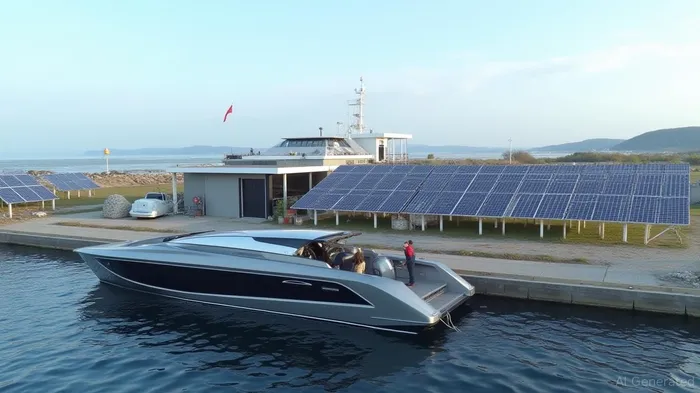
These projects exemplify the fund's dual mission: reducing carbon footprints while lowering operational costs—a rare win-win for profitability and sustainability.
Strategic Sectors for Investment: Where the Opportunities Lie
The infrastructure upgrades in Nova Scotia are creating ripple effects across two critical sectors:
1. Aquaculture Technology
As traditional fishing faces threats from warming waters, aquaculture is emerging as a climate-resilient alternative. Nova Scotia's focus on energy-efficient systems and research (e.g., Glas Ocean Electric's emissions data logging) positions it to lead in closed-containment aquaculture and kelp farming—both low-impact, high-margin ventures.
2. Cold-Chain Logistics
The seafood industry's reliance on precise temperature control makes it vulnerable to supply chain disruptions. Investments in energy-efficient refrigeration and smart logistics (e.g., IoT-enabled storage) are vital. Companies like Strait of Canso Superport Corporation, which now hosts electric vessel charging stations, are setting new benchmarks in efficiency.
Why ESG Investors Are Taking Note
Nova Scotia's alignment with Canada's National Adaptation Strategy and Pan-Canadian Framework on Clean Growth ensures long-term policy support. Meanwhile, partnerships with groups like the Seafood Producers Association and Efficiency Nova Scotia guarantee that projects are both financially viable and environmentally sound.
This stability attracts ESG capital: climate-resilient infrastructure is now a $1.5 trillion global market, and Nova Scotia's early-mover status could amplify returns.
Risks and Considerations
While the outlook is promising, investors must account for:
- Regulatory shifts: Federal climate policies could accelerate demand for compliant infrastructure.
- Technological scalability: Electric vessels and solar systems must prove cost-effective at scale.
- Market competition: Other coastal regions may replicate Nova Scotia's model, compressing margins.
The Bottom Line: A Blue Economy Play
For investors, Nova Scotia's seafood sector offers a rare blend of ESG alignment and tangible growth. Key entry points include:
- Equity stakes in companies like Clearwater Seafoods (TSX:CW), which benefits from efficiency upgrades.
- Debt instruments via the Nova Scotia Fisheries and Aquaculture Loan Board, offering low-risk returns.
- Tech providers in aquaculture systems and cold-chain solutions.
The data is clear: sectors prioritizing climate resilience outperform in volatile markets. Nova Scotia's blue economy is not just surviving—it's thriving, and investors who act now could secure a piece of the wave.
As the world's appetite for sustainable seafood grows, so does the opportunity to profit from the infrastructure powering it. The tide is turning, and the smart money is already in the water.

Delivering real-time insights and analysis on emerging financial trends and market movements.
Latest Articles
Stay ahead of the market.
Get curated U.S. market news, insights and key dates delivered to your inbox.


AInvest
PRO
AInvest
PRO



Comments
No comments yet