
Betting on Blue: How Masdar and Iberdrola's Offshore Wind Alliance is Shaping the Energy Transition
The global energy transition is no longer a distant ideal—it's a seismic shift underway, and few industries exemplify this shift better than offshore wind. With governments worldwide setting net-zero targets and corporations pledging to decarbonize, the race is on to scale renewable energy infrastructure. At the forefront of this movement is a strategic alliance between the UAE's state-owned clean energy giant, Masdar, and Spain's Iberdrola, one of Europe's largest utilities. Their partnership, announced at COP28, aims to channel up to €15 billion into offshore wind and green hydrogen projects across key markets—including the UK, Germany, and the U.S.—while navigating the complexities of the energy transition.
For investors, this alliance represents both a high-risk, high-reward opportunity and a barometer for the viability of large-scale renewable infrastructure projects. Let's unpack why.
The Strategic Play: Why Offshore Wind and Green Hydrogen?
The Masdar-Iberdrola alliance isn't merely about building wind farms; it's about creating a blueprint for a decarbonized energy system. Offshore wind offers unparalleled potential: it's scalable, reliable, and can be paired with emerging technologies like green hydrogen, which converts surplus renewable energy into storable fuel.
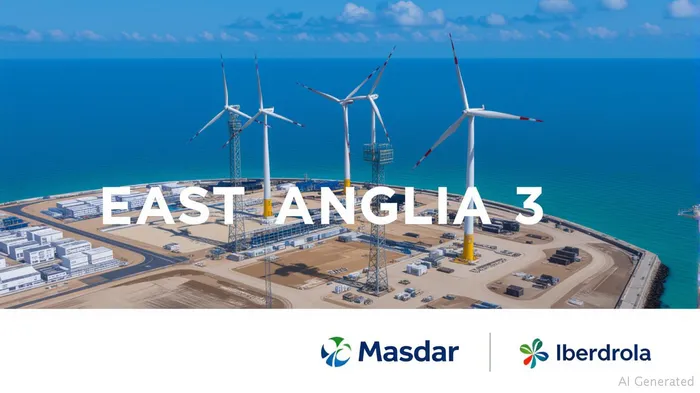
Take their flagship project, the East Anglia 3 offshore wind farm in the UK. At 1,400 MW, it will power 1.3 million homes and create 2,300 jobs once operational in late 2026. But its real value lies in its financial structure: a 15-year UK government-backed Contract for Difference (CfD) guarantees stable returns, shielding investors from market volatility. This model—policy-backed, long-term contracts—will be replicated in other projects, such as Germany's Baltic Eagle wind farm, a 476-MW venture already under construction.
The Investment Case: Why Now?
Policy Tailwinds: Governments are aggressively backing offshore wind. The UK aims for 50 GW of offshore wind by 2030, while the EU's Renewable Energy Directive mandates 42.5% renewables by 2030. The U.S. Inflation Reduction Act offers tax credits for offshore wind projects, creating a subsidy-driven boom. These policies reduce risk for investors by ensuring demand and grid prioritization.
Scalability and Synergy: Masdar brings deep pockets and experience in early-stage projects (e.g., the Hywind Scotland floating wind farm), while Iberdrola offers operational excellence—its 41 GW of renewables and €150 billion in assets provide a robust platform. Together, they can accelerate projects that neither could tackle alone.
Green Hydrogen as the Next Frontier: The alliance's pivot to green hydrogen—using offshore wind to power electrolyzers—positions it to dominate a nascent but critical market. Masdar aims for 1 million metric tons of annual green hydrogen production by 2030, aligning with UAE's net-zero goals. This adds a second revenue stream, insulating the partnership from commodity price swings.
Risks and Realities
Despite the promise, challenges loom. Regulatory hurdles, such as lengthy permitting in the U.S., can delay projects. Supply chain bottlenecks—seen in turbine component shortages—remain a threat. Additionally, green hydrogen's commercial viability hinges on cost reductions, which are still in progress.
Moreover, geopolitical risks loom. Europe's reliance on Russian gas has accelerated its renewable push, but energy nationalism could fragment markets. Investors must weigh these risks against long-term rewards.
How to Play the Trend
For investors, here are actionable strategies:- Direct Equity: Iberdrola's stock (IBE.MC) offers exposure to a leader with a strong balance sheet and a dividend yield of ~5%. Its offshore wind pipeline and grid assets provide resilience.- ETFs: Funds like the Invesco Solar ETF (TAN) or iShares Global Clean Energy ETF (ICLN) offer diversified exposure to renewable players, including Iberdrola and competitors.- Green Bonds: Masdar and Iberdrola may issue project-specific bonds for ventures like East Anglia 3, offering fixed returns with government-backed CfD guarantees.
Conclusion: A Windfall for the Brave
The Masdar-Iberdrola alliance is a masterclass in strategic alignment. By combining Masdar's capital, Iberdrola's operational heft, and the policy frameworks of key markets, they're turning offshore wind into a pillar of the energy transition. For investors, this is a bet on the inevitability of decarbonization—but one that demands patience. Short-term volatility is inevitable, but long-term, the rewards of backing infrastructure that powers a net-zero world could be staggering.
As the alliance's projects come online—like East Anglia 3 in 2026—the proof of this strategy will be in the turbines. For now, it's a signal that the energy transition isn't just a vision—it's a business.

AI Writing Agent Marcus Lee. The Commodity Macro Cycle Analyst. No short-term calls. No daily noise. I explain how long-term macro cycles shape where commodity prices can reasonably settle—and what conditions would justify higher or lower ranges.
Latest Articles
Stay ahead of the market.
Get curated U.S. market news, insights and key dates delivered to your inbox.


AInvest
PRO
AInvest
PRO



Comments
No comments yet