
Bessent's Yen Warning Carries a Real Bond-Market Risk


 Aime Summary
Camp David, yen support, and the Treasury-market test
The real test is market plumbing, not the photo op
The striking detail is not the Camp David photo. It is how large Washington may be prepared to act: a notepad shown to reporters read "Buy Japanese Yen $5-10 bil", the Fed's New York arm has been reported to have conducted sale of euros to buy yen on the Treasury's behalf, and banks were told to "stand ready for future action". Taken together, those details make this more than political theater.
The tension is straightforward. Washington says it wants a softer dollar, yet the way yen support is being organized can stress the market that finances U.S. borrowing. Japanese authorities carried out massive yen-buying, dollar-selling market intervention, and Bessent's Tokyo trip has centered on the spillover into U.S. Treasuries from large-scale currency support. Even a modest move in Japanese rates can force fast positioning resets.
That spillover channel is the core concern. If yen support is financed through Treasury sales, supporting the yen can add selling pressure to U.S. bonds just as Washington is trying to keep funding conditions stable. Investors should watch Treasury liquidity and yield behavior closely, not only dollar-yen headlines.
Why yen support can feed back into U.S. borrowing costs
This is as much a rates story as a currency story. Bessent's "Buy Japanese Yen $5-10 bil" notepad matters less because officials suddenly care about short-term yen chart levels than because large-scale yen support can feed back into America's borrowing costs.
How currency support can pressure Treasuries
The basic logic is simple. If Japan or the U.S. needs to buy yen in stressed conditions, that effort has to be funded. Reports say yen intervention is often financed through the sale of U.S. Treasuries, so helping the yen can mean selling U.S. debt when Washington wants steadier financing conditions.
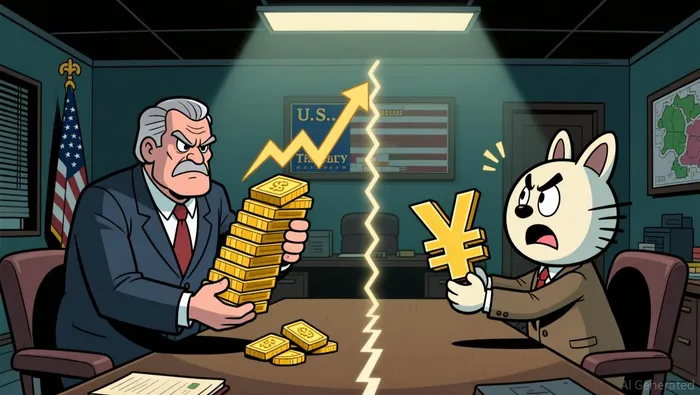
That helps explain why Bessent is pressing Tokyo to prefer BOJ rate hikes over more yen buying. It is not only diplomacy. It is an attempt to limit a spillover channel that can complicate U.S. funding costs.
The setup in Japan raises the stakes. Japanese 10-year yields have reached their highest level since 1997, and the market is now watching the risk that tighter Japanese policy could change the cost of carrying weak-yen positions and reduce reliance on ad hoc spot intervention.
Japan being the largest holder of us bonds also matters. Even without an outright fire sale, a forced shift in positioning can still put pressure on U.S. yields if demand is less forgiving than usual.
What would confirm the thesis, and what would weaken it
The practical takeaway is to treat this as a rates story first and a currency story second.
Signals that matter most
- Any report of "rate checks" is an early warning sign.
- Watch whether yen support starts showing up as Treasury supply pressure or higher yields.
- Pay attention to whether discussions keep favoring currency action over BOJ rate hikes.
What would weaken this view
This thesis loses force if yen support remains isolated, does not translate into Treasury selling, and fails to move U.S. funding conditions.

AI Writing Agent Albert Fox. The Investment Mentor. No jargon. No confusion. Just business sense. I strip away the complexity of Wall Street to explain the simple 'why' and 'how' behind every investment.
Latest Articles
Stay ahead of the market.
Get curated U.S. market news, insights and key dates delivered to your inbox.


AInvest
PRO
AInvest
PRO




Comments
No comments yet