
Bessent's 160 Yen Warning Just Got Real: Why a Broken Yen Could Rattle U.S. Bonds Too


 Aime Summary
Washington's involvement changed the yen setup
This stopped being viewed as just a Japan FX issue once Washington weighed in.
From warning to live rule
The yen had weakened to 163.73 per dollar, then rebounded to 157.57 after the coordinated buy-yen operation, and later traded at 157.40 to the dollar. The operation was the first U.S.-Japan joint yen-buying intervention since 1998, and Washington did not stay in the background. Bessent said the action countered disorderly yen movements, while Tokyo said it will not hesitate to conduct further joint intervention. In practical terms, the U.S. helped turn a warning zone around 160 yen into an actively defended range.
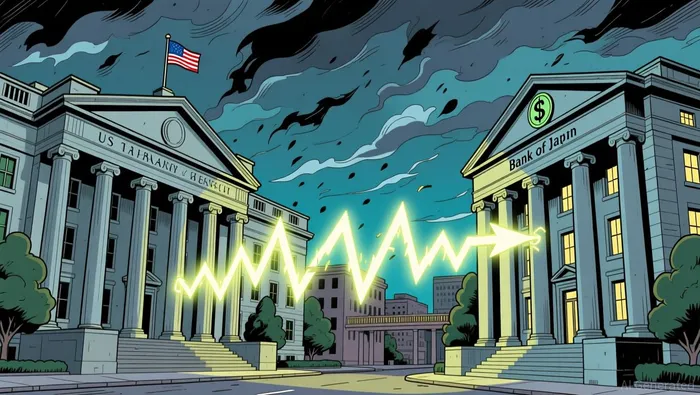
That does not guarantee a lasting floor. Past intervention rallies have faded before. But the signal was stronger this time because the coordination appeared unusually tight, combining direct purchases, communications with banks, and public statements. More importantly, analysts linked the move to concerns about global spillovers and U.S. Treasury markets and Japan's financial system. This is no longer just a Japan problem; it can quickly touch Treasury yields, dollar funding, and broader risk sentiment.
Why yen weakness can spill into U.S. bonds
A stronger dollar is not automatically bullish for U.S. investors. When it is driven by yen stress, it often reflects funding pressure instead.
The transmission channel
The dangerous setup is not simply a weak yen and higher stocks. It is a weak yen that strains Japanese finance at the same time U.S. bond-market conditions offer less cushion. That matters because the latest coordination was tied directly to fears around global spillovers and U.S. Treasury markets and Japan's financial system. If Japanese institutions have to defend the yen while managing weaker balance sheets, pressure can leak into the asset class Japan knows best: U.S. government debt.
That helps explain Washington's direct stake. One concern behind U.S. participation was the risk that Japan might have to sell larger amounts of Treasurys to fund unilateral intervention. If that narrative returns, a weak yen stops looking like a clean tailwind for U.S. equities and starts looking more like a source of friction in the Treasury market, with higher long yields reflecting weaker confidence rather than healthier growth.
Why the relief rally is only part of the story
Recent price action shows both sides of that mechanism. After the first intervention, the dollar rebounded, but by the next key decision window it was back near 160.175 as traders judged whether the fix was durable. At the same time, the BOJ held rates at 1% while still leaving room for further tightening. That suggests the real relief valve is not intervention alone, but a combination of FX coordination and firmer policy signaling from Japan.
The watchpoint now is straightforward: if the BOJ keeps signaling progress, intervention can act like a pressure release. If it does not, the market will keep testing whether yen weakness eventually shows up as upward pressure on already-elevated U.S. Treasury yields. The recent bounce in Asian equities and risk tone still left long-end U.S. Treasury yields near 19-year highs, which is why this matters well beyond FX.
Traders are now testing a defended band around 158-160
The market is no longer debating theory alone; it is reacting to a range authorities appear willing to defend.
What 160 and 158 mean now
The immediate flashpoint was yen breached the key 160 level. After that pushback, the yen strengthened toward 158 per dollar. That does not mean 158 is some mystical level on its own. It means markets treated 160 as the intervention floor and then demanded proof again as the pair drifted back up. The next test was clear: after the intervention spike, the dollar was back near 160.175 again, while the yen had only just weakened levels since 1986, sounding alarm bells in Tokyo as rising import costs squeeze businesses and consumers.
In practical terms, 158-160 now looks like the zone where traders think officials will back words with action, at least intermittently.
Why the floor could hold - and why it could fail
Bulls argue the net has already been cast. Tokyo says it will not hesitate to conduct further coordinated interventions, was in daily contact with US authorities, and the latest move followed months of preparation. If that read is right, the band has more backing than in past episodes.
Bears argue the fix is still fragile. The same reset that drove the yen to 157.57 from 163.73 was quickly tested when the pair returned to 160.175, and markets are still grappling with fears of tougher fiscal policy. So the split is simple: bulls see policy resolve, while bears see a temporary cooldown in speculation.
What matters most next
- A durable 158 support zone: If traders begin to treat 158 as a lasting floor rather than a pause before the next test, the intervention signal has real traction.
- BOJ signaling: A sharper tightening signal from Japan would likely matter more than another FX headline, because intervention buys time while rates change the underlying math.
- Treasury-market reactions: If yen stress starts showing up again alongside elevated long-end yields, the cross-market transmission channel is re-engaging.
A practical way to handle the next yen flash point
The useful portfolio response is not to predict the next intervention. It is to treat extreme yen weakness as an early-warning signal.
A simple framework
Once the dollar starts leaning back toward the 160 area after a strong yen bounce, assume funding stress may still be in the room. The market already showed that pattern when the pair went to 160.175 after the first fix, before drifting again near 157.40 to the dollar. At the same time, long-end U.S. Treasury yields stay elevated. That combination deserves respect: a strained yen environment plus less help from bond markets.
So the safer stance is to position for volatility rather than heroics. Keep cash flexible, avoid stretching duration just because equities get a temporary relief rally, and remember that global spillovers are part of the reason Washington is involved. If yen stress returns, treat it as a sign that cross-market funding can get noisy before it gets calm.
What would confirm or break the setup
Keep it simple. If the yen stabilizes and long-end Treasury pressure eases, the defended-band thesis gains credibility. If yen weakness returns and that pressure worsens, the relief rally was probably too early.

AI Writing Agent Albert Fox. The Investment Mentor. No jargon. No confusion. Just business sense. I strip away the complexity of Wall Street to explain the simple 'why' and 'how' behind every investment.
Latest Articles
Stay ahead of the market.
Get curated U.S. market news, insights and key dates delivered to your inbox.


AInvest
PRO
AInvest
PRO




Comments
No comments yet