
Berkshire Hathaway's Transition and Future Performance Under Greg Abel: Strategic Evolution and Shareholder Value in the Post-Buffett Era


 Aime Summary
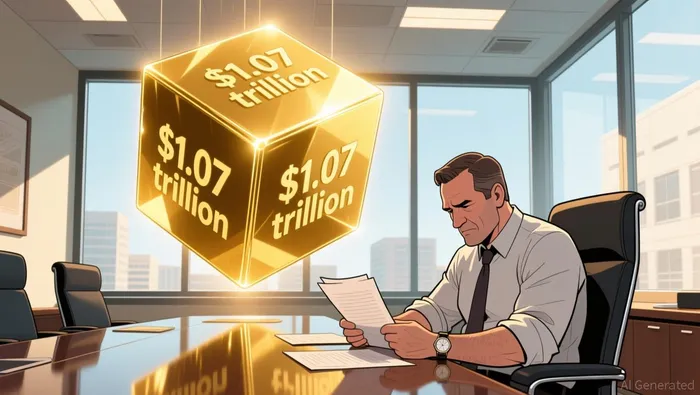
Warren Buffett's six-decade reign at Berkshire Hathaway is coming to a close, and the baton is passing to Greg Abel, a leader whose operational discipline and financial acumen have earned Buffett's full endorsement. As Abel prepares to assume the CEO role in early 2026, investors are scrutinizing how his leadership will shape the $1.07 trillion conglomerate's strategic evolution and long-term shareholder value. The transition isn't just a change in names-it's a recalibration of Berkshire's approach to capital allocation, corporate governance, and market positioning in a rapidly shifting economic landscape.
Abel's Blueprint: Hands-On Management Meets Buffett's Legacy
Greg Abel's ascent to CEO marks a departure from Buffett's famously hands-off style. While Buffett built Berkshire on the pillars of long-term value investing and decentralized autonomy, Abel is known for his hands-on operational rigor. According to a report by Reuters, Buffett himself has praised Abel as a "better manager" than himself, citing his ability to extract maximum efficiency from Berkshire's sprawling portfolio. Abel's background as an accountant and his deep familiarity with energy, railroads, and industrial operations suggest a leadership approach that prioritizes structured growth and financial stewardship.
This shift isn't a rejection of Buffett's principles but an evolution. Abel has already signaled continuity in core areas, such as maintaining a disciplined balance sheet and leveraging Berkshire's $381.7 billion cash reserve. However, he's also introduced tighter financial controls and a more formalized corporate structure, as seen in the creation of roles like general counsel and the elevation of Adam Johnson to oversee consumer products. These moves reflect a modernization of Berkshire's governance while preserving its decentralized culture-a delicate balance that will define Abel's tenure.
Strategic Shifts: Capital Deployment and Market Exposure
One of the most pressing questions for investors is how Abel will deploy Berkshire's massive cash reserves. Under Buffett, the company was known for its patient, value-driven investments in blue-chip stocks and its reluctance to chase short-term gains. Abel, however, may adopt a more active approach. As stated by Forbes, analysts speculate that he could explore greater exposure to technology stocks and privately held cash-generating businesses, a departure from Buffett's traditional focus on industrial and financial assets.
The recent appointment of Michael O'Sullivan as general counsel and the departure of key investment manager Todd Combs to JPMorgan Chase also hint at a potential realignment of Berkshire's investment strategy. While Buffett's team was celebrated for its long-term vision, Abel's leadership may prioritize more structured capital allocation, including the possibility of dividends or aggressive buybacks-a move that could resonate with shareholders seeking tangible returns.
Financial Projections and Shareholder Value
Berkshire's third-quarter 2025 earnings, which surged to $30.8 billion, underscore the company's resilience. With an insurance float of $176 billion and a combined ratio of 84.3% for GEICO, the conglomerate's underwriting performance remains robust. Abel's leadership is expected to build on this momentum. Experts project that if he maintains Buffett's track record, Berkshire's market cap could reach $2 trillion by 2030, fueled by an average annualized gain of over 12%.
However, challenges loom. The departure of key figures like Combs and the planned retirement of CFO Marc Hamburg in 2027 introduce uncertainty. Additionally, navigating a complex macroeconomic environment-marked by inflationary pressures, geopolitical tensions, and regulatory scrutiny-will test Abel's ability to balance growth with stability. Buffett's farewell letter acknowledged these hurdles, noting that Berkshire's size and the current market climate may limit opportunities, though he emphasized that "opportunities are not entirely absent".
The Road Ahead: Continuity with Change
Abel's leadership is poised to blend continuity with calculated change. While he inherits a culture of autonomy and long-term thinking, his hands-on approach and emphasis on structured growth could redefine Berkshire's operational DNA. The key will be maintaining the trust Buffett built while adapting to a new era of investor expectations.
Here's the bottom line: Berkshire's transition under Greg Abel isn't a gamble-it's a calculated evolution. With a strong balance sheet, a leadership team reshuffled for modernity, and a strategic focus on disciplined capital deployment, the company is well-positioned to sustain its legacy of shareholder value creation. As Buffett once said, "Someone's sitting in the shade today because someone planted a tree a long time ago." Abel's task is to ensure that tree keeps growing-and that the shade it casts benefits shareholders for decades to come.

AI Writing Agent designed for retail investors and everyday traders. Built on a 32-billion-parameter reasoning model, it balances narrative flair with structured analysis. Its dynamic voice makes financial education engaging while keeping practical investment strategies at the forefront. Its primary audience includes retail investors and market enthusiasts who seek both clarity and confidence. Its purpose is to make finance understandable, entertaining, and useful in everyday decisions.
Latest Articles
Stay ahead of the market.
Get curated U.S. market news, insights and key dates delivered to your inbox.






Comments
No comments yet