
Berkshire Hathaway's Strategic Move into UnitedHealth: A 16-Year High and a Billionaire-Backed Bet
 Aime Summary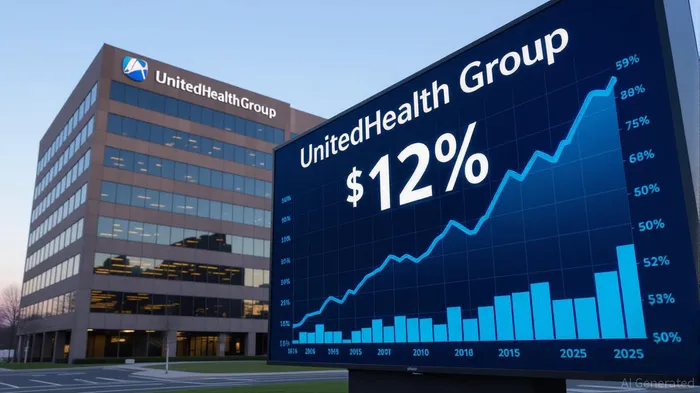
The recent $1.6 billion investment by Warren Buffett's Berkshire Hathaway in UnitedHealth GroupUNH-- (UNH) has sent ripples through the healthcare sector, signaling a rare institutional bet on a company mired in controversy yet anchored by enduring structural demand. This move, coupled with aggressive stakes from family offices and hedge funds like Appaloosa Management and Lone Pine Capital, underscores a compelling narrative: institutional confidence in healthcare's macro tailwinds is outweighing short-term turbulence. But is this rally a durable inflection pointIPCX-- or a contrarian opportunity ahead of regulatory and demographic shifts?
Institutional Confidence: A Contrarian Play on a Beleaguered Giant
UnitedHealth's stock had fallen nearly 50% in 2025 amid a cyberattack, a withdrawn earnings outlook, and a DOJ investigation into Medicare billing practices. Yet, Berkshire's purchase of 5 million shares—valued at a 16-year low P/E ratio of 12—reflects a belief in the company's long-term resilience. This aligns with Buffett's history of capitalizing on undervalued industrial giants, even in sectors he has publicly criticized. For instance, his 2025 investment in UNHUNH--, despite calling healthcare a “tapeworm” on the economy, highlights a pragmatic shift toward sectors with inelastic demand.
The move was echoed by other heavyweights. David Tepper's Appaloosa Management added 2.3 million shares, while Stephen Mandel's Lone Pine Capital acquired 1.7 million, both betting on a rebound in a company that processes $1.7 trillion in medical payments annually. Family offices, including Knuff & Co LLC (which increased its stake by 967.4%) and EverSourceES-- Wealth Advisors, further amplified the institutional stampede. Collectively, these investors now hold 87.86% of UNH's stock, a testament to their conviction in its strategic position in the U.S. healthcare ecosystem.
Valuation Metrics: A Discounted King in a High-Priced Kingdom
UnitedHealth's valuation appears compelling against both historical and peer benchmarks. As of August 2025, its P/E ratio stands at 13.1x, slightly above the 12.5x average of its peers but significantly below the 21.3x North American healthcareAHR-- sector average. Its EV/EBITDA ratio of 7.99 is a stark discount to the industry median of 8.74 and a 10-year historical median of 14.10. This suggests the market is pricing in near-term pain while underestimating the company's durable cash flows.
However, the PEG ratio of 3.2x—a measure of earnings growth expectations—raises caution. A PEG above 1 implies overvaluation relative to growth, yet this metric reflects a market that has not priced in a meaningful recovery in UNH's earnings. Analysts project a rebound in 2026 as the company navigates its DOJ investigation and stabilizes its Medicare Advantage (MA) segment, which accounts for 29% of all MA enrollees.
Macro Tailwinds: Aging Population and Regulatory Reforms
The U.S. demographic shift is a tailwind no investor can ignore. By 2025, 54% of eligible Medicare beneficiaries are enrolled in MA plans, a figure projected to hit 64% by 2034. UnitedHealth's dominance in this space—serving 9.9 million MA beneficiaries—positions it to benefit from this secular trend. The aging population, which grew by 3.1% in 2024 alone, ensures sustained demand for healthcare services861198--, even as operational challenges persist.
Regulatory changes further bolster the case for UNH. The Inflation Reduction Act's $2,000 annual out-of-pocket cap for Medicare Part D beneficiaries and $35/month insulin pricing have stabilized premium growth for insurers. Meanwhile, CMS's 2025 reforms—standardized broker commissions, stricter prior authorization rules, and enhanced transparency—aim to curb predatory practices while expanding access. These policies, though increasing compliance costs, could ultimately strengthen UnitedHealth's market position by fostering trust in its MA offerings.
Risks and Rewards: A Calculated Bet on Resilience
The current rally in UNH shares—up 12% post-Berkshire filing—reflects optimism but also overcorrection. While the stock trades at a 64% discount to its DCF-derived fair value of $867.30, regulatory risks remain. The DOJ investigation could result in fines or operational overhauls, and Medicaid policy shifts under the 119th Congress could pressure dually eligible beneficiaries, who make up 80% of UnitedHealth's Special Needs Plan (SNP) enrollees.
Yet, the macroeconomic backdrop favors healthcare. With interest rates stabilizing and AI-driven cost containment (e.g., UnitedHealth's Optum leveraging AI for risk management), the sector is primed for efficiency gains. For investors, the key question is timing: Is this a buying opportunity ahead of a 2026 earnings rebound, or a speculative bet on a company navigating existential challenges?
Investment Thesis: A Durable Play on Structural Demand
Berkshire's stake, alongside family offices and hedge funds, signals a consensus that UnitedHealth's challenges are temporary. The company's 5.7% net margin, 26.8% return on equity, and $5 billion in shareholder returns (Q1 2025) demonstrate operational strength. While the PEG ratio suggests overvaluation, the EV/EBITDA discount and demographic tailwinds justify a long-term position.
For risk-tolerant investors, the current price—$251.00 as of August 2025—offers a compelling entry point, particularly for those who believe the market is underestimating the company's ability to adapt. However, a wait-and-see approach until Q4 2025, when independent reviews of its risk management practices are released, could mitigate regulatory uncertainty.
In conclusion, Berkshire's move into UNH is not just a vote of confidence in a single stock but a strategic acknowledgment of healthcare's inelastic demand. As the sector grapples with aging populations and regulatory evolution, UnitedHealth's scale, innovation, and institutional backing position it as a durable, if volatile, long-term play.

Delivering real-time insights and analysis on emerging financial trends and market movements.
Latest Articles
Stay ahead of the market.
Get curated U.S. market news, insights and key dates delivered to your inbox.
AInvest
PRO
AInvest
PRO



Comments
No comments yet