
Berkshire Hathaway's Resilience Amid Volatility: A Test of Buffett's Legacy
The surge of Berkshire Hathaway’s stock in early 2025—up 16% despite a 14% drop in Q1 operating profit—has reignited debates about the enduring relevance of Warren Buffett’s value investing philosophy. While critics point to declining short-term returns, supporters argue the company’s $347 billion cash hoard and strategic bets on global stability underscore its ability to weather storms. This week’s shareholder meeting and regulatory moves in London highlight both the opportunities and challenges facing the Oracle of Omaha’s empire.
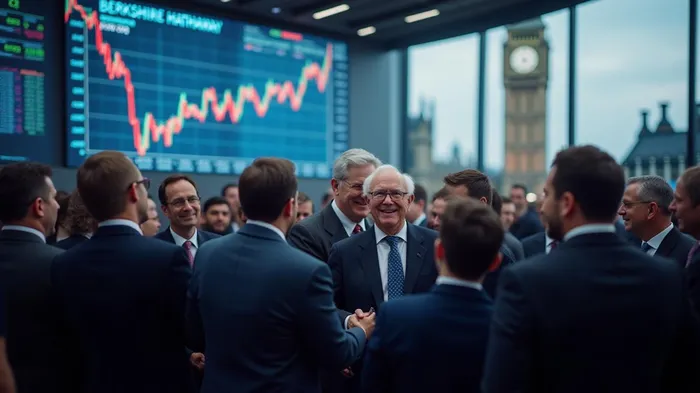
The Catalyst: Leverage Shares and Investor Confidence
On April 28, the Financial Conduct Authority admitted Leverage Shares 2x Long Berkshire Hathaway (BRK-B) ETP Securities to the London Stock Exchange. These leveraged exchange-traded products (ETPs), designed to amplify exposure to Berkshire’s stock, reflect growing investor optimism. “The listing signals that institutional investors see Berkshire as a reliable anchor in turbulent markets,” said analyst Emily Chen of Global Equity Research.
This confidence is not misplaced: Berkshire’s stock outperformed the S&P 500’s 2% decline in early 2025, buoyed by its $320 billion cash reserves—now grown to $347.7 billion—as of Q1.
Profit Declines, Cash Accumulates
While Berkshire’s operating profit fell to $9.64 billion in Q1—driven by wildfire-related losses—the company’s cash reserves swelled, marking Buffett’s tenth consecutive quarter as a net seller of stocks. This strategy, he explained at the May 3 shareholder meeting, reflects caution in an era of “overvalued markets.” Yet critics argue that hoarding cash risks missing out on growth opportunities.
Buffett defended the approach, stating: “We’d rather have the cash and be wrong than take risks we don’t understand.” The $347 billion stash, equivalent to about 20% of Berkshire’s market cap, serves as both a safety net and a weapon for opportunistic acquisitions—a stark contrast to his peers’ debt-fueled strategies.
Global Bets and Geopolitical Crosscurrents
The shareholder meeting also revealed Buffett’s evolving playbook. He praised investments in Japanese trading houses like Itochu and Mitsubishi, calling them “forever holdings” that offer exposure to Asia’s recovery. Meanwhile, Berkshire doubled its stake in Israel’s Teva Pharmaceutical to 3.45%, a move that briefly boosted Teva’s shares by 5%.
Yet Buffett’s optimism about Japan contrasts with his frustration over U.S. trade policies. “Tariffs are a weapon,” he warned, criticizing protectionism as harmful to global economic harmony. This tension—between opportunism abroad and skepticism at home—defines Berkshire’s current strategy.
Leadership and Legacy
When asked about succession, Buffett reiterated confidence in current managers but offered no timeline. This ambiguity, combined with his $23 billion net worth surge to $165 billion in 2025, underscores the personal stakes.
Conclusion: A Portfolio for the Long Game
Berkshire’s recent performance reveals a company at a crossroads. While short-term profits are pressured by external shocks, its fortress balance sheet and Buffett’s contrarian instincts position it to capitalize on future downturns. The 16% stock surge in early 2025, fueled by cash reserves and geopolitical hedging, suggests investors are betting on its resilience.
The test ahead lies in translating cash into value. With $347 billion on hand and a leader who has delivered 20% annual returns over six decades, Berkshire’s next chapter hinges on whether Buffett’s successors can replicate his knack for spotting undervalued assets—and his patience to wait for them.
As markets grapple with inflation and trade wars, Berkshire’s story remains a paradox: a symbol of stability in a volatile world, yet a reminder that even legends must adapt to survive.

Stay ahead of the market.
Get curated U.S. market news, insights and key dates delivered to your inbox.




Comments
No comments yet