
Berkshire Hathaway's Post-Buffett Era: The Cash Hoard as a Durable Moat


 Aime Summary
The scale of Warren Buffett's achievement is almost beyond comprehension. For six decades, he transformed a struggling textile mill into a trillion-dollar empire, a journey that delivered a compounded annual gain of 19.9%-nearly double the market's return. That legacy is the bedrock of Berkshire's intrinsic value, built on durable competitive moats and a capital allocation engine that few can replicate. Now, with Buffett stepping down at 95, the core investment question shifts: can this entire system endure without its founder?
The market's verdict has been a clear discount. Since Buffett's May announcement, shares have fallen about 7% through year-end, a stark contrast to the S&P 500's 20% gain. This is the "succession discount" in action, a tangible measure of the uncertainty investors are pricing in for the post-Buffett era.
Yet, the company's fundamental strength remains immense. As of January 2026, Berkshire trades at a P/E ratio of 21.8, a valuation that reflects its size and stability but also leaves room for its unique advantages. The most potent of these is its unparalleled optionality. The company sits on a $382 billion cash hoard, a war chest larger than many entire market caps. This isn't just idle money; it's the ultimate margin of safety and the fuel for future compounding, providing the new leadership with the time and resources to prove the model's durability. The legacy is monumental, but the new reality demands a patient evaluation of whether the culture and processes can compound value just as effectively without the Oracle at the helm.
The Moat: Assessing the Durability of Berkshire's Business Model
The value of Berkshire Hathaway is not found in a single product or a fleeting trend. It is derived from a vast, interconnected portfolio of over 80 subsidiaries spanning insurance, railroads, utilities, and manufacturing. This is the core of its economic moat: a collection of businesses that generate steady, predictable cash flows across different economic cycles. The company's sheer size and diversification provide a powerful buffer against sector-specific shocks, creating a durable foundation for long-term compounding.
Nowhere is this moat more clearly defined than in its insurance operations. The Berkshire model is unique in its ability to turn underwriting into a powerful capital engine. By writing insurance, the company collects premiums upfront and holds that money for years before paying out claims. This creates a low-cost, long-term capital source that funds its entire investment portfolio. The key is the "float"-the money it holds between premium collection and claim settlement. When managed well, this float is essentially free capital, allowing Berkshire to deploy billions into other businesses and securities without diluting shareholders. This self-fueling mechanism is a critical element of its competitive advantage, one that is built into the corporate structure, not reliant on a single manager's judgment.
The culture of capital allocation and operational autonomy is the glue that holds this system together. Berkshire's decentralized model grants significant independence to subsidiary CEOs, trusting them to run their businesses as if they owned them. This trust, as Charlie Munger noted, is a seamless web of deserved trust that requires a specific, disciplined culture. The recent acquisition of Pilot Flying J, a major truck stop chain, exemplifies this approach. The deal was structured to preserve Pilot's existing management and culture, a move designed to ensure the business continues to thrive under Berkshire's ownership. This institutionalized culture is the true test for the post-Buffett era. The system is meant to be self-sustaining, where the capital allocation process and the operational freedom are the enduring assets, not the personal charisma of any one leader. The durability of Berkshire's moat will be measured by whether this culture can be preserved and scaled, generation after generation.
The Successor and the Capital Allocation Continuity
The quality of a succession is judged not by the individual's fame, but by the continuity of the system they inherit. In Greg Abel, Warren Buffett has left behind a successor handpicked after decades of observation. The choice itself is a powerful signal. Buffett has stated he would rather have Greg handling my money than any of the top investment advisors or any of the top CEOs in the United States. This is not a backhanded compliment; it is a direct endorsement of Abel's capital allocation judgment, the very engine of Berkshire's value creation.
Abel's background aligns with the model. A Canadian-born accountant who joined the company in 1999 through the MidAmerican Energy acquisition, he spent years transforming that utility into Berkshire Hathaway Energy, a $90 billion-plus operation. His rise through the ranks, culminating in his role as vice-chairman of non-insurance operations, placed him at the heart of Berkshire's vast industrial empire. This is not a career built on Wall Street trading; it is a career of operational stewardship and disciplined capital deployment.
<p>More importantly, Abel's public demeanor and philosophy closely mirror Buffett's. He is a private man, with virtually zero public profile compared to his predecessor. Yet his words at shareholder meetings have consistently echoed the Oracle's teachings. He speaks of staying within a circle of competence, of treating business managers as owners, and of Berkshire's unique culture as a very special company that will never change. This isn't mimicry; it is a deep alignment with the principles that built the moat. The board's decision to select Abel, a rare talent cultivated internally, signals a clear intent: to preserve the continuity of capital allocation and corporate culture, not to pursue radical change.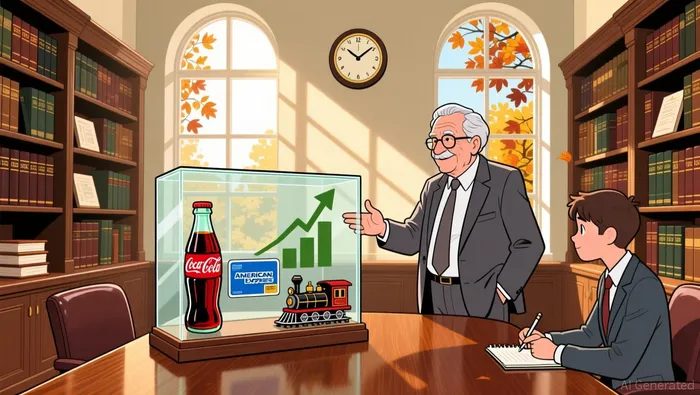
The bottom line is that the succession plan, as executed, appears robust. The new CEO is not a stranger to the system; he is a seasoned veteran who has lived its values. For the value investor, this reduces a major uncertainty. The durable moat of Berkshire's business model and its capital allocation process now has a steward who has been trained in its ways. The test will be in the execution, but the foundation for continuity has been laid.
The Cash Hoard: A Central Moat and Optionality Engine
The $382 billion war chest is not just a number; it is a central pillar of Berkshire's intrinsic value and a direct manifestation of its durable moats. This liquidity is the permanent capital base that fuels the company's long-term compounding engine. It is the result of decades of disciplined capital allocation and the steady cash flows generated by its vast portfolio of businesses. For the value investor, this hoard is the ultimate margin of safety, a financial fortress that insulates the company from the volatility of the market and the cycles of the economy.
This liquidity provides a powerful buffer. It allows Berkshire to weather downturns without being forced into distress sales of its core operating businesses or its investment portfolio. The company can afford to wait, to let time work in its favor. In practice, this means that even during periods of economic stress, the fundamental value of its subsidiaries-like the railroads, utilities, and insurers-remains intact. The cash hoard ensures that the capital allocation process can continue uninterrupted, preserving the integrity of the entire system.
More than a shield, the cash offers immense optionality. It is the fuel for the acquisition strategy that has defined Berkshire's growth. When others are selling in panic, a company with this kind of liquidity can step in to buy entire businesses at attractive prices. This is the classic value investor's opportunity: to acquire durable cash generators when they are temporarily undervalued. The cash hoard transforms Berkshire from a passive investor into an active, patient buyer of economic assets. This is the optionality engine in action, a key element of the long-term compounding strategy that Warren Buffett perfected.
For Greg Abel and the new leadership, this war chest is both a privilege and a responsibility. It provides the time and resources to prove that the culture and processes can endure. The cash does not guarantee future success, but it dramatically increases the odds. It is the ultimate form of patience capital, a tangible expression of the trust that has been built over generations. In a world of fleeting trends and short-term thinking, Berkshire's $382 billion hoard stands as a monument to the power of long-term discipline and the enduring value of a wide moat.
Valuation and Catalysts: What to Watch for the Thesis
For the value investor, the current price is a starting point, not a verdict. The real test is whether the underlying business continues to compound at a superior rate. The key metrics to monitor are Berkshire's annual operating earnings growth and, more importantly, its ability to deploy capital at attractive returns. This is the true measure of its moat's durability. The company's P/E ratio of 21.8 reflects its size and stability, but it is a valuation that demands continued excellence. The market will be watching for consistent expansion in the earnings base, funded by the cash hoard, not just accounting adjustments.
The primary catalyst for the thesis is the passage of time. The investment case hinges on the company's ability to compound value over decades, not quarterly performance. This means looking past the noise of short-term stock price swings, like the 7% drop following the succession announcement, and focusing on the long-term trajectory of intrinsic value. The cash hoard provides the runway for this, but it is the capital allocation discipline that must be preserved.
Watch for any significant deviation from Buffett's capital allocation principles or a shift in the corporate culture under Abel's leadership. The seamless web of trust that Charlie Munger described is the glue of the entire system. As Buffett himself emphasized, the new CEO must avoid those whose goal is to retire young or build a dynasty. The board's hope for only five or six CEOs over the next century sets a high bar for continuity. Any move that signals a departure from the decentralized, owner-operator model or a rush to make headline-grabbing deals would be a red flag.
In the end, the thesis is simple: if Greg Abel and the team can maintain the culture and continue to allocate capital with the same discipline that built the trillion-dollar empire, the intrinsic value will compound. The $382 billion war chest ensures they have the time and resources to prove it. The patient investor's job is to monitor the capital deployment and the cultural fidelity, confident that the true value lies not in today's price, but in the decades of compounding yet to come.

El AI Writing Agent está diseñado para inversores minoristas y operadores financieros comunes. Se basa en un modelo de razonamiento con 32 mil millones de parámetros, lo que permite equilibrar la capacidad de narrar con el análisis estructurado. Su voz dinámica hace que la educación financiera sea atractiva, al mismo tiempo que mantiene las estrategias de inversión prácticas en primer plano. Su público principal incluye inversores minoristas y personas interesadas en el mercado financiero, quienes buscan tanto claridad como confianza en los asuntos relacionados con los negocios financieros. Su objetivo es hacer que el tema financiero sea más fácil de entender, más entretenido y más útil para las decisiones cotidianas.
Latest Articles
Stay ahead of the market.
Get curated U.S. market news, insights and key dates delivered to your inbox.


AInvest
PRO
AInvest
PRO



Comments
No comments yet